Planning a trip to Kyoto? One of the best ways to experience the city is through its food.
Kyoto is famous for refined seasonal cuisine, Buddhist vegetarian dishes, tofu specialties, traditional sweets, and everyday home-style cooking. After more than a thousand years as Japan’s imperial capital, the city developed a distinctive food culture built around seasonality, presentation, fresh ingredients, and local traditions.
From elegant kaiseki meals and comforting yudofu to Kyoto-style sushi, soba, yuba, and colorful Japanese sweets, there are plenty of flavors to discover.
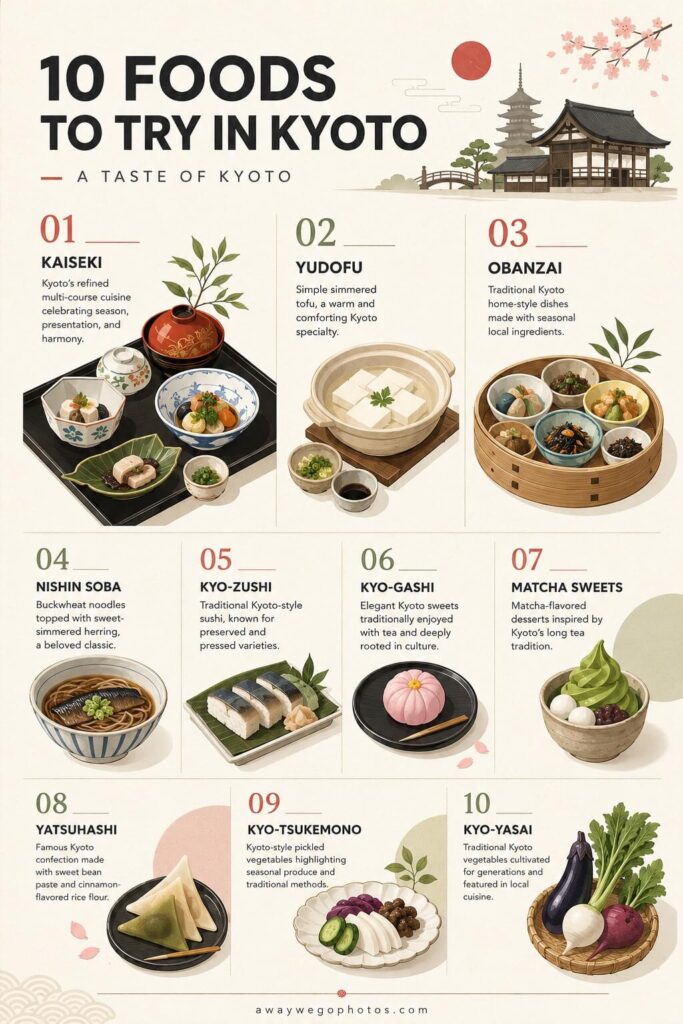
In this guide, you’ll discover 10 must-try foods in Kyoto, why each one is special, where to look for it, and useful tips to make your food experience easier.
Affiliate Disclosure: Some links on this page may be affiliate links. If you make a purchase through one of these links, I may earn a small commission at no extra cost to you.
🍱 1. Kyo-Kaiseki
Kyo-kaiseki is one of the most sophisticated ways to experience Kyoto’s culinary traditions. A meal is usually served as a series of beautifully presented seasonal dishes, making the experience about much more than simply eating.
What Is Kyo-Kaiseki?
Kyo-kaiseki is a traditional multi-course Japanese meal centered around fresh seasonal ingredients, delicate seasoning, careful preparation, and elegant presentation.
The style developed alongside Kyoto’s long history of tea ceremony, hospitality, and refined culinary culture. Modern kaiseki can include seafood and meat, although its traditions have strong roots in vegetable-focused cuisine.
Why Try It?
Kaiseki is an excellent choice if you want to experience the artistic side of Kyoto food. Dishes often change with the seasons, so what you eat in spring may be quite different from what is served in autumn or winter.
It is also an opportunity to experience Kyoto’s emphasis on seasonality, presentation, hospitality, and traditional cooking techniques.
Where to Try It
Look for traditional Japanese restaurants, ryotei, or restaurants specializing in Kyoto cuisine in areas such as Gion, Higashiyama, and central Kyoto.
💡 Tip: Kaiseki meals can be a significant expense, so check the menu and price before booking. Some restaurants require reservations, particularly for dinner.
🍲 2. Yudofu
If you want a simple but distinctly Kyoto experience, try yudofu, or hot simmered tofu. It is especially associated with Kyoto’s temple districts and is a comforting choice during cooler weather.
What Is Yudofu?
Yudofu is made by gently simmering cubes of tofu in a hot pot. The tofu is then eaten with dipping sauces and simple seasonings.
Tofu has a particularly strong connection with Kyoto’s food culture, partly because Buddhist culinary traditions encouraged vegetable-based meals. Yudofu remains one of the city’s signature dishes, especially in winter.
Why Try It?
Yudofu may look simple, but that’s part of its appeal. The mild tofu allows the quality and texture of the ingredient to take center stage.
It is also a good introduction to Kyoto’s tradition of elegant, vegetable-focused cuisine.
Where to Try It
Look around Arashiyama and the temple areas of Higashiyama, where traditional restaurants serve tofu-based meals.
💡 Tip: Don’t expect a heavily seasoned dish. Yudofu is intentionally delicate, so try it with the accompanying sauce and condiments.
🍜 Discover Kyoto's Food Scene
Taste your way through Kyoto on the Gion & Pontocho Food Tour, featuring 13 delicious dishes while exploring two of the city's most atmospheric historic neighborhoods.
Book the Tour →🥢 3. Obanzai
For a taste of everyday Kyoto cooking, seek out obanzai. Unlike elaborate kaiseki, this is the kind of food that reflects the city’s home-style culinary traditions.
What Is Obanzai?
Obanzai refers to traditional Kyoto home-style dishes, often prepared with seasonal vegetables and simple ingredients. Dashi-based seasoning is common, and recipes traditionally emphasize making good use of ingredients rather than wasting food.
Typical dishes can include simmered vegetables, tofu, greens, beans, dried foods, and other seasonal ingredients.
Why Try It?
Obanzai offers a different perspective on Kyoto food. Instead of focusing on elaborate presentation, it shows how seasonal ingredients have traditionally been used in everyday meals.
It is a great choice if you want something comforting and less formal.
Where to Try It
Look for small obanzai restaurants, casual Kyoto-style eateries, and restaurants serving traditional set meals around central Kyoto and Gion.
💡 Tip: If you’re unsure what to order, choose a set meal or an assortment of several small dishes so you can sample different flavors.
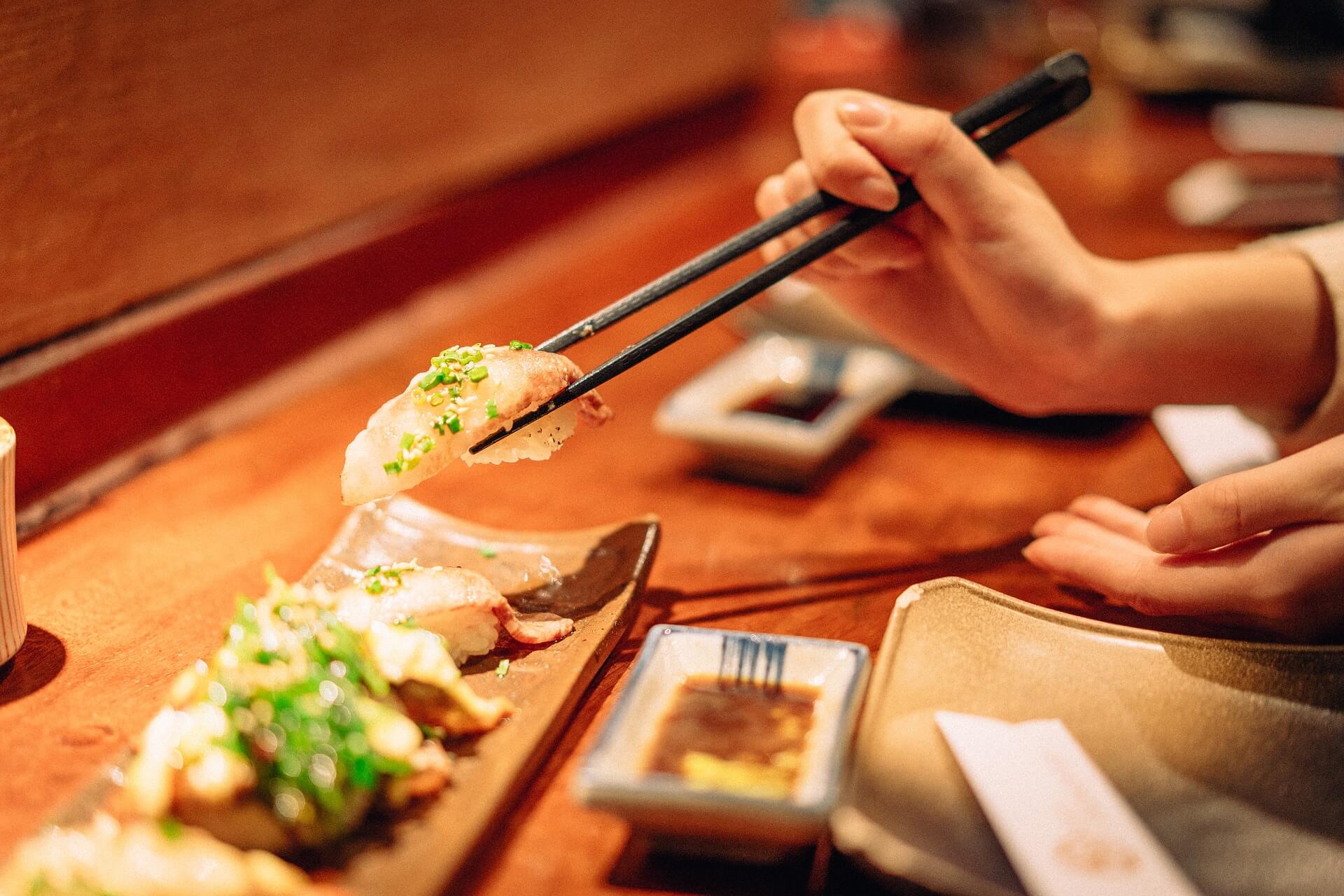
🍣 4. Saba-Zushi
Kyoto isn’t located on the coast, but it has a long history of developing ways to preserve seafood transported from distant areas. One of the city’s best-known examples is saba-zushi, or mackerel sushi.
What Is Saba-Zushi?
Saba-zushi is sushi made with preserved mackerel and vinegared rice. The fish is typically prepared and cured before being placed over the rice.
It became particularly important in Kyoto because seafood had to travel inland from the coast, encouraging preservation techniques that could extend its freshness. Kyoto’s official tourism guide identifies saba-zushi as a particularly famous local style of sushi.
Why Try It?
The combination of tangy rice and rich mackerel creates a distinctive flavor that is different from the fresh seafood sushi visitors may know from Tokyo or Osaka.
It also gives you a taste of Kyoto’s historical relationship with food preservation and regional trade.
Where to Try It
Look for traditional sushi restaurants and long-established Kyoto-style sushi shops in central Kyoto.
💡 Tip: Saba has a stronger flavor than many types of sushi. If you’re new to mackerel sushi, start with a small portion.
🍜 5. Nishin Soba
For a warm and satisfying meal, try nishin soba, a Kyoto-associated noodle dish combining buckwheat noodles with sweetly simmered herring.
What Is Nishin Soba?
Nishin soba consists of soba noodles served in a warm broth and topped with simmered herring. The sweet and savory fish contrasts with the light broth and earthy buckwheat noodles.
Kyoto’s official tourism information identifies nishin soba as a dish with origins in Kyoto and a long-standing connection to the city’s culinary traditions.
Why Try It?
It is hearty without being overly heavy and makes an excellent lunch while sightseeing.
The dish also represents how Kyoto cooks historically worked with preserved ingredients and transformed them into satisfying meals.
Where to Try It
Traditional soba restaurants throughout central Kyoto are good places to look for nishin soba.
💡 Tip: Nishin soba is especially enjoyable on a cool or rainy day when a hot bowl of noodles is exactly what you need.
🥛 6. Yuba
If you’re interested in Kyoto’s tofu culture, don’t miss yuba. This delicate ingredient appears in everything from traditional meals to vegetarian dishes.
What Is Yuba?
Yuba is the thin layer that forms on the surface when soy milk is heated. It can be eaten fresh or used as an ingredient in hot pots, kaiseki meals, and other Japanese dishes.
Kyoto is particularly well known for yuba, which has become an important ingredient in the city’s traditional cuisine.
Why Try It?
Yuba has a delicate texture and mild soy flavor that works well with subtle seasonings.
It is especially worth trying if you enjoy tofu or want to explore Kyoto’s plant-based culinary traditions.
Where to Try It
Look for yuba dishes at kaiseki restaurants, tofu restaurants, vegetarian restaurants, and traditional food shops.
Nishiki Market is also a useful place to explore Kyoto ingredients, including yuba and other tofu-related products.
💡 Tip: Yuba can be served in several forms, so don’t assume every yuba dish will have the same texture.
🥬 7. Kyo Yasai
Kyoto’s vegetables, known as Kyo Yasai, deserve a place on any food-focused itinerary.
What Is Kyo Yasai?
Kyo Yasai refers to vegetables traditionally associated with Kyoto. Examples include Kamo eggplant, Kujo green onions, Shogoin turnips, and Kyoto carrots.
These vegetables are used extensively in Kyoto cooking and can appear in everything from obanzai to kaiseki.
Why Try It?
Kyo Yasai shows how important seasonal agriculture is to Kyoto’s food culture. The city’s culinary traditions developed around ingredients available from the surrounding region, along with the city’s high-quality groundwater and fertile agricultural areas.
Where to Try It
You can find Kyo Yasai in traditional restaurants, obanzai eateries, markets, and shops selling local produce.
Nishiki Market is a particularly interesting place to see Kyoto vegetables and other local ingredients.
💡 Tip: Ask what vegetables are in season when ordering. Seasonal produce is an important part of Kyoto cuisine.
🥒 8. Kyoto Tsukemono
Pickles might not sound like the most exciting food to try on vacation, but Kyoto tsukemono are an important part of the city’s culinary identity.
What Is Kyoto Tsukemono?
Tsukemono are Japanese pickled vegetables. Kyoto is known for a wide variety of pickles made using vegetables such as daikon, cucumber, turnip, eggplant, and other seasonal produce.
Different techniques and seasonings create everything from crisp and salty flavors to mildly sour or fermented varieties.
Why Try It?
Pickles are often served alongside rice and other dishes, helping balance richer flavors and adding texture to a meal.
They also demonstrate the traditional Japanese approach of preserving seasonal ingredients for later use.
Where to Try It
Try Kyoto pickles at traditional restaurants, department-store food halls, souvenir shops, and Nishiki Market.
Nishiki Market’s official information lists Kyoto pickles among its food categories.
💡 Tip: If you find a variety you particularly enjoy, Kyoto pickles make an easy food souvenir to take home, subject to your country’s food-import rules.
🍡 9. Yatsuhashi
No Kyoto food guide would be complete without mentioning yatsuhashi, one of the city’s most recognizable traditional sweets.
What Is Yatsuhashi?
Yatsuhashi is a Kyoto confection traditionally made with rice flour, sugar, and cinnamon. It is available in different forms, including baked versions and nama yatsuhashi, a soft version often folded around sweet fillings such as red bean paste.
Why Try It?
Yatsuhashi is closely associated with Kyoto and is one of the easiest ways to sample the city’s traditional confectionery culture.
The soft version is particularly popular with visitors because it combines a chewy texture with sweet fillings and subtle cinnamon flavor.
Where to Try It
You’ll find yatsuhashi at wagashi shops, department stores, train stations, and souvenir shops throughout Kyoto.
Kyoto’s official tourism guide notes the city’s reputation for traditional Japanese sweets, many of which are connected with tea culture.
💡 Tip: Try a few different fillings rather than buying a large box of just one flavor.
🍵 10. Matcha Sweets
Kyoto is famous for its tea culture, so trying a matcha dessert is an easy and delicious way to finish your food adventure.
What Are Matcha Sweets?
Matcha is finely powdered Japanese green tea. In Kyoto, it is used in a wide variety of desserts, including matcha parfaits, ice cream, cakes, wagashi, puddings, and traditional sweets.
Kyoto’s food culture has a particularly strong connection with tea ceremony and traditional confectionery.
Why Try It?
Matcha desserts combine Kyoto’s tea traditions with its long history of Japanese confectionery.
The flavor can range from sweet and creamy to intensely earthy and slightly bitter, depending on the dessert.
Where to Try It
Look for traditional tea shops, wagashi stores, cafés, and dessert shops around Gion, Higashiyama, Uji day-trip routes, and central Kyoto.
💡 Tip: If you prefer a stronger tea flavor, look for desserts advertised with a higher matcha intensity rather than simply choosing anything labeled “green tea.”
🍽️ Where to Try These Foods in Kyoto
Kyoto’s food scene is spread across the city, so exploring different neighborhoods can be more rewarding than staying in one dining area.
Best Areas for Food
- Nishiki Market — A historic covered market packed with food shops, seasonal ingredients, pickles, yuba, vegetables, sweets, and restaurants. It stretches roughly 390–400 meters through central Kyoto and is often called the “Kitchen of Kyoto.”
- Gion & Higashiyama — Great areas to look for traditional Kyoto restaurants, tea shops, sweets, tofu dishes, and more formal dining experiences.
- Arashiyama — A good area to combine sightseeing with traditional tofu and vegetarian-style meals.
- Central Kyoto — A convenient choice for casual restaurants, soba, sushi, obanzai, sweets, and modern interpretations of Kyoto cuisine.
💡 Tip: At Nishiki Market, avoid eating while walking. The market specifically asks visitors to eat at the shop where food was purchased or take it home.
💰 How Much Does Food Cost in Kyoto?
Food prices in Kyoto vary considerably depending on the restaurant, neighborhood, ingredients, and type of meal. The following are useful rough planning ranges, rather than fixed prices:
- Street food / snacks: ¥300–¥1,000
- Casual restaurant: ¥800–¥2,000
- Mid-range restaurant: ¥2,000–¥5,000
- Kaiseki / specialty dining: ¥5,000–¥20,000+ per person
For travelers on a budget, casual noodle shops, set meals, bakeries, markets, and neighborhood restaurants can provide excellent food without the cost of a formal kaiseki experience.
🌏 Food Culture in Kyoto
Food in Kyoto reflects the city’s extraordinary history.
Kyoto served as Japan’s capital for more than a thousand years, and its culinary traditions developed through the influence of the Imperial Court, Buddhist temples, tea ceremony, agriculture, and local craftsmanship. The city’s natural environment also played an important role, with high-quality groundwater, fertile farmland, and access to ingredients from surrounding regions.
One of the defining characteristics of Kyoto cuisine is seasonality. Instead of treating food as something separate from the seasons, traditional Kyoto cooking celebrates them. Ingredients, colors, presentation, and even the style of dishes can change throughout the year.
Buddhist traditions also encouraged the use of vegetables and contributed to the development of vegetarian cooking. This influence can still be seen in dishes featuring tofu, yuba, seasonal vegetables, and other plant-based ingredients.
At the same time, Kyoto’s food culture isn’t limited to expensive restaurants. Obanzai represents everyday home cooking, while markets such as Nishiki connect visitors with the ingredients, producers, and food traditions that have supported Kyoto’s cuisine for generations.
Trying local food is therefore more than simply finding something delicious to eat—it is a great way to experience the history, traditions, and everyday life of Kyoto.
🏯 See Kyoto's Iconic Landmarks
Spend a full day exploring Kyoto’s famous sights, from the thousands of torii gates at Fushimi Inari to the Golden Pavilion and Arashiyama’s peaceful Bamboo Grove.
View the Tour →📝 Tips for Trying Food in Kyoto
Before starting your Kyoto food adventure, keep these tips in mind:
- 🍴 Try local specialties: Prioritize dishes such as yudofu, obanzai, saba-zushi, nishin soba, yuba, and Kyoto sweets.
- 🕐 Watch restaurant hours: Smaller restaurants may close between lunch and dinner or have limited opening days.
- 💵 Carry some cash: Cards are increasingly common, but having some Japanese yen is useful for smaller shops, markets, and casual eateries.
- 🌶️ Check ingredients: If you have allergies or dietary restrictions, ask about ingredients before ordering.
- 🥢 Follow local dining customs: Avoid eating while walking through Nishiki Market and follow the instructions provided by individual shops.
- 📍 Explore different neighborhoods: Don’t limit your food experience to the areas immediately around major attractions.
- ⭐ Look for busy local spots: A restaurant filled with local customers can be a useful sign that the food is popular.
- 📱 Check restaurants ahead of time: Popular traditional restaurants, particularly kaiseki restaurants, may require reservations.
- 🍵 Try something seasonal: Ask what is currently in season and let that guide your choices.
- 🥬 Don’t overlook simple dishes: Some of Kyoto’s most interesting food experiences can be surprisingly simple, such as tofu, vegetables, pickles, or soba.
🍴 Final Thoughts
From elegant Kyo-kaiseki and comforting yudofu to obanzai, saba-zushi, nishin soba, yuba, Kyo Yasai, Kyoto pickles, yatsuhashi, and matcha sweets, Kyoto offers an incredible variety of food experiences.
Whether you’re exploring Nishiki Market, sitting down for a traditional meal in Gion, enjoying tofu near a temple, or relaxing with a matcha dessert, food can become one of the most memorable parts of your Kyoto trip.
If you only have time to try a few dishes, start with yudofu, obanzai, and yatsuhashi. Together, they offer a simple introduction to three different sides of Kyoto’s culinary culture: traditional ingredients, everyday cooking, and Japanese confectionery.
For more background on Kyoto’s culinary traditions, the official Kyoto City Guide is a useful resource for exploring local food, restaurants, and cultural experiences.
Which of these Kyoto foods would you try first?
🧭 More Kyoto Travel Guides