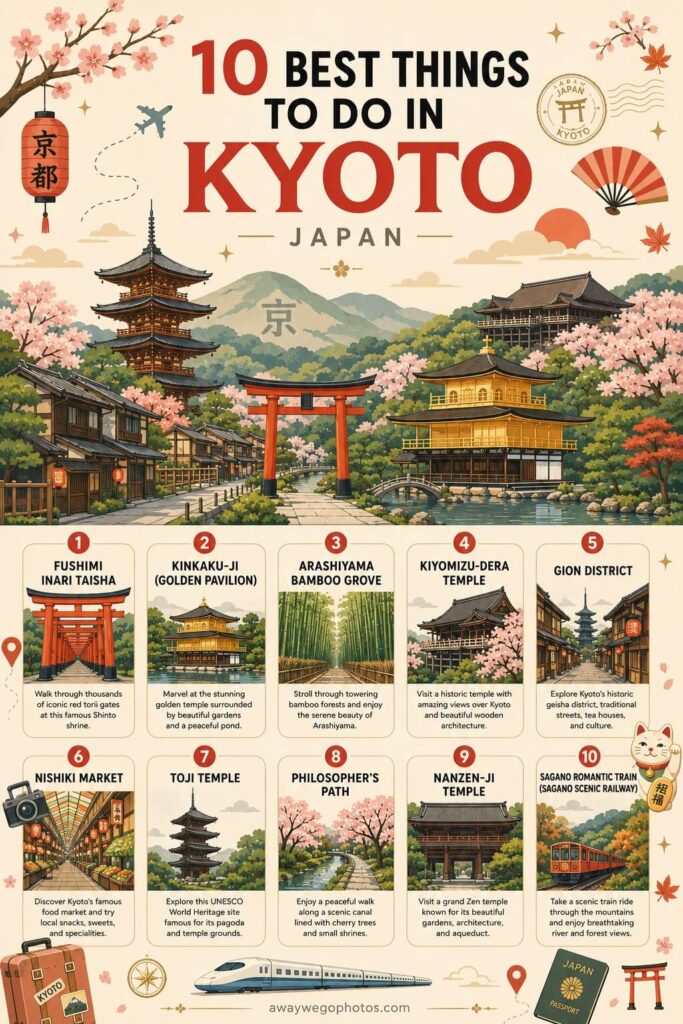
Planning a trip to Kyoto? From centuries-old temples and shrines to peaceful gardens, traditional neighborhoods, local markets, and scenic bamboo forests, Kyoto offers an incredible mix of history, culture, food, and natural beauty.
Once the imperial capital of Japan, Kyoto remains one of the country’s best places to experience traditional Japanese architecture, Buddhist temples, Shinto shrines, seasonal scenery, and historic neighborhoods. The city is especially rewarding when you slow down and explore its streets on foot rather than trying to see everything in a single day.
Whether you’re visiting for the first time or returning for another trip, these 10 best things to do in Kyoto will help you experience some of the city’s most important sights, cultural experiences, neighborhoods, and local highlights.
Affiliate Disclosure: Some links on this page may be affiliate links. If you make a purchase through one of these links, I may earn a small commission at no extra cost to you.
🏯 1. Visit Kiyomizu-dera Temple
One of the most famous temples in Kyoto, Kiyomizu-dera sits on the wooded slopes of eastern Kyoto and offers beautiful views across the city. The temple’s history stretches back more than 1,250 years, making it one of the most important historic sites in Kyoto.
The temple is particularly famous for its large wooden stage supported by tall wooden columns. The surrounding grounds contain additional halls, gates, pagodas, and the Otowa Waterfall, where visitors can participate in a traditional purification ritual.
Kiyomizu-dera is also a wonderful place to combine sightseeing with a walk through the historic streets of Higashiyama. After visiting the temple, wander down Kiyomizu-zaka and nearby lanes toward Yasaka Pagoda and Gion.
Why visit: For one of Kyoto’s most iconic temples, historic architecture, and panoramic city views.
📍 Location: Higashiyama
⏰ Best time to visit: Early morning or late afternoon
💡 Tip: Wear comfortable shoes. The approach to the temple includes uphill streets and stone-paved lanes.
🎟️ See Kyoto in One Day
Visit three unforgettable Kyoto highlights—Fushimi Inari, Kinkakuji, and the Bamboo Grove—on a relaxing one-day sightseeing trip.
View the Tour →⛩️ 2. Walk Through the Torii Gates at Fushimi Inari Taisha
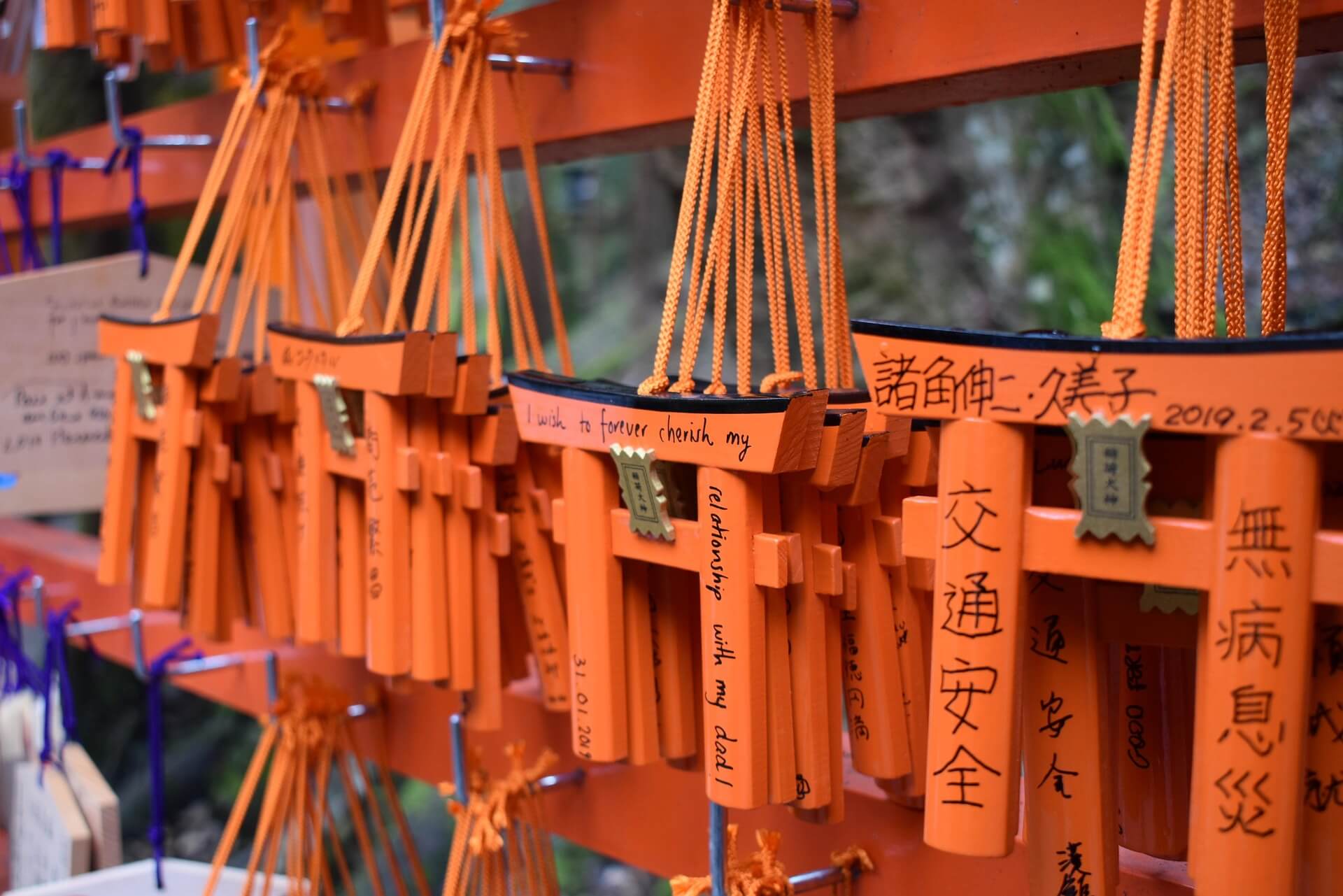
Few sights in Kyoto are as recognizable as the thousands of vermilion torii gates at Fushimi Inari Taisha. Located at the base and slopes of Mount Inari in southern Kyoto, the shrine is dedicated to Inari Okami and is the head shrine of the many Inari shrines found throughout Japan.
The torii gates form a series of paths that wind up Mount Inari. You don’t have to complete the entire mountain trail to enjoy the experience; even walking through the lower sections gives you an unforgettable view of the shrine’s famous tunnel of gates.
Fushimi Inari is also different from many of Kyoto’s other major attractions because the mountain itself forms part of the sacred shrine grounds. Along the route, you’ll encounter smaller shrines, stone monuments, wooded paths, and quieter sections away from the main entrance.
Why visit: For Kyoto’s most famous torii-gate experience and a memorable walk through a sacred mountain landscape.
📍 Location: Fushimi
⏰ Best time to visit: Early morning
💡 Tip: Take the JR Nara Line to Inari Station; the station is directly beside the shrine.
🎋 3. Explore Arashiyama and the Bamboo Grove
A visit to Kyoto would not be complete without exploring Arashiyama, one of the city’s most scenic areas. Located in western Kyoto, the district is known for its towering bamboo grove, Togetsukyo Bridge, temples, river scenery, and traditional streets.
The famous Bamboo Grove provides one of Kyoto’s most atmospheric walks. Tall bamboo stalks rise on both sides of the path, creating a striking green landscape that changes with the seasons. Arashiyama is also home to Tenryu-ji Temple, a UNESCO-listed cultural site with a beautiful Zen garden.
Beyond the most photographed areas, consider walking farther into Saga and exploring quieter temples and lanes. Arashiyama is large enough to spend several hours exploring rather than simply stopping for a quick photograph.
Why visit: For bamboo forests, temples, mountain scenery, and one of Kyoto’s most beautiful landscapes.
📍 Location: Western Kyoto
⏰ Best time to visit: Early morning
💡 Tip: Don’t limit your visit to the Bamboo Grove. Explore the surrounding Arashiyama area and walk toward Togetsukyo Bridge.
🥇 4. See the Golden Pavilion at Kinkaku-ji
Kinkaku-ji, better known as the Golden Pavilion, is one of Kyoto’s most recognizable landmarks. The gold-covered pavilion sits beside a reflective pond, creating one of the city’s classic photographic views.
The site originally served as a retirement residence for shogun Ashikaga Yoshimitsu before becoming a Zen temple after his death. The pavilion was destroyed by fire in 1950 and rebuilt in 1955. Its surrounding garden adds another layer to the visit, with ponds, trees, paths, and traditional landscaping.
Because Kinkaku-ji is extremely popular, the experience can be much more enjoyable when you arrive earlier in the day. You can also combine it with other attractions in the northwestern Kyoto area, such as Ryoan-ji and Ninna-ji.
Why visit: To see one of Japan’s most famous temples and its beautiful reflection in Kyokochi Pond.
📍 Location: Northern Kyoto
⏰ Best time to visit: Morning
💡 Tip: Consider combining Kinkaku-ji with nearby Ryoan-ji to make better use of your time in the area.
🌆 5. Wander Through Gion and Historic Higashiyama
For a taste of traditional Kyoto, spend time walking through Gion and the Higashiyama area. Narrow streets, traditional wooden buildings, tea houses, small restaurants, temples, and historic lanes make this one of the city’s most atmospheric neighborhoods.
Gion developed around Yasaka Shrine and remains associated with Kyoto’s traditional geiko and maiko culture. Nearby Higashiyama contains major attractions including Kiyomizu-dera, Yasaka Pagoda, Kodai-ji, and Kennin-ji.
One of the best ways to experience the area is simply to walk without rushing. Visit the temples, explore the side streets, and stop at a traditional tea house or small shop.
Remember that Gion is a residential and working neighborhood as well as a tourist destination. Follow local signs and avoid photographing geiko or maiko without permission.
Why visit: For traditional Kyoto streets, historic architecture, temples, and cultural atmosphere.
📍 Location: Higashiyama / Gion
⏰ Best time to visit: Morning or late afternoon
💡 Tip: Visit respectfully and stay on designated walking areas, especially around busy streets such as Hanamikoji.
🏯 6. Explore Nijo-jo Castle
Kyoto is famous for temples and shrines, but Nijo-jo Castle offers a different perspective on Japanese history. Built by Tokugawa Ieyasu, the castle became a Kyoto residence of the Tokugawa shoguns and remains an impressive reminder of their political power.
Inside the castle complex, you’ll find the Ninomaru Palace, gardens, stone walls, moats, and beautifully decorated interiors. The famous “nightingale floors” were designed to make a squeaking sound when walked upon, helping alert occupants to movement inside the palace.
Nijo-jo is especially worthwhile for travelers interested in Japanese political history and traditional architecture. The castle was also connected to the dramatic political changes that brought the Tokugawa shogunate to an end.
Why visit: To explore samurai-era architecture, gardens, palace interiors, and an important chapter of Japanese history.
📍 Location: Central Kyoto
⏰ Best time to visit: Morning or early afternoon
💡 Tip: Check the official visitor information before going because palace access and closing days can vary.
🔗 Info: Nijo-jo Castle official website
🍵 7. Experience Traditional Kyoto Culture
Kyoto is more than a collection of famous sightseeing spots. One of the best ways to understand the city is to take part in a traditional cultural experience.
Depending on your interests, you could participate in a tea ceremony, try wearing a traditional kimono, take a Japanese cooking class, learn about Kyoto crafts, or attend a cultural performance.
A tea ceremony is particularly fitting in Kyoto because it allows you to experience the Japanese principles of hospitality, careful preparation, seasonal awareness, and attention to detail. Rather than simply seeing traditional culture in a museum, you get to participate in it.
You can also look for experiences focused on Kyoto’s traditional crafts, including ceramics, textiles, incense, and sweets.
Why visit: To experience Kyoto’s living traditions rather than simply viewing them as historical attractions.
📍 Location: Various areas, especially Gion, Higashiyama, and central Kyoto
⏰ Best time to visit: Depends on the experience
💡 Tip: Book popular cultural experiences ahead of time, particularly during spring and autumn.
🚌 Tour Kyoto at Your Own Pace
Enjoy the freedom to hop off and explore whenever something catches your eye, then continue your Kyoto sightseeing by bus.
Book the Tour →🌿 8. Walk the Philosopher’s Path
For a slower and more peaceful Kyoto experience, walk along the Philosopher’s Path, a pedestrian route following a canal between the northern Higashiyama temples.
The path is particularly popular during cherry blossom season, when trees along the canal create a beautiful spring landscape. However, it can also be enjoyable outside peak seasons when the area is quieter.
The walk can be combined with visits to nearby temples and gardens, including Ginkaku-ji at the northern end and Nanzen-ji farther south. Instead of treating the Philosopher’s Path as a destination to rush through, allow time to stop at small cafés, shops, temples, and gardens along the way.
Why visit: For a peaceful walk through one of Kyoto’s most scenic historic areas.
📍 Location: Northern Higashiyama
⏰ Best time to visit: Morning or late afternoon
💡 Tip: Visit early during cherry blossom season if you want a quieter experience.
🛍️ 9. Explore Nishiki Market
Known as **”Kyoto’s Kitchen,” Nishiki Market is one of the best places to experience the city’s food culture. The covered market stretches for roughly 400 meters and has a history spanning centuries. Today, it is filled with shops selling seafood, pickles, Kyoto vegetables, tofu products, sweets, tea, spices, and other local specialties.
Walking through Nishiki gives you a chance to see ingredients used in Kyoto cuisine while sampling small bites and browsing traditional food shops. It is also a useful place to look for edible souvenirs and specialty products.
The market can become extremely crowded, so take your time and be considerate of other visitors. One important local rule is to avoid eating while walking through the market; enjoy food at the shop where you purchased it or in an appropriate designated area.
Why visit: For Kyoto food, local ingredients, traditional shops, and an authentic market atmosphere.
📍 Location: Central Kyoto
⏰ Best time to visit: Late morning or early afternoon
💡 Tip: Visit hungry, but don’t try to eat while walking through the market.
🔗 Info: Nishiki Market official website
✨ 10. Visit the Kyoto Imperial Palace
Finish your Kyoto sightseeing list with a visit to the Kyoto Imperial Palace, located in the spacious Kyoto Gyoen area in the center of the city.
The palace was the residence of Japan’s imperial family for centuries before the capital moved to Tokyo in 1869. Today, the surrounding grounds provide a fascinating look at Kyoto’s imperial history while also offering a relaxing green space away from some of the city’s busiest tourist streets.
The wider Kyoto Gyoen area is worth exploring on foot, with broad paths, trees, gardens, historic buildings, and seasonal scenery. It is particularly pleasant when you want a break from the crowds around Kyoto’s most famous temples.
Why visit: For imperial history, traditional architecture, spacious gardens, and a quieter side of central Kyoto.
📍 Location: Central Kyoto
⏰ Best time to visit: Morning or afternoon
💡 Tip: Allow extra time to walk around Kyoto Gyoen rather than visiting only the palace buildings.
🗺️ How to Plan Your Kyoto Visit
If you only have 1 day in Kyoto, prioritize:
#1 Kiyomizu-dera → #5 Gion & Higashiyama → #2 Fushimi Inari → #9 Nishiki Market
This combination gives you a taste of Kyoto’s temples, traditional streets, shrine culture, and food scene. Start early because Kyoto’s most popular areas become increasingly busy during the day.
If you have 2–3 days, add:
#3 Arashiyama → #4 Kinkaku-ji → #6 Nijo-jo Castle
This gives you more time to explore Kyoto’s western and northern areas without rushing between distant attractions.
If you have 4+ days, add:
#7 Traditional cultural experience → #8 Philosopher’s Path → #10 Kyoto Imperial Palace
You can also use the extra time to explore quieter neighborhoods, additional temples, gardens, museums, or day trips such as Uji and Nara.
📌 Quick Tips for Visiting Kyoto
- 🚶 Getting around: Kyoto is easiest to explore by combining trains, the subway, buses, and walking. For many sightseeing routes, using a train or subway first and then walking or transferring can help avoid road congestion.
- 🎟️ Tickets: Popular temples and cultural experiences can become busy, so check official websites before your visit for current admission information, reservations, and special openings.
- 🌸 Best time to visit: Spring and autumn offer beautiful scenery, but they are also among Kyoto’s busiest periods. Summer can be hot and humid, while winter is generally quieter and can offer a more peaceful atmosphere.
- 💰 Budget: Kyoto can suit different budgets. Temples and shrines vary in admission costs, while walking through neighborhoods and public spaces can be inexpensive or free.
- 👟 What to wear: Comfortable walking shoes are essential. Many sightseeing areas include hills, stone paths, temple grounds, and long walks between attractions.
- 📱 Useful tip: Consider using an IC transportation card for convenient travel. Kyoto also offers a Subway & Bus 1-Day Pass covering Kyoto City Subway and participating bus services; the current adult price is ¥1,100.
- 🚌 Avoid unnecessary bus journeys: Kyoto’s official travel information recommends combining subway and bus services where possible because road congestion can make some direct bus journeys slow.
🔗 Transportation links: Kyoto City Transportation Bureau – Subway & Bus 1-Day Pass
🌍 Final Thoughts
From Kiyomizu-dera and Fushimi Inari to the bamboo forests of Arashiyama and the historic streets of Gion, Kyoto offers an extraordinary mix of history, culture, architecture, food, nature, and traditional Japanese life.
The best way to experience Kyoto is not to simply collect famous attractions. Give yourself time to walk, explore side streets, visit smaller temples, stop for local food, and enjoy the atmosphere of each neighborhood.
Whether you’re visiting for one day or spending several days discovering the city, these 10 best things to do in Kyoto are a great starting point for planning your trip and experiencing the highlights of Japan’s historic cultural capital.
🧭 More Kyoto Travel Guides