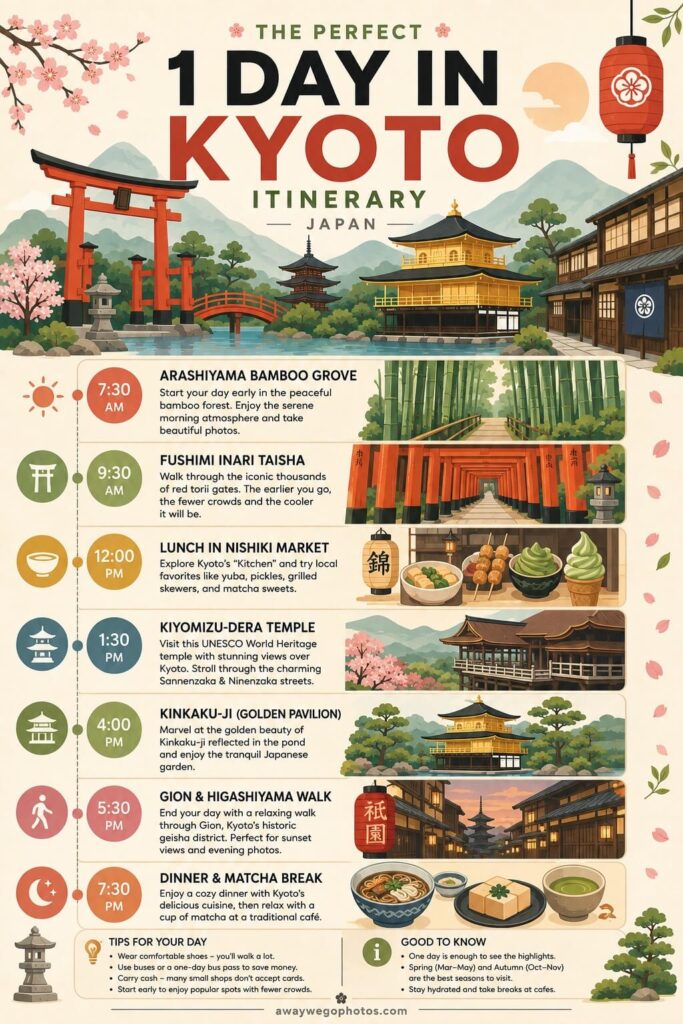
Kyoto is one of Japan’s most rewarding cities for travelers interested in history, culture, architecture, and traditional food. Even with only one day, you can experience several of its most distinctive areas without spending the entire day rushing between distant attractions.
The key is to focus on eastern Kyoto and central Kyoto, where several important sights can be connected on foot. Start early at Kiyomizu-dera, walk through the historic streets of Higashiyama, continue toward Gion and Yasaka Shrine, then move into central Kyoto for lunch and an afternoon around Nishiki Market. Finish your day with a relaxed walk through Gion or along the Kamo River.
This itinerary prioritizes Kyoto’s historic character rather than trying to check every famous attraction off your list. Kyoto’s official tourism guide also recommends early-morning sightseeing in Higashiyama because the area becomes considerably busier later in the day.
Affiliate Disclosure: Some links on this page may be affiliate links. If you make a purchase through one of these links, I may earn a small commission at no extra cost to you.
🗺️ 1-Day Kyoto Itinerary at a Glance
🌅 Morning: Kiyomizu-dera → Sannenzaka & Ninenzaka → Yasaka Pagoda
🏛️ Late Morning: Yasaka Shrine → Maruyama Park → Gion
🍜 Lunch: Nishiki Market and central Kyoto
🎨 Afternoon: Nishiki Market → Shijo/Kawaramachi → traditional streets and shops
🌆 Evening: Gion → Shirakawa → Kamo River
The route keeps you primarily in eastern and central Kyoto, reducing unnecessary travel across the city.
📍 Morning — Kiyomizu-dera & Historic Higashiyama
6:30–8:00 AM — Kiyomizu-dera Temple
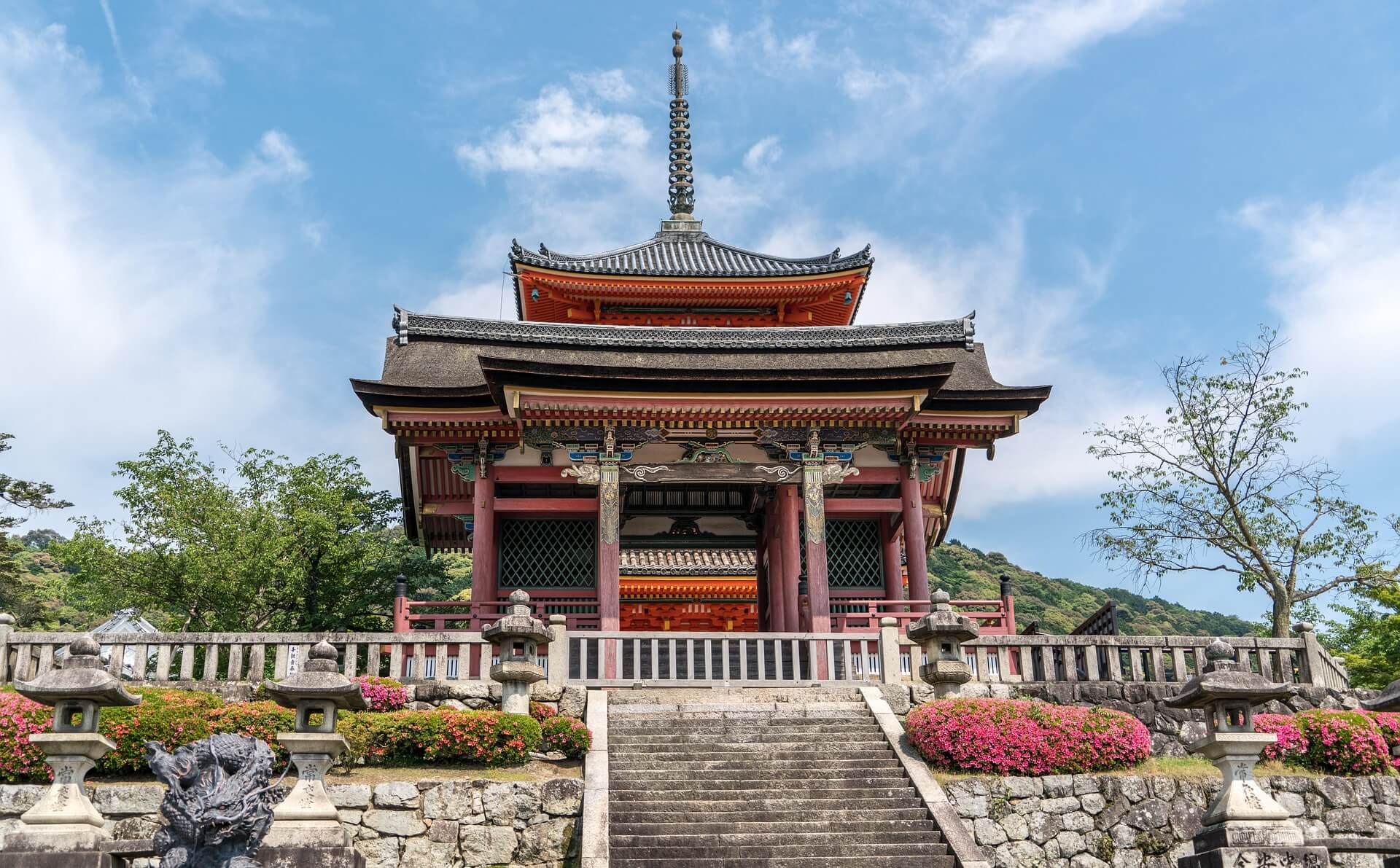
Begin your 1 Day in Kyoto itinerary early at Kiyomizu-dera, one of the city’s most important temples.
Kiyomizu-dera dates back more than 1,250 years and is associated with Kannon, the Buddhist deity of compassion. Its famous Main Hall stands dramatically above the hillside, creating one of Kyoto’s best-known architectural views.
The early start is intentional. Kiyomizu-dera opens at 6:00 AM, while the surrounding Higashiyama area can become heavily crowded later in the morning.
Allow around 60–90 minutes to explore the temple grounds.
⭐ Highlights:
- Kiyomizu-dera Main Hall
- The famous wooden stage
- Temple gates and pagodas
- Views across Kyoto
- Otowa Waterfall
- Traditional temple architecture
Opening hours can vary during special events and seasonal evening viewings, so check the temple’s official information before your visit.
🚶 8:00–9:30 AM — Sannenzaka, Ninenzaka & Higashiyama
After Kiyomizu-dera, walk downhill through the historic streets of Sannenzaka and Ninenzaka.
This is one of the best sections of Kyoto for simply walking and looking at the architecture. Traditional wooden buildings, small shops, tea houses, ceramics stores, and narrow lanes create the atmosphere many visitors associate with old Kyoto.
The nearby Higashiyama district is particularly rich in temples and traditional crafts, including Kyoto pottery.
Take your time here rather than treating it as a checklist of attractions.
You can also stop for a small Japanese breakfast or tea if you skipped breakfast.
📸 Optional Stop — Yasaka Pagoda
The distinctive Yasaka Pagoda, part of Hokan-ji Temple, is one of the most recognizable landmarks in Higashiyama.
Even if you do not spend much time inside the temple complex, the surrounding streets offer excellent opportunities to appreciate Kyoto’s traditional architecture.
🚌 Kyoto Day Tour
Make the most of your day in Kyoto with a guided bus tour visiting Fushimi Inari, the Golden Pavilion, and Arashiyama Bamboo Grove.
Check Availability →🏛️ Late Morning — Yasaka Shrine & Gion
9:30–10:30 AM — Yasaka Shrine
Continue north toward Yasaka Shrine, one of Kyoto’s major Shinto shrines.
The shrine is closely connected with the history of Gion and the famous Gion Matsuri, one of Japan’s best-known traditional festivals.
The shrine grounds are open at all times, making it an easy addition to a walking itinerary. Kyoto’s official tourism guide describes Yasaka Shrine as a historic gateway between the shrine area and Gion.
Spend around 30–45 minutes exploring the grounds.
🌿 10:30–11:15 AM — Maruyama Park
From Yasaka Shrine, walk into Maruyama Park.
This gives you a quieter break after several busy historic streets. In spring, the park is particularly famous for its cherry blossoms, but it is worth visiting in other seasons as well.
You do not need to spend a long time here. Around 30–45 minutes is enough for a relaxed walk.
📍 11:15 AM–12:15 PM — Gion
Continue into Gion, Kyoto’s historic geisha district.
Gion developed around Yasaka Shrine and became associated with tea houses, traditional entertainment, restaurants, and the city’s geiko and maiko culture. Today, its traditional streets remain one of Kyoto’s most atmospheric areas.
Walk through the area respectfully and avoid treating residents or performers as photo opportunities. Kyoto specifically asks visitors not to photograph maiko without permission, and visitors should stay out of the roadway on busy streets such as Hanamikoji.
🍜 Lunch — Nishiki Market & Central Kyoto
12:30–1:45 PM — Nishiki Market
From Gion, continue toward central Kyoto for lunch around Nishiki Market.
Known as the “Kitchen of Kyoto,” Nishiki Market is a long shopping street filled with food shops, specialty stores, and local products. Kyoto’s official tourism guide highlights foods and snacks such as rolled omelettes, hamo tempura, namafu, and takoyaki among the market’s offerings.
Rather than having one large restaurant meal, this is a good opportunity to sample a few Kyoto specialties.
🍜 Food ideas to look for:
- Kyoto-style rolled omelette
- Yuba
- Namafu
- Seasonal vegetables
- Matcha sweets
- Japanese pickles
- Fresh seafood
- Kyoto-style sweets
One important etiquette point: do not walk through Nishiki Market while eating. Eat what you purchase in the designated area or near the shop where it was bought.
Allow around 60–75 minutes for lunch and exploring.
🎨 Afternoon — Central Kyoto & Traditional Shopping Streets
2:00–3:30 PM — Shijo & Kawaramachi
After Nishiki Market, explore the surrounding Shijo-Kawaramachi area.
This gives your one-day itinerary a useful contrast. The morning focused heavily on temples, shrines, and traditional streets; central Kyoto shows how the historic city functions alongside modern shopping, department stores, cafés, restaurants, and everyday urban life.
Kyoto’s central district combines historic attractions such as Nishiki Market and Nijo Castle with the modern commercial areas around Shijo-dori.
You can browse:
- Traditional craft shops
- Japanese stationery stores
- Department stores
- Tea shops
- Small food shops
- Kyoto souvenirs
If shopping is not your priority, simply use this time for a relaxed walk and coffee or tea break.
🏛️ Optional Alternative: Nijo Castle
If you prefer history and architecture over shopping, replace part of the central Kyoto exploration with Nijo Castle.
However, because you only have one day, do not try to combine every major Kyoto attraction. Adding Nijo Castle means shortening your time around Nishiki Market or Gion.
The goal of this itinerary is to experience Kyoto well rather than collect the maximum number of attractions.
🌆 Evening — Gion & the Kamo River
4:00–5:30 PM — Return Toward Gion
After exploring central Kyoto, make your way back toward Gion.
Depending on your energy level, you can walk through quieter streets or use public transportation for part of the journey.
Spend some time around Shirakawa and the traditional streets near Gion. This is an especially pleasant part of the city for a slower evening walk.
You do not need to plan nightlife here. Kyoto’s historic streets, traditional architecture, canals, shrines, and restaurants provide plenty to experience without making bars or clubs part of the itinerary.
📸 5:30–7:00 PM — Kamo River
Finish your day near the Kamo River.
The river provides a natural transition from the historic streets to the modern city center. It is a good place to slow down after a full day of sightseeing.
Depending on the season, sunset can make this a particularly enjoyable time for photography.
For dinner, choose a local Kyoto restaurant or traditional Japanese meal in the Gion, Kawaramachi, or nearby central Kyoto area.
🚇 Getting Around Kyoto
For this itinerary, walking is one of your most useful forms of transportation.
The morning route from Kiyomizu-dera through Higashiyama, Yasaka Shrine, and Gion works especially well on foot. Kyoto’s official tourism guide specifically provides walking routes connecting these areas.
For longer distances, use Kyoto’s buses and subway system.
Best approach for this itinerary:
- 🚶 Walk through Higashiyama and Gion.
- 🚌 Use a city bus when it saves significant walking time.
- 🚇 Use the subway for longer cross-city journeys.
- 🚕 Consider a taxi when you are short on time or traveling with luggage.
- 📱 Check current transportation conditions before leaving each area.
Kyoto offers several transportation passes, including a subway/bus one-day ticket that covers specified subway and bus services. Whether it saves money depends on how much you travel, so compare the current fare structure with your planned journeys.
🌤️ Best Time to Visit Kyoto
🌸 Spring
Spring is one of Kyoto’s most popular seasons, particularly during cherry blossom season. Expect beautiful scenery but also substantial crowds.
☀️ Summer
Summer can be hot and humid. Start sightseeing early, carry water, and schedule breaks during the hottest part of the afternoon.
🍁 Fall
Autumn is another excellent time to visit, especially when Kyoto’s temples and gardens are surrounded by colorful foliage. Kiyomizu-dera notes that its autumn foliage viewing typically occurs around mid-November to early December, although exact timing changes each year.
❄️ Winter
Winter is generally quieter than spring and autumn. Cold temperatures make early starts less comfortable, but the lower crowds can make historic areas especially peaceful.
🚌 Discover Kyoto’s Highlights
Hop on and off throughout the city while discovering temples, shrines, historic neighborhoods, and other must-see sights.
Check the Tour →💰 Estimated Budget for One Day in Kyoto
Your spending will depend heavily on your transportation choices, meals, and paid attractions.
A reasonable day might include:
- 🚇 Transportation: a few hundred to around ¥1,000+ depending on usage
- 🏛️ Attractions: approximately ¥500–¥2,000+ depending on which paid sites you enter
- 🍜 Food: approximately ¥2,000–¥4,000 for casual meals and snacks
- ☕ Drinks/snacks: approximately ¥500–¥1,500
These are broad planning estimates rather than fixed prices. Admission fees, transportation fares, and food prices can change, so check current prices before your trip.
💡 1-Day Kyoto Travel Tips
- Start early. Kiyomizu-dera opens at 6:00 AM, making it ideal for an early visit before Higashiyama becomes busier.
- Wear comfortable shoes. Much of this itinerary involves walking on slopes and traditional stone-paved streets.
- Avoid overplanning. Kyoto has too many attractions to see everything in one day.
- Group sights geographically. Staying around Higashiyama and central Kyoto prevents unnecessary cross-city travel.
- Respect residential areas. Kyoto asks visitors to remember that many tourist areas are also people’s neighborhoods.
- Follow food etiquette at Nishiki Market. Eat purchases in designated areas rather than while walking.
- Check attraction information before visiting. Special events and seasonal opening hours can change.
❓ FAQ: 1 Day in Kyoto
Is 1 day enough for Kyoto?
One day is not enough to see all of Kyoto, but it is enough to experience several major historic and cultural highlights if you plan your route carefully.
What is the best area to visit in Kyoto for one day?
For a first visit, Higashiyama, Gion, and central Kyoto make a strong combination because they offer temples, shrines, historic streets, traditional architecture, food, and shopping without requiring constant long-distance travel.
Should I visit Kiyomizu-dera in the morning?
Yes. An early visit is one of the best ways to experience the temple and surrounding Higashiyama area with fewer crowds. Kiyomizu-dera opens at 6:00 AM.
Can I visit Arashiyama with only one day in Kyoto?
You can, but it is better to choose either Arashiyama or an eastern Kyoto itinerary such as this one rather than trying to combine both. Kyoto’s major sightseeing areas are spread across the city, so attempting both can create a rushed day.
What should I eat during one day in Kyoto?
Look for Kyoto specialties such as yuba, namafu, seasonal vegetables, Japanese sweets, pickles, tofu-based dishes, and foods available around Nishiki Market.
📌 Final Thoughts
A well-planned 1 Day in Kyoto can give you a surprisingly rich introduction to Japan’s former imperial capital. Starting at Kiyomizu-dera lets you experience one of Kyoto’s most important temples before the busiest part of the day. From there, the walk through Higashiyama, Yasaka Shrine, and Gion connects history, architecture, religion, and traditional culture naturally.
After lunch at Nishiki Market, central Kyoto provides a different perspective before you return toward Gion and the Kamo River for a relaxed evening. You will not see everything Kyoto offers, but this route gives you a balanced introduction without spending the entire day traveling between attractions.
🧭 More Kyoto Travel Guides