Planning a trip to Osaka? One of the best ways to experience the city is through its food.
Known for its lively food culture and nickname “Japan’s Kitchen,” Osaka is famous for hearty, affordable dishes, casual restaurants, markets, and street-food specialties. From sizzling okonomiyaki and takoyaki to crispy kushikatsu and comforting udon, there is plenty to discover.
In this guide, you’ll discover 10 must-try foods in Osaka, including what each dish is, why it is worth trying, where to find it, and useful tips for enjoying it during your visit.
Affiliate Disclosure: This post contains affiliate links. I may earn a small commission if you book through them, at no extra cost to you.
🍜 1. Takoyaki
No Osaka food guide would be complete without takoyaki. These small, round snacks are one of the city’s most recognizable foods and are easy to find while exploring areas such as Dotonbori and Namba.
What Is Takoyaki?
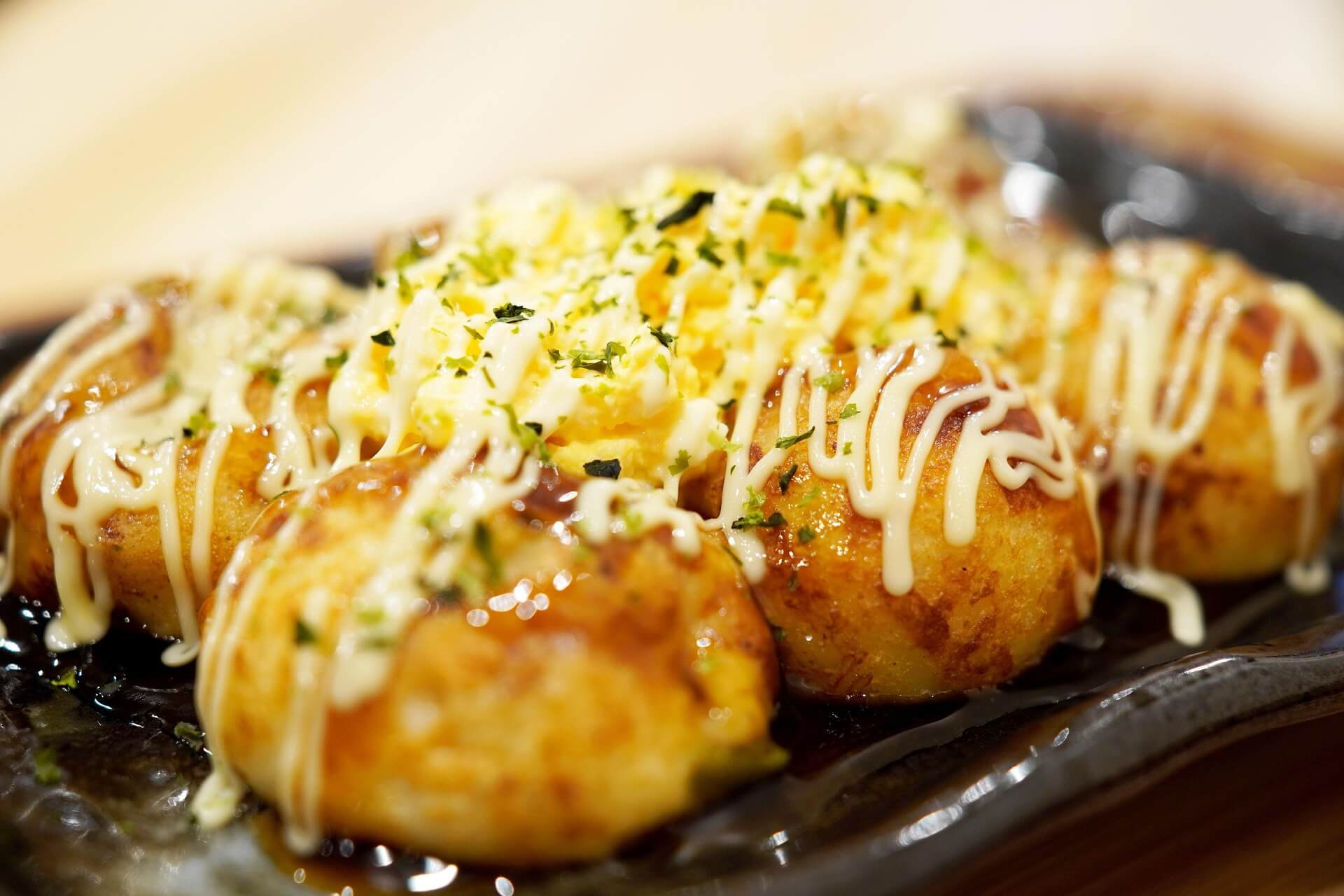
Takoyaki are round balls made from a light batter containing flour, dashi, eggs, and water, with pieces of octopus inside. They are cooked in a special pan with semicircular molds and continually turned until they become round.
They are commonly finished with takoyaki sauce, mayonnaise, aonori seaweed, bonito flakes, green onions, and pickled ginger. Takoyaki began appearing in Osaka in the 1930s and developed into one of the city’s signature foods.
Why Try It?
The contrast between the lightly cooked exterior and soft, hot interior makes takoyaki particularly enjoyable. It is also an inexpensive way to sample one of Osaka’s most famous local specialties.
Where to Try It
Look for dedicated takoyaki shops and street-food stalls around Dotonbori, Namba, Shinsaibashi, and major shopping streets.
💡 Tip: Takoyaki can be extremely hot inside. Break one open and let the steam escape before taking a bite.
🎟️ See Osaka with a Native Guide
Explore the city's must-see attractions on a guided walking tour and gain local insight into Osaka's history, traditions, and unique character.
Explore the Tour →🥞 2. Okonomiyaki
Okonomiyaki is another essential Osaka dish. It is filling, customizable, and closely associated with the city’s casual food culture.
What Is Okonomiyaki?
Okonomiyaki is a savory pancake made primarily with shredded cabbage, flour, egg, and dashi. Pork, seafood, green onions, cheese, and other ingredients can be added depending on the restaurant and your preferences.
The cooked pancake is usually topped with a savory-sweet sauce, mayonnaise, aonori, and bonito flakes. The name roughly conveys the idea of cooking something “as you like it.”
Why Try It?
Osaka-style okonomiyaki is hearty and comforting while still being customizable. Some restaurants cook it directly in front of you on a hotplate, making the meal part of the experience.
Where to Try It
Dotonbori, Namba, Umeda, and Tenma are excellent areas for finding okonomiyaki restaurants.
💡 Tip: Popular restaurants can have long waits, particularly around dinner. Consider going for lunch if you want to avoid the busiest period.
🍢 3. Kushikatsu
If you enjoy crispy fried food, put kushikatsu high on your Osaka food list.
What Is Kushikatsu?
Kushikatsu consists of meat, seafood, and vegetables placed on skewers, coated in batter and breadcrumbs, and deep-fried until crisp.
Common choices include beef, shrimp, chicken, asparagus, onions, and other vegetables. Osaka-style kushikatsu is particularly associated with the Shinsekai district.
Why Try It?
It is casual, flavorful, and easy to customize by ordering several different skewers. The crisp coating contrasts nicely with the tender ingredients inside.
Where to Try It
Head to Shinsekai and Janjan Yokocho, one of Osaka’s best-known areas for kushikatsu.
💡 Tip: At traditional shared-sauce restaurants, follow the famous “no double dipping” rule. Dip your skewer once and avoid putting it back into the communal sauce.
🍲 4. Kitsune Udon
For something lighter and comforting, try kitsune udon, a classic Osaka noodle dish.
What Is Kitsune Udon?
Kitsune udon consists of thick, soft udon noodles served in a flavorful dashi broth and topped with sweetened deep-fried tofu known as aburaage.
The combination of savory broth, chewy noodles, and slightly sweet tofu makes it a simple but satisfying meal.
Why Try It?
Osaka has a strong udon tradition, with local versions known for their delicate dashi-based flavors. JNTO also highlights udon among Osaka’s regional specialties.
Where to Try It
Look for traditional udon restaurants around Namba, Umeda, Tennoji, and Osaka’s railway stations.
💡 Tip: Kitsune udon makes an excellent quick lunch when you want something filling without a heavy meal.
🍣 5. Osaka Sushi
Osaka has its own distinctive sushi tradition, so don’t limit your food adventure to the familiar styles of Tokyo.
What Is Osaka Sushi?
One of the most representative forms is oshizushi, or pressed sushi. Fish and other ingredients are placed with vinegared rice into a mold and pressed into a compact shape.
Unlike hand-formed nigiri, pressed sushi has a distinctive rectangular appearance and reflects Osaka’s long culinary traditions.
Why Try It?
It offers a different perspective on Japanese sushi and gives travelers an opportunity to experience a style closely associated with Osaka.
Where to Try It
Look for traditional sushi restaurants in central Osaka, Namba, Umeda, and historic dining districts.
💡 Tip: If you’re interested in traditional Japanese food, ask for the restaurant’s local or seasonal specialties rather than ordering only familiar sushi.
🥬 6. Negiyaki
Negiyaki is a close relative of okonomiyaki but has its own distinct character.
What Is Negiyaki?
Instead of relying heavily on cabbage, negiyaki features a generous amount of green onions, or negi, mixed into a thinner batter. Ingredients such as beef, seafood, or konjac can also be added.
The result is thinner and more savory than a typical Osaka-style okonomiyaki.
Why Try It?
Negiyaki is a great choice if you want to explore beyond Osaka’s two most famous dishes. The large amount of green onion gives it a fresh, aromatic flavor.
Where to Try It
You can find negiyaki at specialty okonomiyaki restaurants, particularly around Namba, Dotonbori, and other central food districts.
💡 Tip: Try negiyaki alongside okonomiyaki so you can compare the two dishes.
🚌 Explore Kyoto, Osaka & Nara
Discover some of Kansai's most famous sights on a full-day bus tour featuring Nara, Fushimi Inari Taisha, and Arashiyama.
Book the Tour →🥟 7. Butaman
A steaming butaman, or Japanese-style pork bun, makes an excellent snack while exploring Osaka.
What Is Butaman?
Butaman is a steamed bun filled with seasoned ground pork and onions. The soft, fluffy exterior contrasts with the savory filling.
Although steamed meat buns have Chinese influences, they became adapted into Japanese food culture and are now strongly associated with Osaka’s casual food scene.
Why Try It?
Butaman is inexpensive, portable, and satisfying. It is particularly convenient when you want a quick snack between sightseeing stops.
Where to Try It
Look for butaman at department-store food halls, train stations, shopping streets, and specialty shops throughout Osaka.
💡 Tip: Butaman is especially enjoyable on a cooler day when you can eat it fresh and steaming hot.
🍚 8. Udon Suki
For a more substantial meal, try udon suki, a style of hot-pot cooking associated with Osaka.
What Is Udon Suki?
Udon suki combines thick udon noodles with vegetables, seafood, meat, tofu, and other ingredients cooked together in a flavorful broth.
Osaka’s udon tradition places particular emphasis on the relationship between soft noodles and dashi made from ingredients such as kelp and bonito flakes.
Why Try It?
It is a comforting communal meal that lets you experience Osaka’s appreciation for dashi, noodles, and seasonal ingredients.
Where to Try It
Look for traditional udon restaurants and Japanese restaurants specializing in hot-pot dishes.
💡 Tip: Udon suki is best enjoyed as a relaxed meal rather than a quick snack, so allow plenty of time.
🥩 9. Doteyaki
For something especially connected with Osaka’s traditional casual food scene, try doteyaki.
What Is Doteyaki?
Doteyaki is made by simmering beef tendon in a sweet and savory miso-based sauce. The meat becomes tender through slow cooking, producing a rich dish with a deep flavor.
Why Try It?
Doteyaki offers a different side of Osaka cuisine from the city’s better-known flour-based dishes. It is hearty, savory, and particularly associated with the Shinsekai area.
Where to Try It
Try it at traditional izakaya-style restaurants and casual eateries in Shinsekai and around Tennoji.
💡 Tip: Order it as a small dish alongside other Osaka specialties so you can sample several flavors during the same meal.
🍡 10. Iwa Okoshi
Finish your Osaka food adventure with a traditional local sweet such as iwa okoshi.
What Is Iwa Okoshi?
Iwa okoshi is a traditional Japanese confection made from puffed grains bound together with a sweet syrup. It has been produced in Osaka for centuries and is recognized by JNTO as one of the city’s local specialties.
Why Try It?
Unlike the city’s savory specialties, iwa okoshi gives you a taste of Osaka’s traditional confectionery culture.
Where to Try It
Look for iwa okoshi at traditional confectionery shops, department-store food halls, souvenir shops, and major shopping areas.
💡 Tip: Iwa okoshi is easy to pack, making it a practical edible souvenir to take home.
🍽️ Where to Try These Foods in Osaka
You can find Osaka’s famous foods throughout the city, but several neighborhoods are particularly useful for food-focused travelers.
Best Areas for Food
- Dotonbori — One of Osaka’s most famous dining districts, with takoyaki, okonomiyaki, sushi, ramen, and countless casual restaurants.
- Namba — A convenient base for exploring Osaka’s food scene, with restaurants and casual eateries throughout the area.
- Shinsekai — Particularly famous for kushikatsu and traditional casual Osaka dishes.
- Kuromon Market — A historic covered market with roughly 150 shops selling seafood, produce, prepared foods, sushi, fried foods, and other snacks.
- Tenma — A lively neighborhood known for its wide variety of restaurants and local dining.
💡 Tip: Busy restaurants and food markets with plenty of local customers can be a good starting point when deciding where to eat.
💰 How Much Does Food Cost in Osaka?
Food prices vary considerably depending on the restaurant, neighborhood, ingredients, and portion size. As a general travel guide, you can expect approximately:
- Street food / snacks: ¥300–¥1,000
- Casual restaurant: ¥800–¥1,500
- Mid-range restaurant: ¥1,500–¥3,500
- Specialty / fine dining: ¥4,000+
These are general guidelines rather than fixed prices. Popular restaurants, premium ingredients, and tourist-heavy locations can cost more.
🌏 Food Culture in Osaka
Food is an important part of everyday life in Osaka. The city has long been associated with commerce and dining, helping create a culinary culture centered on approachable, flavorful, and relatively casual food.
Osaka is often called “Japan’s Kitchen,” and dishes such as takoyaki, okonomiyaki, kushikatsu, and udon are closely connected with the city’s identity.
The city’s food culture also reflects its history as a major commercial center. Seafood, wheat-based foods, dashi, vegetables, and other ingredients have been incorporated into dishes designed to be flavorful and accessible.
One of the best ways to experience this culture is simply to explore on foot. Dotonbori, Namba, Shinsekai, Tenma, and Kuromon Market each offer different food experiences.
For more information about Osaka’s local cuisine and food destinations, see the official Osaka tourism guide.
📝 Tips for Trying Food in Osaka
Before starting your food adventure, keep these tips in mind:
- 🍴 Try local specialties: Start with foods closely associated with Osaka, especially takoyaki, okonomiyaki, and kushikatsu.
- 🕐 Watch restaurant hours: Smaller restaurants may close between meal periods or have limited opening days.
- 💵 Carry some cash: Cards are widely accepted, but smaller restaurants, stalls, and shops may have different payment options.
- 🌶️ Check ingredients: Ask about unfamiliar ingredients if you have allergies or dietary restrictions.
- 🥢 Follow local dining customs: Pay attention to restaurant-specific rules, such as the traditional no-double-dipping rule for kushikatsu.
- 📍 Explore different neighborhoods: Some memorable food experiences are away from the busiest tourist attractions.
- ⭐ Look for busy local spots: A restaurant with steady local customers can be worth considering.
- 📱 Check popular restaurants ahead of time: Some well-known restaurants can have long lines, especially during peak meal times.
- 🔥 Be careful with hot food: Takoyaki and other freshly cooked dishes can be extremely hot inside.
- 🚶 Follow local rules at markets: Not every market or food area permits visitors to eat while walking, so check the local signs and instructions.
🍴 Final Thoughts
From takoyaki and okonomiyaki to kushikatsu, udon, Osaka sushi, and traditional sweets, Osaka offers an exciting variety of flavors and culinary experiences.
Whether you’re exploring a busy market, stopping at a small neighborhood restaurant, grabbing a quick snack, or sitting down for a traditional meal, trying local food is an essential part of visiting Osaka.
If you only have time to try a few dishes, start with takoyaki, okonomiyaki, and kushikatsu. Together, they provide a great introduction to the bold, casual, and distinctly Osaka-style food culture.
Which of these foods would you try first?