Hiroshima is a city where history, culture, food, and beautiful landscapes come together. A three-day trip gives you enough time to understand Hiroshima’s history, visit the Peace Memorial sites, explore the city’s modern neighborhoods, and spend a full day on nearby Miyajima.
The key is not to rush. Hiroshima’s Peace Memorial area deserves time and reflection, while Miyajima is best experienced as more than a quick photo stop. With three days, you can combine important historical attractions with Japanese gardens, castles, local food, shopping streets, and the scenery of the Seto Inland Sea.
This 3 Days in Hiroshima itinerary is designed around public transportation and walking, with each day focusing on a different part of the city and region.
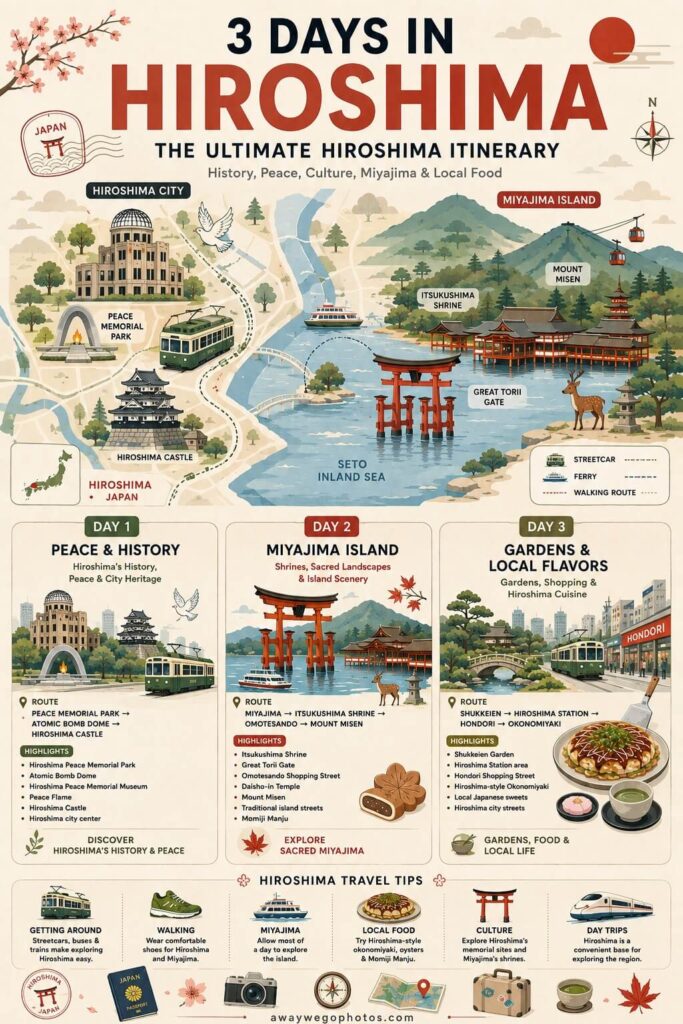
🗺️ 3 Days in Hiroshima at a Glance
📍 Day 1 — Hiroshima History & Peace Memorial
Explore the Atomic Bomb Dome, Peace Memorial Park, Peace Memorial Museum, and surrounding memorial sites.
📍 Day 2 — Miyajima & Itsukushima
Spend a full day exploring Itsukushima Shrine, the Great Torii, historic streets, temples, local food, and Mount Misen.
📍 Day 3 — Hiroshima Culture, Gardens & Local Life
Visit Hiroshima Castle and Shukkeien Garden before exploring central Hiroshima, shopping streets, and local food.
Affiliate Disclosure: This post contains affiliate links. I may earn a small commission if you book through them, at no extra cost to you.
🚶 Explore Hiroshima's History
Discover Hiroshima's important historical landmarks and learn about the city's past on a guided historical walking tour.
Book the Tour →📍 Day 1 — Hiroshima History & Peace Memorial
Your first day should focus on the historical heart of Hiroshima. Most of the major Peace Memorial attractions are concentrated around the same area, making this an easy day to explore on foot.
🌅 Morning — Atomic Bomb Dome & Peace Memorial Park
Start your day at the Atomic Bomb Dome, one of Hiroshima’s most recognizable landmarks.
The building was formerly the Hiroshima Prefectural Industrial Promotion Hall. It was located close to the hypocenter of the atomic bombing on August 6, 1945, and parts of the structure remained standing after the blast.
Today, the preserved building serves as a powerful reminder of the bombing and is part of the Hiroshima Peace Memorial area.
From here, walk through Peace Memorial Park.
The park contains several important memorials, monuments, and sites connected with the history of the bombing. Rather than rushing from one monument to another, allow yourself time to walk through the park.
Important stops include:
- Cenotaph for the A-Bomb Victims
- Children’s Peace Monument
- Peace Flame
- National Peace Memorial Hall for the Atomic Bomb Victims
- Peace Memorial Museum
The National Peace Memorial Hall is only a short walk from the Peace Memorial Museum and provides another place for remembrance and reflection.
🏛️ Hiroshima Peace Memorial Museum
Spend around 1.5–2 hours at the Hiroshima Peace Memorial Museum.
The museum presents personal belongings, photographs, documents, and other materials related to the atomic bombing and its aftermath. Hiroshima City describes the museum’s purpose as contributing to nuclear disarmament and lasting world peace.
This is one of the most important places to visit in Hiroshima, but it can also be emotionally difficult. Give yourself enough time rather than trying to squeeze the museum between several other attractions.
The museum can be particularly busy between approximately 11:00 a.m. and 3:00 p.m., while the city’s visitor guidance recommends checking the latest opening information before visiting.
🍜 Lunch — Hiroshima-Style Okonomiyaki
After the museum, take a break for lunch.
This is the perfect time to try Hiroshima-style okonomiyaki.
Unlike the Osaka style, Hiroshima-style okonomiyaki is typically built in layers and commonly includes cabbage, noodles, batter, and other ingredients. It is one of the foods most closely associated with Hiroshima.
Look for an okonomiyaki restaurant in the central Hiroshima area rather than traveling far away specifically for lunch.
🌿 Afternoon — Continue Exploring the Peace Area
After lunch, return to the Peace Memorial area if you want more time at the museum or memorial sites.
You can also visit the Exhibit Facility for Atomic-Bombed Remnants, which preserves archaeological remains of buildings and displays evidence of the area’s pre- and post-bombing history. Admission is free.
The experience adds another dimension to the Peace Memorial Park because it helps visitors understand that this was once an ordinary residential and commercial neighborhood.
🌆 Evening — Hondori & Central Hiroshima
For the evening, move toward central Hiroshima.
Explore Hondori Shopping Street and the surrounding downtown area. This gives you a chance to see Hiroshima as a modern Japanese city rather than viewing it only through its wartime history.
You can browse shops, find a casual dinner, or simply walk around the central streets.
🚶 Day 1 walking tip: The Peace Memorial attractions are close enough together that walking is generally the easiest way to explore this area.
📍 Day 2 — Miyajima & Itsukushima
Day two takes you outside central Hiroshima to Miyajima, officially known as Itsukushima.
This should be treated as a full-day trip, not a quick half-day excursion.
🚆 Morning — Hiroshima to Miyajima
Start relatively early.
One convenient option is taking a JR train from Hiroshima Station to Miyajimaguchi Station. JR West Miyajima Ferry states that the train journey takes approximately 28 minutes. From Miyajimaguchi Station, the ferry terminal is reached via an underground passage.
The ferry crossing itself takes about 10 minutes.
The current standard adult one-way fare on JR West Miyajima Ferry is ¥180, with a separate ¥100 Miyajima Visitor Tax charged when entering the island.
Check the latest ferry timetable before your trip because schedules can vary between regular and busy days.
⛩️ Itsukushima Shrine & the Great Torii
Your first major stop should be Itsukushima Shrine.
The shrine dates back to 593, while the present shrine complex was built under Taira no Kiyomori in the 12th century.
Its most famous feature is the Great Torii, which appears to float offshore when the surrounding water level is high.
Take your time walking through the shrine’s wooden corridors and viewing the architecture from different angles.
Itsukushima Shrine’s official schedule currently lists opening times that vary by season, so check the official information before your visit.
📸 Walk Through Miyajima’s Historic Streets
After visiting the shrine, explore the streets around Omotesando.
This is a good place to try local snacks and browse traditional shops.
Look for:
- Momiji manju
- Fresh oysters
- Anago dishes
- Local sweets
- Japanese souvenirs
Miyajima’s deer are also commonly encountered around the island, but remember that wildlife should be treated respectfully.
🍜 Lunch — Miyajima Specialties
Miyajima is particularly well known for oysters, anago, and momiji manju.
Rather than having a long sit-down lunch, you can also sample several smaller foods as you explore.
This works especially well if you want to experience several local specialties during the day.
Suggested Internal Link: 10 Must-Try Foods in Hiroshima
🌿 Afternoon — Temple Area & Mount Misen
After lunch, continue farther into Miyajima.
Depending on your interests and fitness level, consider visiting:
- Daisho-in Temple
- Senjokaku
- Five-Story Pagoda
- Momijidani Park
- Mount Misen
Mount Misen is the best choice if you want more nature and panoramic scenery.
However, don’t feel that you have to climb the mountain just to say you did it. If hiking is not your priority, you can spend more time around the temples, historic streets, gardens, and waterfront.
🚢 Optional Great Torii Ferry View
If the ferry timing works, consider taking a JR West Miyajima Ferry service that provides a closer view of the Great Torii from the water.
The operator currently lists special Great Torii services departing Miyajimaguchi between 9:10 a.m. and 4:10 p.m., although travelers should check the current schedule and conditions before visiting.
⛩️ Hiroshima & Miyajima Day Trip
Discover the historic highlights of Hiroshima and Miyajima in one day, including their renowned UNESCO World Heritage Sites and cultural landmarks.
Book Your Tour →🌅 Evening — Return to Hiroshima
Return to Hiroshima in the late afternoon or evening.
Have a relaxed dinner in central Hiroshima rather than adding another major attraction.
After a full day on Miyajima, a slower evening is much more enjoyable than trying to squeeze in another museum.
📍 Day 3 — Hiroshima Culture, Gardens & Local Life
Your third day is deliberately more relaxed.
After two major sightseeing days, use this day to explore Hiroshima’s architecture, gardens, castle, shopping areas, and modern city life.
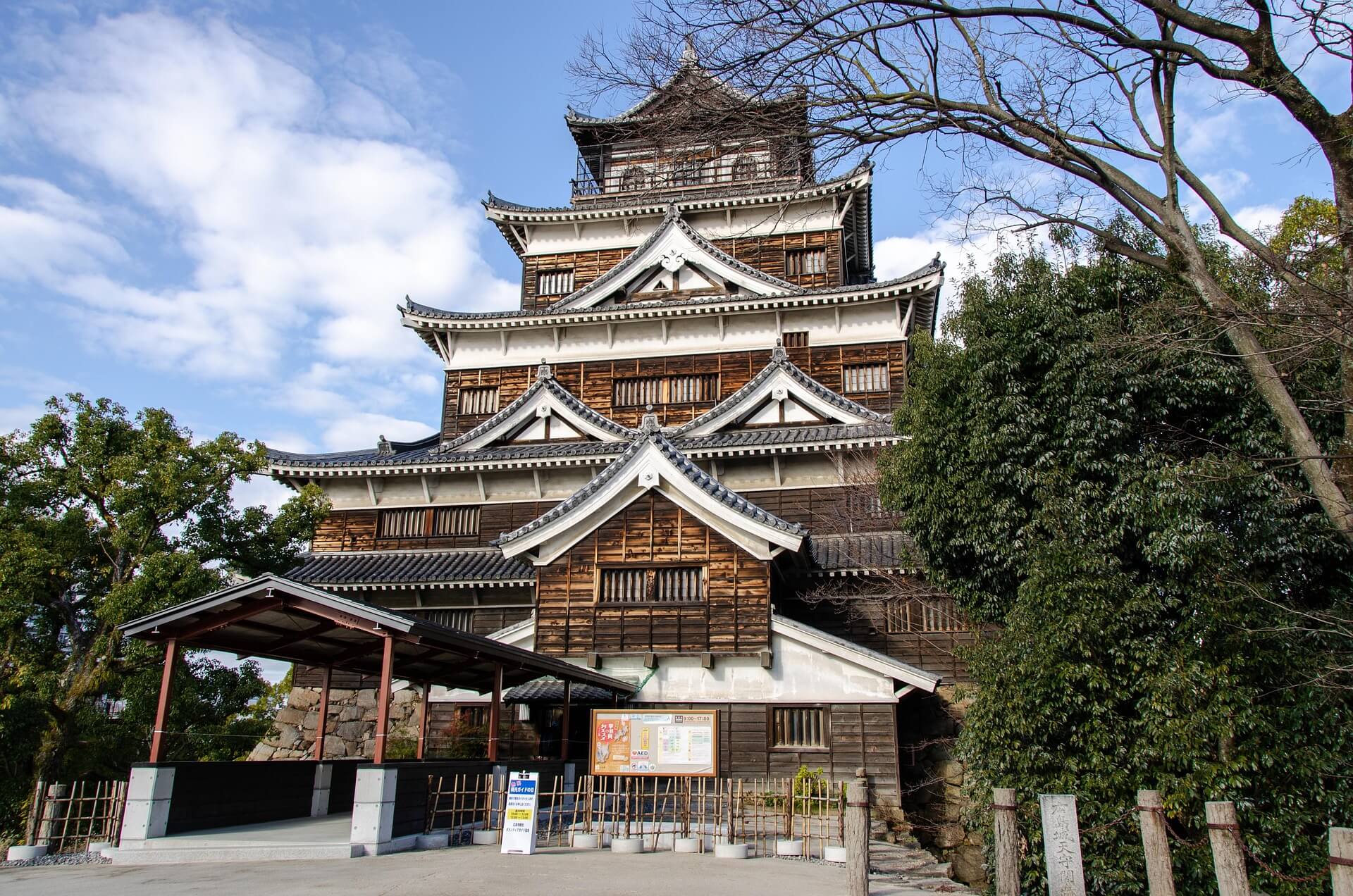
🏯 Morning — Hiroshima Castle
Start at Hiroshima Castle, located north of central Hiroshima.
The castle provides a different perspective on the city and its prewar history.
Take time to explore the castle grounds and surrounding area rather than simply visiting the main building.
The area is also convenient for continuing toward Shukkeien.
🌿 Shukkeien Garden
Next, walk or use public transportation to reach Shukkeien Garden.
This traditional Japanese garden is a peaceful contrast to the busy downtown area.
Its landscape includes ponds, bridges, trees, and carefully designed viewpoints.
Allow roughly 60–90 minutes here, particularly if you enjoy photography or Japanese garden design.
🎨 Optional — Hiroshima Museum of Art
If you enjoy art, consider adding the Hiroshima Museum of Art.
Alternatively, if museums aren’t your priority, skip it and spend more time exploring central Hiroshima.
This flexibility is intentional: three days should give you room to adapt the itinerary to your interests rather than forcing every attraction into your schedule.
🍜 Lunch — Explore Central Hiroshima
Head toward central Hiroshima for lunch.
You can have another Hiroshima-style dish or try something different, such as:
- Fresh seafood
- Anago
- Japanese curry
- Soba or udon
- Local sweets
If you loved okonomiyaki on Day 1, this is a good opportunity to try another restaurant or style rather than eating exactly the same meal again.
🛍️ Afternoon — Hondori, Hatchobori & Local Hiroshima
Spend the afternoon exploring Hiroshima’s central shopping and commercial districts.
Hondori Shopping Street is a useful starting point, with covered pedestrian areas and plenty of shops and restaurants.
From there, explore around Hatchobori and nearby streets.
This part of the itinerary gives you something the Peace Memorial area cannot: a look at ordinary contemporary Hiroshima.
You can browse Japanese stores, stop at a café, pick up souvenirs, or simply walk around without a strict schedule.
🌆 Evening — Relaxed Final Evening
Keep your final evening flexible.
Good options include:
- A final Hiroshima-style okonomiyaki dinner
- A walk through central Hiroshima
- A quiet café
- Returning to the Peace Memorial area
- Shopping for souvenirs
- A riverside walk
There is no need to schedule nightlife to finish your Hiroshima trip.
🚇 Getting Around Hiroshima
Hiroshima is relatively straightforward to explore without a car.
The city’s tram network is particularly useful for visitors. Hiroshima Electric Railway currently operates routes connecting Hiroshima Station with central areas and the Miyajima direction, including a Hiroshima Station–Miyajima-guchi route.
Best options for this itinerary
🚋 Tram: Useful for central Hiroshima and the Peace Memorial area.
🚆 JR Train: Convenient for reaching Miyajimaguchi from Hiroshima Station.
⛴️ Ferry: Required to cross from Miyajimaguchi to Miyajima.
🚶 Walking: Excellent around Peace Memorial Park and central Hiroshima.
🚕 Taxi: Useful when you want to save time or are traveling with luggage, although it isn’t necessary for most of this itinerary.
Hiroshima also has tourist information centers, including one at Hiroshima Station that currently operates from 6:00 a.m. to midnight.
🏨 Where to Stay in Hiroshima
For a three-day Hiroshima itinerary, staying somewhere central makes the trip much easier.
1. Hiroshima Station Area
Best for: First-time visitors, train travelers, day trips
This is especially convenient if you’re arriving by Shinkansen or plan to use JR trains frequently.
2. Downtown Hiroshima
Best for: Food, shopping, central location
Staying around Hatchobori or nearby downtown areas puts you close to restaurants, shopping streets, and tram connections.
3. Peace Memorial Park Area
Best for: History-focused travelers
This is convenient if the Peace Memorial sites are the main reason for your visit and you want to walk to the park.
4. Near Hondori
Best for: Travelers who enjoy walking, shopping, and food
You’ll have easy access to central Hiroshima while remaining within reasonable reach of the major sightseeing areas.
🌤️ Best Time to Visit Hiroshima
🌸 Spring
Spring is one of the most attractive times to visit Hiroshima. Cherry blossoms can add beautiful scenery to parks and gardens, but popular periods can also bring more visitors.
☀️ Summer
Summer can be hot and humid, with the rainy season affecting early summer weather. August is particularly significant because Hiroshima’s annual Peace Memorial Ceremony takes place on August 6. The 2026 ceremony was scheduled for August 6 from 8:00–8:50 a.m. in Peace Memorial Park.
If visiting around August 6, expect special events, larger crowds, and restrictions around the ceremony.
🍁 Fall
Fall brings comfortable sightseeing weather and attractive autumn colors, particularly around gardens and Miyajima.
❄️ Winter
Winter is cooler but can offer a quieter sightseeing experience. Daylight hours are shorter, so plan outdoor attractions accordingly.
💰 Estimated Hiroshima Budget
Your exact budget depends heavily on accommodation and dining style, but Hiroshima can be explored reasonably well without a car.
Typical expenses include:
- 🚋 Local transportation: relatively inexpensive, especially when walking between nearby attractions
- ⛴️ Miyajima ferry: currently ¥180 one way on JR West Miyajima Ferry, plus the ¥100 visitor tax
- ⛩️ Itsukushima Shrine: currently ¥300 for adult admission
- 🍜 Local meals: inexpensive casual meals through to higher-priced restaurants
- 🏛️ Museums and attractions: generally manageable as part of a daily sightseeing budget
Prices and operating conditions can change, so check official websites shortly before your trip.
💡 3-Day Hiroshima Travel Tips
- Start Day 1 early. The Peace Memorial Museum can become busiest around the middle of the day.
- Give the Peace Memorial Museum enough time. Don’t treat it as a quick stop between other attractions.
- Wear comfortable shoes. Both Hiroshima and Miyajima involve plenty of walking.
- Check Miyajima ferry schedules before leaving Hiroshima. Regular and busy-day schedules can differ.
- Check tides if seeing the Great Torii is important to you. The scenery around the shrine changes with the water level.
- Don’t rush Miyajima. Its historic streets, temples, food, and mountain scenery deserve more than a quick photo stop.
- Respect memorial sites. Peace Memorial Park is a place of remembrance as well as a tourist destination.
- Check attraction hours before visiting. Seasonal schedules and special events can affect opening times. The Peace Memorial Museum specifically advises visitors to verify the latest information.
❓ FAQ
Is 3 days enough for Hiroshima?
Yes. Three days is a good amount of time for a first visit. It allows you to explore the Peace Memorial area, spend a full day on Miyajima, and still have time for Hiroshima Castle, Shukkeien Garden, food, shopping, and central Hiroshima.
Can I visit Miyajima in one day?
Yes. Miyajima works very well as a full-day trip from Hiroshima. The journey from Hiroshima Station to Miyajimaguchi takes about 28 minutes by JR, followed by a ferry crossing of around 10 minutes.
What food should I try in Hiroshima?
Start with Hiroshima-style okonomiyaki. On Miyajima, try oysters, anago, and momiji manju.
Is Hiroshima easy to explore without a car?
Yes. Hiroshima has trams, buses, trains, ferries, and walkable central areas. A car isn’t necessary for this three-day itinerary.
Should I stay near Hiroshima Station or downtown?
Both are good choices. Hiroshima Station is especially convenient for trains and Miyajima, while downtown is better if you want restaurants, shopping, and central city life close to your accommodation.
What is Hiroshima famous for besides its history?
Hiroshima is also known for its food, traditional gardens, Hiroshima Castle, contemporary city life, and access to Miyajima and Itsukushima Shrine.
📌 Final Thoughts
Three days gives you enough time to experience the many sides of Hiroshima without turning your trip into a checklist. Begin with the Peace Memorial Park and its important historical sites, dedicate a full day to the temples, scenery, and food of Miyajima, then spend your final day discovering Hiroshima’s castle, gardens, shopping streets, and local food culture.
The most rewarding approach is to leave some space in the schedule. Hiroshima’s significance deserves time and reflection, while Miyajima rewards travelers who slow down and explore beyond its famous torii gate.
With a combination of history, culture, architecture, food, and beautiful island scenery, 3 Days in Hiroshima makes a memorable introduction to this important Japanese city.