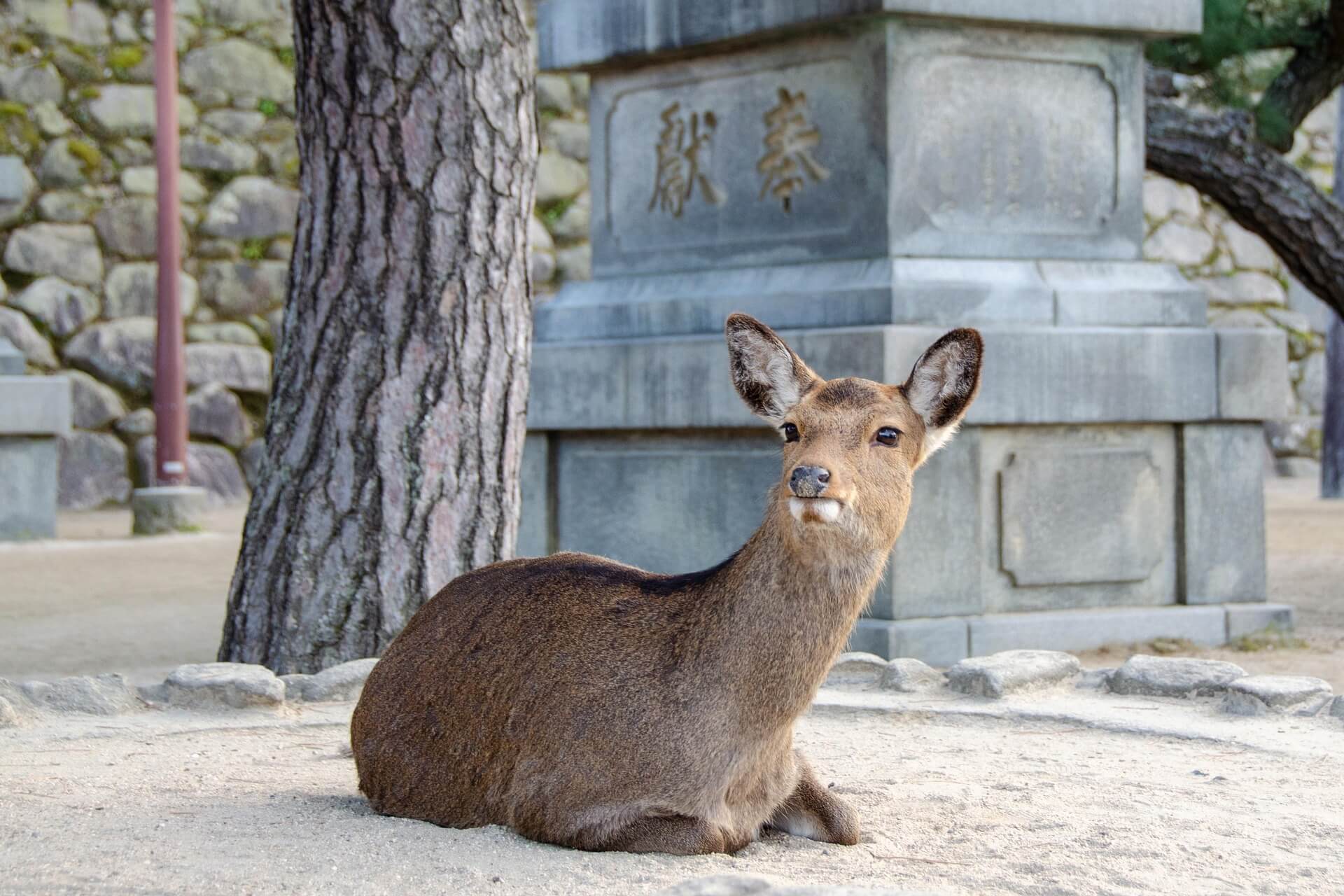
Miyajima is one of Japan’s most memorable places to explore, combining centuries-old shrines, Buddhist temples, forested mountains, traditional streets, and spectacular views over the Seto Inland Sea. Although many travelers visit Miyajima as a day trip from Hiroshima, spending 3 days in Miyajima gives you something a rushed visit cannot: time to experience the island after the busiest hours, explore its quieter streets, and see how religion, nature, food, and traditional craftsmanship have shaped local life.
The island is best known for Itsukushima Shrine and its famous Great Torii Gate, but there is much more to discover. Over three days, you can explore the historic waterfront, visit Daishoin Temple, travel up Mt. Misen, learn about Miyajima’s merchant history, try local specialties such as oysters and anago meshi, and spend time in areas that many short-term visitors miss.
🗺️ 3 Days in Miyajima at a Glance
📍 Day 1 — Itsukushima Shrine & Historic Miyajima
Explore the Great Torii, Itsukushima Shrine, Senjokaku, the Five-storied Pagoda area, Omotesando, and the old streets around the waterfront.
📍 Day 2 — Mt. Misen, Daishoin & Island Nature
Ride the ropeway toward Mt. Misen, explore the summit area, visit Daishoin Temple, and enjoy the island’s forests and panoramic views.
📍 Day 3 — Local History, Crafts & Quieter Miyajima
Discover the History and Folklore Museum, traditional crafts, quieter shrines, backstreets, and more of Miyajima’s local food and culture.
📍 Day 1 — Itsukushima Shrine & Historic Miyajima
🌅 Morning — Miyajima Pier to Itsukushima Shrine
Start your first morning early. One of the biggest advantages of staying on Miyajima is being able to explore before the island becomes busy with day-trippers.
After arriving at Miyajima Pier, walk toward the historic center. The main sightseeing area is compact, so much of today’s itinerary can be done on foot.
Your first major stop should be Itsukushima Shrine, the island’s most famous landmark.
Miyajima has been associated with nature worship for centuries, and the shrine is traditionally said to have been founded in 593. Its present architectural character is strongly associated with the Taira clan and Taira no Kiyomori, who supported the shrine during the 12th century. The shrine’s buildings appear to float above the water, reflecting Miyajima’s historical status as a sacred island.
The shrine became part of the UNESCO World Heritage Site in 1996. The World Heritage property includes the shrine buildings as well as important structures such as the Great Torii, Five-storied Pagoda, and Tahoto Pagoda.
Allow around 60–90 minutes to explore the shrine.
Look for:
- The vermilion corridors
- The main shrine buildings
- The Noh stage
- The open wooden platforms above the water
- Views toward the Great Torii
- Traditional architectural details
🌊 Discover Hiroshima & Miyajima
See the historic sights of Hiroshima and Miyajima with a knowledgeable guide while enjoying the more personal experience of a small-group day tour.
Explore the Tour →⛩️ The Great Torii Gate
After exploring the shrine, spend some time around the Great Torii Gate.
The current wooden torii is about 16.8 meters high and is one of Miyajima’s most recognizable structures. Its position offshore was historically connected to the island’s sacred status, allowing visitors to approach the shrine without treating the island itself as an ordinary place.
The appearance of the torii changes dramatically with the tide. At higher water levels it appears to stand in the sea, while at low tide visitors may be able to walk toward it.
💡 Tip: Check the tide times for your visit if seeing the Great Torii from a particular perspective is important to you.
🏛️ Senjokaku & the Five-storied Pagoda
Continue uphill toward Senjokaku, also known as the Hall of One Thousand Tatami Mats, and the nearby Five-storied Pagoda.
Senjokaku was commissioned by Toyotomi Hideyoshi in the late 16th century but was left unfinished after his death. The huge wooden structure is noticeably different from the painted buildings of Itsukushima Shrine and offers an interesting glimpse into the architectural ambitions of the Momoyama period.
The Five-storied Pagoda dates to 1407 and combines Japanese and Chinese architectural influences.
Important current note: the Miyajima Tourist Association currently states that the Five-storied Pagoda is undergoing construction and cannot be viewed normally, with work expected through December 2026, although the timetable may change. You can still see the structure from outside.
Allow roughly 45–60 minutes for this area.
🍜 Day 1 Food — Oysters, Anago Meshi & Momiji Manju
For lunch, explore the streets around Omotesando Shopping Street.
Miyajima’s food culture is closely tied to the surrounding Seto Inland Sea. Two of the island’s best-known savory specialties are oysters and anago meshi, grilled conger eel served over rice. Oyster farming in the Hiroshima area dates back centuries, while anago meshi became popular during the Meiji period.
Try one of these for lunch:
- 🦪 Grilled or fried Miyajima oysters
- 🍱 Anago meshi
- 🍡 Freshly made local snacks
Save room for momiji manju, the maple-leaf-shaped cake that has become one of Miyajima’s signature sweets. It was first created in 1906 and is now available with fillings ranging from traditional red bean to matcha, custard, chocolate, and cheese.
🛍️ Afternoon — Omotesando & Miyajima’s Historic Streets
Spend the afternoon exploring rather than rushing from attraction to attraction.
Omotesando Shopping Street is the busiest commercial area on the island, with restaurants, souvenir shops, and stores selling traditional crafts. The street developed from land reclaimed near the end of the Edo period and became an important commercial street during the 20th century.
Look for traditional Miyajima products such as:
- Wooden rice scoops
- Miyajima woodcraft
- Handcrafted souvenirs
- Momiji manju
- Local food products
Then wander away from the main shopping street and explore the backstreets. Miyajima’s older lanes provide a different atmosphere, with traditional homes, small temples, stone paths, and glimpses of everyday island life.
🌆 Evening — The Island After the Day-Trippers
If you are staying overnight, keep your evening relaxed.
Walk back toward the waterfront and enjoy the changing atmosphere after many visitors have returned to Hiroshima. You don’t need a packed evening schedule; Miyajima is particularly enjoyable when you slow down and explore the quieter streets.
Have dinner featuring local seafood or anago, then take an evening stroll near the shrine area.
📍 Day 2 — Mt. Misen, Daishoin & Island Nature
Day 2 takes you away from the busiest historic core and into Miyajima’s mountainous landscape.
🌿 Morning — Momijidani Park
Begin at Momijidani Park, located at the base of Mt. Misen.
The park is especially famous in autumn when Japanese maple trees turn vivid shades of red, but it is pleasant throughout the year. The park sits within the forested landscape that makes Miyajima more than simply a shrine destination.
From here, make your way toward the Miyajima Ropeway.
🚡 Ride the Miyajima Ropeway
The ropeway connects Momijidani with the upper mountain and provides views over the Seto Inland Sea and Miyajima’s forest.
The current ropeway operates from approximately 9:00 AM to 4:00 PM, with the final return departure at 4:30 PM. The journey uses two ropeway sections, with the ride itself taking about 10 minutes on the first section and about 4 minutes on the second.
A round-trip adult fare is currently ¥2,000, although fares and operating information can change. The service can also be suspended because of strong winds, thunderstorms, or other conditions.
💡 Important: Leave enough time for the mountain. Don’t schedule the ropeway near its closing time if you intend to walk around the summit.
🥾 Mt. Misen Summit
From Shishiiwa Station, continue toward the summit of Mt. Misen.
The standard summit walking route takes about an hour and includes stone steps, uneven surfaces, and steep sections. The official ropeway guidance recommends suitable clothing and sneakers because conditions can change quickly.
At the top, you’ll find panoramic views across the Seto Inland Sea along with unusual rock formations and historic religious sites.
Misen is also important to Miyajima’s Buddhist history. In 806, the monk Kukai (Kobo Daishi) is traditionally said to have established a Buddhist practice site on the mountain after recognizing the island as a sacred place. The spiritual connection between the mountain, forest, and temples remains an important part of Miyajima’s identity.
Allow 3–4 hours for the ropeway, summit area, walking, and returning toward town.
🍜 Day 2 Food — A Relaxed Island Lunch
After returning from Mt. Misen, have a later lunch around the main town area.
This is a good day to try something different from Day 1. If you had anago meshi yesterday, consider oysters, udon, seafood, or another local specialty.
Miyajima’s compact center makes it easy to stop for a snack without losing much sightseeing time.
🏯 Experience Two UNESCO Sites
Make the most of your Hiroshima visit with a small-group day tour that connects the city's historic landmarks with beautiful Miyajima.
Explore the Experience →🏛️ Afternoon — Daishoin Temple
After lunch, walk toward Daishoin Temple.
Daishoin is one of the most important Shingon Buddhist temples in western Japan. Its history is closely connected with the Imperial family and with Miyajima’s long relationship between Buddhism and Shinto.
The temple is particularly worthwhile because it feels different from Itsukushima Shrine. Instead of the dramatic waterfront architecture, you’ll find temple halls, Buddhist statues, religious artwork, stone steps, and a quieter mountain setting.
Take time to explore the temple grounds rather than treating it as a quick photo stop.
🌿 Walk Back Through the Historic District
From Daishoin, gradually make your way back toward the center.
This is a good opportunity to explore some of Miyajima’s smaller streets and stop for tea or a freshly baked momiji manju.
Miyajima’s backstreets have developed gradually since the Kamakura period, and the official tourism organization specifically recommends exploring these quieter areas to see traditional architecture, historic monuments, legends, and aspects of island life that are easy to miss on a standard sightseeing route.
🌅 Evening — Waterfront Views
Finish Day 2 near the waterfront.
The combination of mountains, sea, shrine architecture, and the Great Torii makes this one of the best times to simply enjoy the scenery without adding another major attraction.
📍 Day 3 — Local History, Traditional Crafts & Quieter Miyajima
Your final day is intentionally slower.
Rather than repeating the major attractions, use it to understand how people actually lived and worked on Miyajima.
🏛️ Morning — Miyajima History and Folklore Museum
Start at the Miyajima History and Folklore Museum, housed in a preserved residence that belonged to the prosperous Egami merchant family.
The museum preserves the family’s roughly 170-year-old main building and storehouses and displays objects connected with everyday life, trade, religion, festivals, and traditional crafts.
This is particularly useful after spending the first two days seeing Miyajima’s major religious monuments. Instead of focusing on famous shrines, the museum shows another side of the island: its merchants, homes, tools, crafts, and community traditions.
The museum currently lists admission at ¥300 for adults, with reduced rates for younger visitors. Its listed hours are 8:30 AM–5:00 PM, with last admission at 4:30 PM, and it is generally closed Mondays except when Monday is a national holiday. Always verify current information before visiting.
Allow 60–90 minutes.
🎨 Miyajima Traditional Crafts
Continue with Miyajima’s traditional crafts.
The Miyajima Traditional Crafts Center introduces the island’s woodworking traditions and offers hands-on experiences. Visitors can see traditional crafts and, depending on the current program, try making a momiji manju or a wooden rice scoop.
Miyajima’s famous rice scoops have an interesting cultural history. A Buddhist priest named Seishin is credited with developing the craft and helping spread it among island residents as an important local industry.
If you’re traveling with children or simply enjoy hands-on experiences, this can be one of the most memorable stops of the three-day itinerary.
🍜 Day 3 Food — Take Your Time Around Omotesando
Return toward Omotesando for lunch and spend some time trying foods you haven’t sampled yet.
A good approach is to treat the street as a tasting route rather than ordering one large meal.
Look for:
- 🦪 Miyajima oysters
- 🍱 Anago
- 🍁 Fresh momiji manju
- 🍢 Local snacks
- 🍵 Japanese tea and sweets
The official tourism site highlights Omotesando as the island’s main food and souvenir area, with numerous momiji manju shops and local food specialties.
⛩️ Afternoon — Kiyomori Shrine & Omoto Area
Use your final afternoon to explore some of Miyajima’s quieter religious sites.
Kiyomori Shrine is dedicated to Taira no Kiyomori and was established in 1954 to honor his legacy and commemorate the influence he had on Miyajima’s development.
You can also continue toward Omoto Shrine, which has a particularly interesting connection to Miyajima’s ancient religious landscape. The shrine is associated with an older local deity tradition and is located away from the busiest central sightseeing route.
This area works well for travelers who want a quieter side of Miyajima after seeing the island’s major attractions.
🚶 Late Afternoon — One Last Walk Through Miyajima
Leave your final afternoon flexible.
You could:
- Walk the quieter residential streets
- Return to a favorite viewpoint
- Browse for traditional souvenirs
- Stop for another momiji manju
- Relax near the waterfront
- Revisit the Great Torii if the tide and light are favorable
Three days gives you an important advantage: you don’t have to treat every hour as a checklist.
Miyajima rewards slow exploration, particularly once you move beyond the main tourist streets.
🚇 Getting Around Miyajima
The easiest way to explore Miyajima is on foot.
The main historic area around the ferry terminal, Itsukushima Shrine, Omotesando, Senjokaku, and Daishoin can be explored by walking.
For Mt. Misen, use the Miyajima Ropeway rather than attempting to walk up and down the mountain unless you specifically want a hiking day.
The ropeway currently operates from 9:00 AM to 4:00 PM, with the final return departure at 4:30 PM. Free shuttle buses also operate between the Momijidani area and the ropeway station at scheduled intervals.
🚢 Getting to Miyajima
From Hiroshima, take the JR Sanyo Line to Miyajimaguchi, then take a ferry to Miyajima. The JR route from Hiroshima takes roughly 27 minutes, while the ferry crossing is approximately 10 minutes.
The island itself is not a place where you’ll need a car. In fact, the official tourism site recommends leaving cars at Miyajimaguchi because parking on Miyajima is limited and driving around the island is inconvenient.
🏨 Where to Stay in Miyajima
For this three-day itinerary, staying on Miyajima itself is the most convenient option if your budget allows it. It lets you experience the island early in the morning and after many day visitors leave.
⭐ Around Miyajima Pier
Best for: Convenience and first-time visitors
You’ll be close to the ferry terminal, restaurants, shops, and the beginning of the main sightseeing area.
⛩️ Around Itsukushima Shrine
Best for: History, atmosphere, and scenic surroundings
This puts you close to the island’s most important landmarks and makes early-morning sightseeing particularly convenient.
🌿 Around the Daishoin / Mountain Side
Best for: Travelers seeking a quieter atmosphere
This area provides easier access to Daishoin, hiking routes, and the less commercial side of the island.
🏙️ Miyajimaguchi
Best for: Travelers combining Miyajima with Hiroshima
Staying across the water can be more practical if you are also spending substantial time in Hiroshima. Miyajimaguchi has direct rail and ferry connections to the island.
🌤️ Best Time to Visit Miyajima
🌸 Spring
Spring brings comfortable temperatures and seasonal flowers, with cherry blossoms making some parts of the island particularly attractive. It can also be a busy period, especially around weekends and holidays.
☀️ Summer
Summer offers long daylight hours and lush greenery, but temperatures and humidity can be high. Hiking Mt. Misen can be more demanding in hot weather.
🍁 Fall
Fall is one of the best seasons for Miyajima’s scenery. Momijidani Park is particularly well known for its Japanese maple foliage.
❄️ Winter
Winter is quieter and can be a good choice for travelers who prefer fewer crowds. It is also a strong season for enjoying Hiroshima-area oysters, which are one of Miyajima’s signature foods.
Best overall: Spring and fall offer a particularly good combination of comfortable sightseeing weather and scenery, while winter is appealing for quieter travel and seasonal food.
💰 Estimated Budget for 3 Days in Miyajima
Your spending will depend heavily on accommodation and how many paid attractions you visit.
Approximate planning ranges:
| Expense | Typical Planning Range |
|---|---|
| Ferry | Around ¥180 each way for adults |
| Mt. Misen Ropeway | ¥2,000 round trip for adults |
| Attractions & museums | Generally a few hundred yen each |
| Casual meal | Roughly ¥1,000–¥2,500 |
| Higher-end meal | ¥3,000+ |
| Snacks | A few hundred to ¥1,000+ |
| Accommodation | Highly variable |
The Miyajima tourism authority currently lists the standard ferry fare at around ¥180 each way for adults, while the ropeway lists ¥2,000 round trip for adults. Prices can change, so check official sources before your trip.
A comfortable three-day trip can therefore be done without spending heavily on attractions, but accommodation is likely to be the largest part of your budget if you stay overnight on the island.
💡 3-Day Miyajima Travel Tips
1. Stay overnight if possible
A day trip can cover the major highlights, but staying on the island gives you time to experience quieter mornings and evenings.
2. Start early
Itsukushima Shrine and the main streets become much busier as day-trippers arrive.
3. Check the tide
The Great Torii looks completely different depending on the tide. Check tide predictions before planning your photography.
4. Plan Mt. Misen around the ropeway
Don’t leave the mountain for late afternoon. The ropeway has limited operating hours and can be suspended during bad weather.
5. Wear comfortable shoes
Even outside the mountain trails, you’ll do plenty of walking. Mt. Misen adds steep paths and stone steps.
6. Try more than one local specialty
Don’t leave Miyajima without trying at least one oyster dish, anago meshi, and momiji manju.
7. Explore beyond Omotesando
The busiest shopping street is convenient, but Miyajima’s backstreets offer a better sense of the island’s traditional character.
8. Respect the religious setting
Miyajima is not simply a sightseeing attraction. Shrines and temples remain active religious places, so observe signs, photography restrictions, and appropriate behavior.
❓ FAQ: 3 Days in Miyajima
Is 3 days in Miyajima too long?
For travelers interested only in the Great Torii and Itsukushima Shrine, one day may be enough. However, three days works well if you want to explore Mt. Misen, Daishoin Temple, museums, traditional crafts, local food, and quieter parts of the island without rushing.
Can you visit Miyajima without a car?
Yes. Walking is the main way to explore the historic area, while the ferry, ropeway, and limited local transportation cover the longer parts of the trip. A car is unnecessary for this itinerary.
Is Mt. Misen worth visiting?
Yes, particularly if you enjoy scenery, nature, hiking, and Buddhist history. The mountain offers panoramic Seto Inland Sea views and historic religious sites, while the ropeway makes the upper mountain much easier to access.
Should I stay on Miyajima or in Hiroshima?
Staying on Miyajima is best if you want a quieter experience and early or late access to the island’s attractions. Hiroshima is more convenient if you are combining Miyajima with several days of sightseeing in the city.
What food is Miyajima famous for?
Miyajima is particularly known for oysters, anago meshi, and momiji manju. The island also has numerous other seafood dishes and traditional snacks.
Can I walk to the Great Torii at low tide?
Depending on the tide and conditions, visitors can sometimes walk out toward the Great Torii when the water has receded. Check current tide information rather than assuming the gate will be accessible on foot.
📌 Final Thoughts
Three days in Miyajima gives you enough time to see the island’s famous landmarks while also experiencing the history and culture behind them. Start with Itsukushima Shrine and the Great Torii, devote a full day to Mt. Misen and Daishoin Temple, then slow down on your final day with museums, traditional crafts, quieter shrines, and local streets.
The biggest advantage of a longer stay is that Miyajima becomes more than a quick photo stop. You have time to appreciate its relationship between Shinto, Buddhism, nature, architecture, food, and traditional island life. For a first visit to the area, this three-day itinerary provides a balanced way to explore Miyajima without constantly rushing from one attraction to the next.