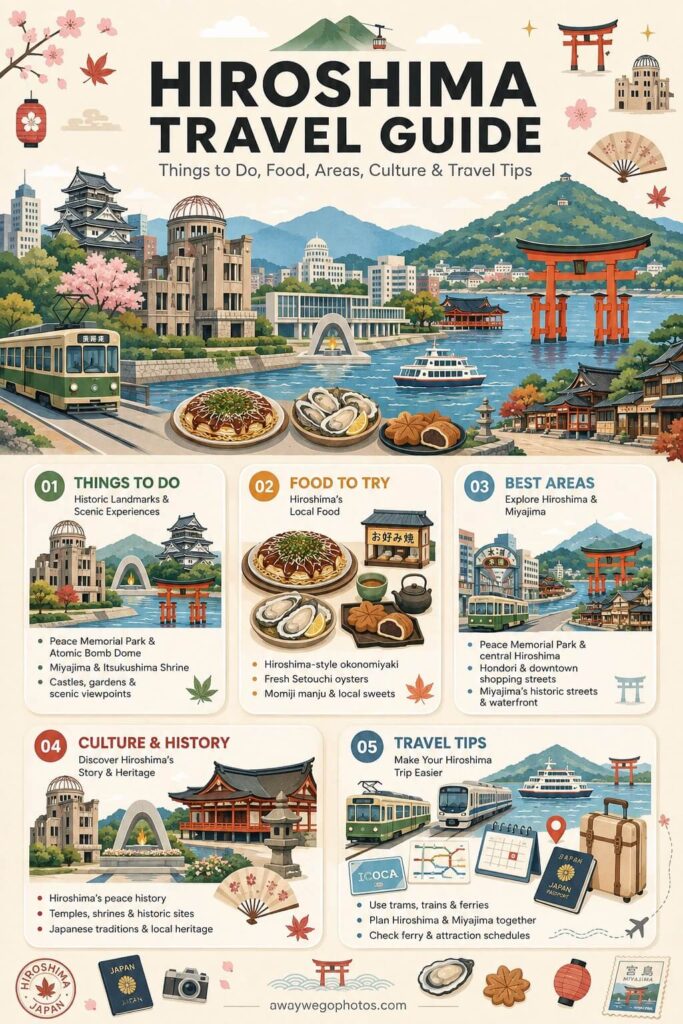
Planning a trip to Hiroshima, Japan? This complete Hiroshima Travel Guide covers everything you need to plan your visit, from historic landmarks and cultural attractions to local food, neighborhoods, transportation, budgets, and day trips.
Hiroshima is a city with a remarkable story. Known around the world because of the atomic bombing of August 6, 1945, Hiroshima today is also a modern, welcoming city focused strongly on peace and remembrance.
Beyond the Peace Memorial Park, you’ll find beautiful gardens, historic temples, traditional neighborhoods, local markets, excellent food, and easy access to Miyajima, one of Japan’s most spectacular island destinations.
Whether you’re visiting Hiroshima for one day, spending three days exploring the region, traveling solo, as a couple, or with family, Hiroshima offers a combination of history, culture, nature, and Japanese food that makes it well worth adding to your Japan itinerary.
Affiliate Disclosure: This post contains affiliate links. I may earn a small commission if you book through them, at no extra cost to you.
📌 Hiroshima Travel Guide at a Glance
- 🌍 Country: Japan
- 🗣️ Language: Japanese
- 💴 Currency: Japanese Yen (JPY / ¥)
- 🕐 Time Zone: Japan Standard Time (JST, UTC+9)
- 🌤️ Best Time to Visit: March–May and October–November
- 🚇 Getting Around: Streetcars, buses, trains, walking, and ferries
- 💵 Average Daily Budget: Approximately ¥8,000–¥25,000+ depending on travel style
- 📅 Recommended Stay: 2–3 days
Hiroshima is relatively easy to explore without a car. Many central attractions are connected by the Hiroshima Electric Railway streetcar network, buses, and walking routes.
🏯 Discover Hiroshima's Past
Walk through Hiroshima and uncover the stories behind its historic sites, landmarks, and cultural heritage with a knowledgeable local guide.
View the Tour →🗺️ Best Things to Do in Hiroshima
Hiroshima has a wide variety of attractions, from important historical sites to gardens, castles, museums, shopping streets, and nearby islands.
🕊️ 1. Hiroshima Peace Memorial Park
Hiroshima Peace Memorial Park is one of the most important places to visit in the city.
Located in central Hiroshima, the park commemorates the victims of the atomic bombing and promotes the message of peace. It includes several significant monuments and memorials, including the Cenotaph for the A-Bomb Victims, Children’s Peace Monument, and Peace Flame.
Allow several hours to explore the park properly, especially if you plan to visit the nearby museum.
The atmosphere is quiet and reflective, making this an attraction where it is worth slowing down rather than rushing from one monument to another.
🏛️ 2. Hiroshima Peace Memorial Museum
The Hiroshima Peace Memorial Museum documents the atomic bombing and its impact on Hiroshima’s residents.
The exhibits include photographs, personal belongings, documents, and information about Hiroshima before and after the bombing.
It can be an emotional experience, so give yourself enough time to explore the museum without rushing.
The museum currently recommends purchasing tickets online in advance because visitor numbers can be high. Official information also notes that the busiest period is generally around 11 a.m. to 3 p.m.
Hiroshima Peace Memorial Museum official website
🏯 3. Hiroshima Castle
Hiroshima Castle is a reconstructed Japanese castle surrounded by trees and gardens.
Originally built in the late 16th century, the castle played an important role in the development of Hiroshima. The original structure was destroyed during the atomic bombing, and the present castle is a reconstruction.
Visit the castle grounds for a quieter experience away from the busiest parts of central Hiroshima.
🌳 4. Shukkeien Garden
Shukkeien is a beautiful traditional Japanese landscape garden near Hiroshima Station.
The garden features ponds, bridges, miniature landscapes, walking paths, and carefully arranged vegetation.
It is an excellent place to experience a more peaceful side of Hiroshima and is particularly attractive during spring and autumn.
⛩️ 5. Miyajima & Itsukushima Shrine
One of the biggest highlights of visiting Hiroshima is taking a day trip to Miyajima.
The island is famous for Itsukushima Shrine and its large vermilion torii gate, which appears to stand in the sea at high tide.
Itsukushima Shrine has been associated with worship on the island for centuries, and the present shrine complex reflects architectural traditions dating back to the Heian period. The shrine and surrounding area are part of a UNESCO World Heritage site.
Miyajima is more than just the famous torii gate. You can also explore traditional streets, temples, parks, shops, local food, and Mount Misen.
🏛️ Explore Hiroshima’s History & Culture
One of the most meaningful ways to experience Hiroshima is to look beyond its most famous landmarks.
🕊️ Historic Sites
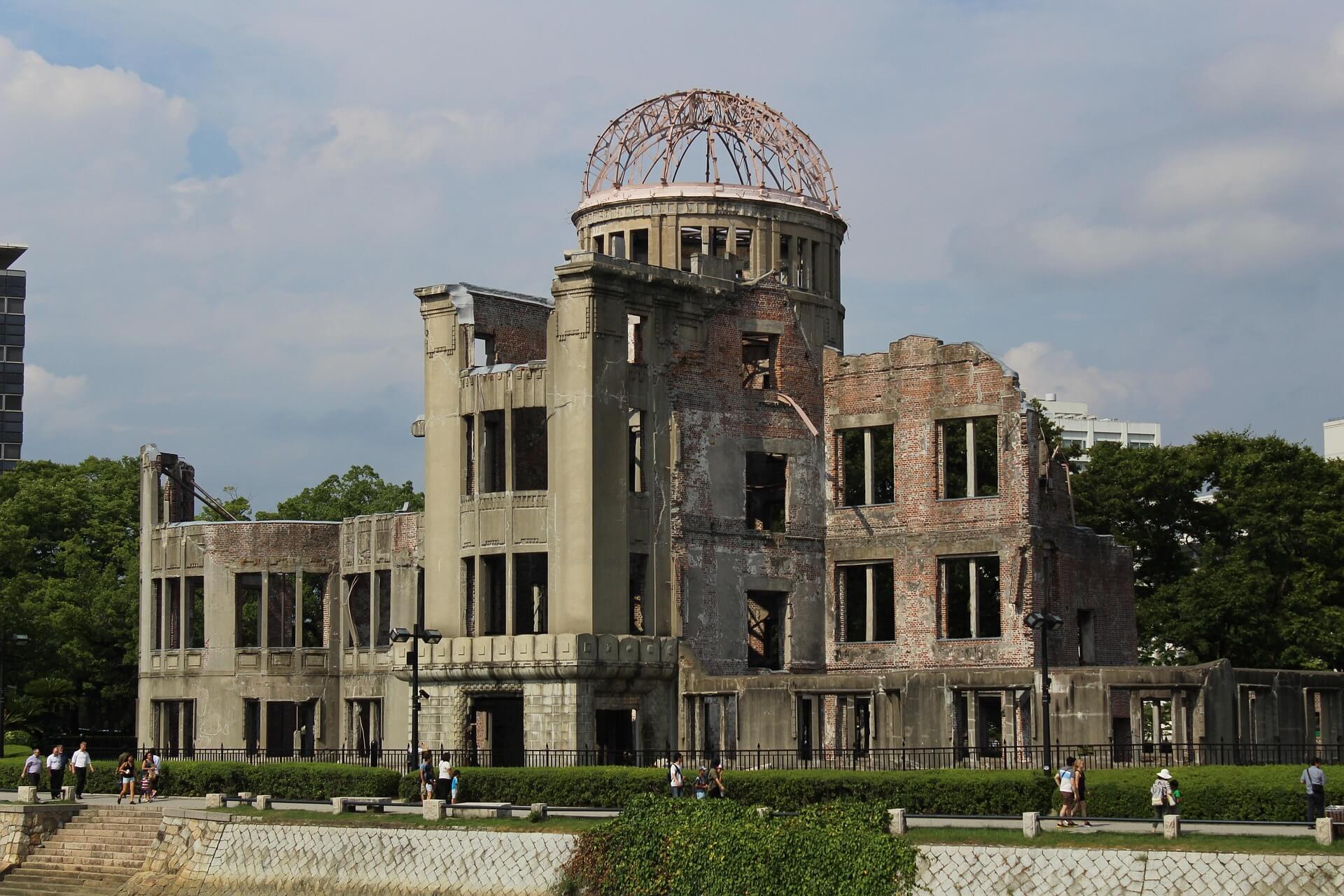
Hiroshima’s history can be explored through Peace Memorial Park, the Atomic Bomb Dome, Hiroshima Castle, and the city’s surviving and reconstructed historic buildings.
The Atomic Bomb Dome is particularly significant. The building survived the atomic bombing despite being close to the explosion’s hypocenter and is now one of Hiroshima’s best-known symbols of peace.
🏛️ Museums
The Hiroshima Peace Memorial Museum is the city’s most important historical museum for many visitors.
Other museums and cultural attractions can help you understand Hiroshima’s art, history, transportation, and regional culture.
🏘️ Historic Neighborhoods
Central Hiroshima has a mixture of modern streets and older neighborhoods.
Miyajima provides another perspective, with traditional wooden buildings, narrow streets, temples, shrines, and long-established shops.
🎎 Cultural Experiences
Miyajima is a particularly good place to experience traditional Japanese architecture and religious sites.
You can also visit gardens, temples, shrines, markets, and local shopping streets throughout Hiroshima.
🍵 Local Traditions
Hiroshima’s food culture is an important part of the city’s identity. Hiroshima-style okonomiyaki, oysters, and momiji manju are among the foods most associated with the region.
Don’t limit your visit to the most famous attractions. Spend time walking through local streets, visiting gardens, exploring markets, and trying regional food.
🌊 Discover Hiroshima & Miyajima
See some of the region's most significant sights on a full-day guided experience covering Hiroshima and the scenic island of Miyajima.
View the Tour →🍜 What to Eat in Hiroshima
Food is an important part of experiencing Hiroshima.
Be sure to try some of the city’s local specialties:
- 🥞 Hiroshima-style Okonomiyaki — A layered savory pancake-style dish traditionally prepared with ingredients such as cabbage, noodles, batter, and meat or seafood.
- 🦪 Hiroshima Oysters — Hiroshima is famous for oysters, which can be served grilled, fried, raw, or prepared in other local styles.
- 🍁 Momiji Manju — A small maple-leaf-shaped cake traditionally filled with sweet red bean paste, with many modern variations available.
- 🍜 Hiroshima Tsukemen — Cold noodles served with a spicy dipping sauce, often accompanied by vegetables and other toppings.
- 🍋 Setouchi Lemon Desserts — The Setouchi region is known for citrus, and lemon-flavored sweets and drinks are popular throughout Hiroshima.
One of the best places to explore Hiroshima’s food culture is Okonomiyaki Village, where several okonomiyaki restaurants are located close together.
🏘️ Best Areas & Neighborhoods in Hiroshima
Different areas of Hiroshima offer different experiences, so choosing the right location can make your trip easier.
🕊️ Peace Memorial Park Area
This is one of the best areas for first-time visitors interested in Hiroshima’s history.
You’ll be close to Peace Memorial Park, the Atomic Bomb Dome, Hiroshima Peace Memorial Museum, restaurants, and public transportation.
🚉 Hiroshima Station Area
Hiroshima Station is convenient for travelers arriving by Shinkansen or using Hiroshima as a base for day trips.
The area has hotels, restaurants, shopping, and easy connections to trains and buses.
🛍️ Hondori & Downtown Hiroshima
Hondori is a pedestrian shopping area in central Hiroshima.
It’s a convenient place for restaurants, shops, cafés, and exploring the modern side of the city.
⛩️ Miyajima
Staying overnight on Miyajima gives you a completely different experience.
The island becomes quieter after many day visitors return to Hiroshima, allowing you to experience the traditional streets and waterfront with fewer crowds.
💡 Tip: For a first visit, staying around Peace Memorial Park or Hiroshima Station is particularly convenient. Choose Miyajima if you want a quieter traditional atmosphere.
📅 How Many Days Do You Need in Hiroshima?
For most first-time visitors, 2–3 days is a good amount of time to experience Hiroshima and Miyajima without rushing.
🗓️ 1 Day in Hiroshima
If you only have one day, focus on Hiroshima’s central attractions.
Start at Peace Memorial Park and visit the Hiroshima Peace Memorial Museum. Continue to the Atomic Bomb Dome and other nearby memorials.
In the afternoon, explore central Hiroshima and try Hiroshima-style okonomiyaki.
If you arrive very early and plan carefully, you can also make a quick visit to Miyajima, although combining both Hiroshima’s major historical attractions and Miyajima into one day can feel rushed.
👉 See our 1 Day in Hiroshima itinerary.
🗓️ 3 Days in Hiroshima
Three days gives you a much more comfortable experience.
Day 1: Explore Peace Memorial Park, the Atomic Bomb Dome, Hiroshima Peace Memorial Museum, and central Hiroshima.
Day 2: Spend most of the day on Miyajima, visiting Itsukushima Shrine, exploring the traditional streets, and enjoying the island’s food and scenery.
Day 3: Visit Hiroshima Castle and Shukkeien Garden, explore additional museums or neighborhoods, and spend time enjoying local food and shopping.
🌤️ Best Time to Visit Hiroshima
The best time to visit Hiroshima depends on weather, seasonal scenery, crowds, and your interests.
🌸 Spring — March to May
Spring is one of the most popular times to visit Japan.
Cherry blossoms can make Hiroshima’s parks and gardens especially beautiful, although popular areas can become busy.
Temperatures are generally comfortable for sightseeing, making spring an excellent choice for walking around Hiroshima and exploring Miyajima.
☀️ Summer — June to August
Summer is warm and humid, with June also bringing Japan’s rainy season.
August is particularly significant in Hiroshima because the annual Peace Memorial Ceremony takes place on August 6.
If visiting around this date, expect increased demand and special events. Hiroshima also implements specific arrangements around the ceremony.
🍂 Autumn — September to November
Autumn is another excellent season.
Temperatures become more comfortable, while fall colors can add beautiful scenery to gardens and Miyajima.
November can be especially attractive for visitors interested in autumn foliage.
❄️ Winter — December to February
Winter is cooler but can be a good option for travelers who want fewer crowds.
Miyajima can be especially peaceful during winter, although you’ll want warmer clothing and shorter daylight hours should be considered when planning outdoor activities.
💡 Best overall time: March–May and October–November
These periods generally offer a good combination of comfortable sightseeing weather and seasonal scenery.
🚇 Getting Around Hiroshima
Getting around Hiroshima is relatively straightforward using public transportation and walking.
- 🚋 Streetcars: Hiroshima’s streetcar network is one of the easiest ways to travel around central Hiroshima.
- 🚌 Buses: Local buses connect many areas that aren’t directly served by streetcars.
- 🚆 Trains: JR trains are useful for Hiroshima Station and journeys outside the city, including travel toward Miyajima.
- ⛴️ Ferries: Ferries connect the mainland with Miyajima.
- 🚕 Taxis: Useful when traveling with luggage or when public transportation isn’t convenient.
- 🚶 Walking: Many central attractions are close enough to explore on foot.
For Miyajima, you’ll need to travel to the ferry terminal area and take a ferry across the Seto Inland Sea.
Miyajima Island is approximately 500 meters from the mainland at the narrowest part of the strait, and the island is accessible by ferry.
💡 Transportation Tip: Consider using an IC transportation card where accepted, but always check current ticketing rules for your specific route. For longer journeys, compare individual fares with any applicable regional or tourist passes before purchasing.
💵 How Much Does a Trip to Hiroshima Cost?
Your total travel cost will depend on your accommodation, transportation, food choices, attractions, and activities.
These are useful planning estimates rather than fixed prices.
💰 Budget Traveler
About ¥8,000–¥12,000 per day
- 🛏️ Hostel or budget accommodation
- 🍜 Affordable local meals
- 🚋 Public transportation
- 🆓 Free attractions and parks
- 💡 Limited paid activities
💵 Mid-Range Traveler
About ¥15,000–¥25,000 per day
- 🏨 Comfortable hotel
- 🍽️ Mix of local restaurants and casual dining
- 🚋 Public transportation with occasional taxis
- 🎟️ Paid museums and attractions
- ⛩️ Day trip to Miyajima
💎 Luxury Traveler
About ¥30,000+ per day
- 🏨 Upscale accommodation
- 🍽️ Higher-end restaurants
- 🚕 Frequent taxis
- 🎟️ Private tours and premium experiences
- 🏯 Traditional accommodation or upscale hotel
💡 Money-Saving Tip: Hiroshima has many attractions that are free or inexpensive, including Peace Memorial Park and several outdoor sightseeing areas. Walking between nearby attractions can also reduce transportation costs.
🛏️ Where to Stay in Hiroshima
The best area to stay depends on your budget and travel plans.
🏙️ Best for First-Time Visitors: Peace Memorial Park / Downtown
Staying near Peace Memorial Park puts you close to Hiroshima’s most important historical attractions.
You’ll also have easy access to restaurants, shopping areas, and public transportation.
💰 Best for Budget Travelers: Hiroshima Station Area
The area around Hiroshima Station offers a wide selection of accommodation at different price levels.
It is particularly useful for travelers taking trains to other destinations.
🏛️ Best for History & Culture: Peace Memorial Park Area
For travelers primarily interested in Hiroshima’s history, staying near the Peace Memorial Park area can save time getting to the city’s major historical sites.
👨👩👧 Best for Families: Hiroshima Station / Downtown
Families may prefer an area with easy transportation, restaurants, shopping, and convenient access to day trips.
💡 Alternative: Consider spending one night on Miyajima if you want a more traditional and peaceful experience.
🎒 Hiroshima Travel Tips
Before visiting Hiroshima, keep these practical tips in mind:
- 📱 Download useful map and transportation apps.
- 💳 Carry a payment card, but don’t rely exclusively on cards.
- 💵 Keep some Japanese yen available for smaller purchases.
- 🚋 Learn the basics of Hiroshima’s streetcar system.
- 👟 Wear comfortable shoes because you’ll do plenty of walking.
- 🌤️ Check the weather before visiting Miyajima.
- 📅 Check attraction schedules before your visit.
- 🎟️ Consider booking popular experiences in advance.
- ⛩️ Check tide times if seeing the Miyajima torii gate is important to you.
- 🎒 Carry a small day bag for Miyajima.
- ⏰ Visit major attractions early when possible.
- 🙏 Be respectful at memorials, temples, and shrines.
One particularly useful tip for Miyajima is to check the tide schedule. The appearance of the famous O-torii Gate changes dramatically between high and low tide, and the Miyajima Tourist Association provides current tide information.
🎫 Best Tours & Experiences in Hiroshima
Tours can be useful if you want a deeper understanding of Hiroshima’s history or prefer having transportation and logistics organized for you.
Consider adding:
- 🕊️ Hiroshima Peace & History Tour — Explore Peace Memorial Park and learn more about Hiroshima’s history.
- ⛩️ Miyajima Walking Tour — Discover Itsukushima Shrine and the island’s historic streets with a guide.
- 🍜 Hiroshima Food Tour — Learn about local food while trying Hiroshima-style specialties.
- 🚶 Hiroshima Walking Tour — Explore central Hiroshima on foot while learning about the city’s history and culture.
- 🏯 Miyajima Cultural Experience — Combine traditional sites, local food, and Japanese cultural experiences.
For Hiroshima, guided tours can be particularly valuable around the Peace Memorial Park because a knowledgeable guide can provide historical context that you may not get from simply walking between the monuments.
🛍️ What to Buy in Hiroshima
Looking for souvenirs or something special to take home?
Consider:
- 🍁 Momiji Manju — One of Hiroshima’s most recognizable regional sweets.
- 🦪 Hiroshima Oyster Products — Packaged oyster-related foods and regional specialties.
- 🍋 Setouchi Lemon Products — Sweets, snacks, and other products featuring regional citrus.
- 🥢 Japanese Tableware — Look for locally inspired ceramics and traditional items.
- 🎁 Miyajima Souvenirs — Miyajima has numerous traditional shops selling sweets, crafts, and souvenirs.
Miyajima’s Omotesando Shopping Street is one of the easiest places to browse for local souvenirs and food.
🗺️ Best Day Trips from Hiroshima
Hiroshima’s location makes it a useful base for exploring western Japan.
⛩️ 1. Miyajima
Travel time: Approximately 45–60 minutes depending on your starting point and connections.
Miyajima is the easiest and most popular day trip from Hiroshima.
Visit Itsukushima Shrine, see the O-torii Gate, explore the traditional streets, and consider taking the ropeway or hiking toward Mount Misen.
The island combines history, religious architecture, nature, and spectacular views across the Seto Inland Sea.
🏯 2. Iwakuni
Travel time: Approximately 45–60 minutes by train depending on the service.
Iwakuni is known for Kintai Bridge, one of Japan’s most recognizable historic wooden bridges.
The town also offers castle views, riverside scenery, gardens, and a more relaxed atmosphere.
🚆 3. Onomichi
Travel time: Approximately 1 hour depending on the train.
Onomichi is a charming hillside town known for temples, narrow streets, traditional houses, and views over the Seto Inland Sea.
It is an excellent option if you enjoy walking, architecture, history, and scenic towns.
🧳 What to Pack for Hiroshima
What you need to pack depends heavily on the season.
- 👟 Comfortable walking shoes
- 🌤️ Weather-appropriate clothing
- ☔ Compact umbrella or rain jacket
- 🔌 Japan-compatible travel adapter
- 📱 Phone and charging equipment
- 💳 Credit/debit cards
- 💵 Some Japanese yen
- 🎒 Comfortable day bag
- 🧴 Personal travel essentials
- 🧥 Light jacket for cooler seasons
💡 Packing Tip: If you plan to visit Miyajima, bring comfortable shoes. Even if you don’t hike Mount Misen, exploring the island involves plenty of walking on streets, paths, and around temple and shrine areas.
❓ Frequently Asked Questions About Hiroshima
How many days do you need in Hiroshima?
2–3 days is a good amount of time for most first-time visitors.
Two days allows you to explore the major Hiroshima attractions and visit Miyajima, while three days gives you more time for gardens, museums, local neighborhoods, food, and a slower pace.
What is the best time to visit Hiroshima?
The best overall periods are generally spring and autumn, particularly March–May and October–November.
Spring brings cherry blossoms, while autumn offers comfortable weather and seasonal foliage.
Is Hiroshima expensive?
Hiroshima can be visited on a range of budgets.
Budget travelers can stay in hostels, eat inexpensive local food, walk between attractions, and use public transportation. Mid-range travelers should expect roughly ¥15,000–¥25,000 per day excluding long-distance transportation and major shopping.
Is Hiroshima easy to get around?
Yes. Hiroshima is relatively easy to explore using streetcars, buses, trains, ferries, and walking.
The central attractions are reasonably compact, while public transportation makes it easy to reach areas farther away.
What food should I try in Hiroshima?
Some of the best-known local specialties include Hiroshima-style okonomiyaki, Hiroshima oysters, momiji manju, and Hiroshima tsukemen.
Is Hiroshima good for first-time visitors?
Yes. Hiroshima is a good destination for first-time visitors to Japan who are interested in history, culture, architecture, food, and scenic destinations.
Its central attractions are accessible, and Miyajima adds an easy opportunity to experience traditional Japan and nature.
Can you visit Miyajima from Hiroshima in one day?
Yes. Miyajima is one of the easiest day trips from Hiroshima.
You can visit Itsukushima Shrine, explore the shopping streets, enjoy local food, and see Mount Misen in a full day.
If you have enough time, staying overnight on Miyajima can provide a quieter experience after the day-trippers leave.
🌍 Final Thoughts on Visiting Hiroshima
Hiroshima is much more than a destination defined by its past.
The city offers an opportunity to learn about one of the most important events of the 20th century while also experiencing a modern Japanese city filled with gardens, food, shopping, architecture, and welcoming neighborhoods.
A visit to Peace Memorial Park and the Hiroshima Peace Memorial Museum provides an important opportunity for reflection and remembrance. From there, you can explore Hiroshima Castle, Shukkeien Garden, downtown shopping streets, and the city’s local food scene.
And just outside the city, Miyajima adds another dimension to the trip with Itsukushima Shrine, the famous O-torii Gate, Mount Misen, traditional streets, temples, and views across the Seto Inland Sea.
Whether you have only one day or several days, Hiroshima can be an incredibly rewarding stop on a Japan itinerary.
🌏 Ready to explore Hiroshima? Start planning your trip today!