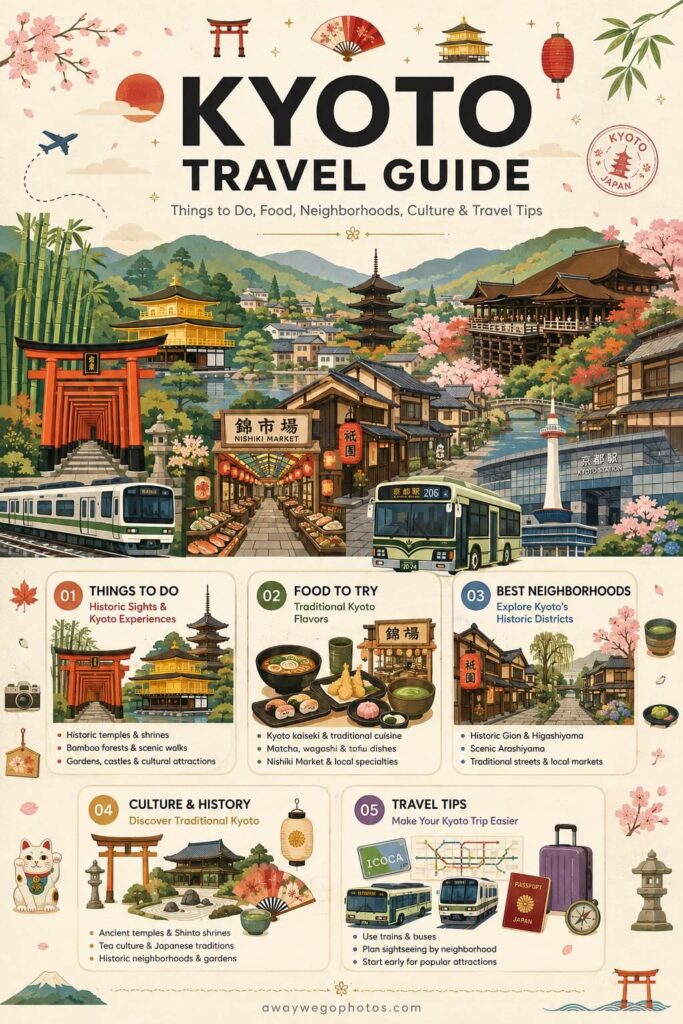
Planning a trip to Kyoto, Japan? This complete Kyoto Travel Guide covers the essential information you need to plan your visit.
Once the imperial capital of Japan, Kyoto remained the center of court life for more than 1,000 years, from 794 until 1869. Today, the city is one of Japan’s best destinations for experiencing historic temples and shrines, traditional neighborhoods, gardens, seasonal scenery, Japanese cuisine, and living cultural traditions.
From the famous streets of Gion and Higashiyama to the thousands of torii gates at Fushimi Inari Taisha, the bamboo landscapes of Arashiyama, and the elegant gardens of northern Kyoto, there is plenty to discover.
Whether you’re visiting for the first time, traveling solo, as a couple, or with family, this guide will help you decide where to go, what to eat, where to stay, how to get around, and how much to budget.
Affiliate Disclosure: Some links on this page may be affiliate links. If you make a purchase through one of these links, I may earn a small commission at no extra cost to you.
📌 Kyoto Travel Guide at a Glance
- 🌍 Country: Japan
- 🗣️ Language: Japanese
- 💴 Currency: Japanese Yen (JPY / ¥)
- 🕐 Time Zone: Japan Standard Time (JST, UTC+9)
- 🌸 Best Time to Visit: Late March–April and late October–November
- 🚇 Getting Around: Trains, subway, buses, walking, taxis, and bicycles
- 💵 Average Daily Budget: About $70–$250+ per person, depending on travel style
- 📅 Recommended Stay: 3 days for a first visit
Kyoto is a large city geographically, and its major attractions are spread across different areas. Planning your sightseeing by neighborhood can save significant time.
🗺️ Best Things to Do in Kyoto
Kyoto combines some of Japan’s most famous landmarks with quieter neighborhoods, gardens, markets, museums, and traditional streets.
⛩️ 1. Visit Fushimi Inari Taisha
Fushimi Inari Taisha is one of Kyoto’s most recognizable landmarks, famous for its seemingly endless rows of bright vermilion torii gates climbing the wooded slopes of Mount Inari.
The shrine is dedicated to Inari, associated with rice, agriculture, and prosperity. You can walk through the torii gates for as long as you like, with the complete mountain trail taking several hours.
Tip: Visit early in the morning if you want a quieter experience.
🏯 2. Explore Kiyomizu-dera
Perched on the hillside of eastern Kyoto, Kiyomizu-dera is one of the city’s most famous temples.
The approach through the traditional streets of Higashiyama is part of the experience. You can combine the temple with nearby Sannenzaka, Ninenzaka, Yasaka Pagoda, and Gion.
The elevated wooden stage also provides beautiful views across Kyoto.
🎋 3. Walk Through Arashiyama
Arashiyama is famous for its bamboo grove, but there is much more to the district than bamboo.
Explore Tenryu-ji Temple, walk beside the Katsura River, visit nearby gardens, and wander through the historic streets.
For a quieter experience, explore beyond the busiest section of the bamboo grove and consider visiting nearby temples and rural areas.
🏛️ 4. Visit Nijo Castle
Nijo Castle offers a different perspective on Kyoto’s history.
Built in the early 17th century, the castle is associated with the Tokugawa shogunate and features ornate interiors, gardens, gates, and famous “nightingale floors.”
It is an excellent choice if you’re interested in Japanese political history and traditional architecture.
🏯 5. See Kinkaku-ji — the Golden Pavilion
Kinkaku-ji is one of Kyoto’s most photographed temples.
The gold-covered pavilion sits beside a reflective pond surrounded by landscaped gardens. Because the temple is located in northern Kyoto, it works best as part of an itinerary focused on that side of the city.
👉 For a more detailed list, see our 10 Best Things to Do in Kyoto guide.
🚌 Explore Kyoto's Famous Sights
Discover Fushimi Inari, Kinkakuji, and Arashiyama's Bamboo Grove on a convenient full-day bus tour through some of Kyoto's most iconic attractions.
Book the Tour →🏛️ Explore Kyoto’s History & Culture
One of the best ways to experience Kyoto is to look beyond its most famous photographs and understand the history behind the city.
Kyoto was established as Japan’s imperial capital in 794 and remained the capital until the imperial court moved to Tokyo in 1869. Its long history helped create an extraordinary concentration of temples, shrines, gardens, crafts, architecture, cuisine, and cultural traditions.
🏯 Historic Sites: Kiyomizu-dera, Nijo Castle, Kyoto Imperial Palace, Kinkaku-ji, Ginkaku-ji
🏛️ Museums: Kyoto National Museum, Kyoto International Manga Museum, Kyoto Museum of Crafts and Design
🏘️ Historic Neighborhoods: Gion, Higashiyama, Pontocho, Nishijin
🎎 Cultural Experiences: Tea ceremonies, traditional crafts, kimono experiences, Japanese gardens, cultural performances
🍵 Local Traditions: Kyoto cuisine, tea culture, seasonal festivals, traditional sweets, ceramics, and textiles
Kyoto’s culture is still part of everyday life rather than something found only inside museums. The official tourism guide describes the city as a place where traditions have been passed down for more than a thousand years.
When exploring residential neighborhoods, remember that Kyoto is also a living city. Keep noise down, avoid blocking entrances, don’t photograph people without permission, and follow local sightseeing etiquette.
🍜 What to Eat in Kyoto
Food is an important part of experiencing Kyoto.
Kyoto is particularly known for refined traditional cuisine, seasonal ingredients, tofu dishes, tea, sweets, and regional specialties.
Be sure to try some of the city’s local specialties:
- 🍱 Kaiseki — Traditional multi-course Japanese cuisine emphasizing seasonal ingredients and presentation.
- 🥢 Yudofu — Simple Kyoto-style simmered tofu, traditionally associated with temple cuisine.
- 🍣 Kyozushi — Kyoto-style sushi developed before refrigeration and historically adapted to inland Kyoto.
- 🍵 Matcha Sweets — Green-tea desserts, especially popular around Uji and Kyoto’s traditional tea shops.
- 🍡 Yatsuhashi — A famous Kyoto sweet available in baked and soft varieties, often flavored with cinnamon.
Other foods worth seeking out include Kyo-ryori, obanzai, soba, ramen, tempura, and seasonal wagashi.
For a deeper food guide, see my 10 Must-Try Foods in Kyoto article.
🏘️ Best Areas & Neighborhoods in Kyoto
Different neighborhoods in Kyoto offer very different experiences, so choosing the right area can make a big difference to your trip.
⛩️ Higashiyama & Gion
This is one of the best areas for first-time visitors interested in traditional Kyoto.
You’ll find Kiyomizu-dera, Ninenzaka, Sannenzaka, Yasaka Shrine, Maruyama Park, and Gion within the wider area.
🛍️ Downtown Kyoto
The Shijo-Kawaramachi and Shijo-Karasuma area is convenient for shopping, restaurants, Nishiki Market, and transportation.
Central Kyoto combines modern city life with historic attractions such as Nijo Castle and Kyoto Imperial Palace.
🚉 Kyoto Station
Kyoto Station is a practical base for travelers who want excellent transportation connections.
The area also provides access to temples including Toji, Higashi Hongan-ji, and Nishi Hongwan-ji, while JR trains make it convenient to reach destinations such as Fushimi Inari.
🎋 Arashiyama
Arashiyama is ideal for travelers interested in gardens, temples, bamboo, mountains, and scenic walks.
It is farther from central Kyoto, so staying here can be peaceful but less convenient if you plan to spend most of your time elsewhere.
💡 Tip: For a first visit, Higashiyama/Gion, Downtown Kyoto, or the Kyoto Station area are among the most convenient bases. Choose based on whether you prioritize atmosphere, restaurants and shopping, or transportation.
📅 How Many Days Do You Need in Kyoto?
For most first-time visitors, 3 days is a good amount of time to experience Kyoto’s major highlights without trying to see everything.
🗓️ 1 Day in Kyoto
If you only have one day, focus on one geographic area rather than crossing the city repeatedly.
A strong first-day route could include Fushimi Inari early in the morning, followed by Kiyomizu-dera, Higashiyama, and Gion.
👉 See our 1 Day in Kyoto itinerary for a detailed schedule.
🗓️ 3 Days in Kyoto
Three days gives you enough time to divide your sightseeing into different areas.
Day 1: Fushimi Inari, Kiyomizu-dera, Higashiyama and Gion
Day 2: Arashiyama, Tenryu-ji and western Kyoto
Day 3: Kinkaku-ji, Nijo Castle, Kyoto Imperial Palace, Nishiki Market and downtown Kyoto
You can adjust this depending on your interests and the season.
👉 See my 3 Days in Kyoto itinerary for a detailed plan.
🌤️ Best Time to Visit Kyoto
The best time to visit Kyoto depends on weather, crowds, seasonal scenery, and what you want to experience.
🌸 Spring — March to May
Spring is one of Kyoto’s most popular seasons.
Cherry blossoms can transform temple grounds, parks, riverbanks, and traditional streets into spectacular scenery.
The downside is that popular areas can become extremely busy, particularly around peak blossom periods.
Best for: Cherry blossoms, gardens, comfortable sightseeing weather.
☀️ Summer — June to August
Summer can be hot and humid.
June usually brings the rainy season, while July and August are typically hotter.
However, summer offers festivals and seasonal cultural events, including Gion Matsuri, one of Kyoto’s best-known traditional festivals.
Best for: Festivals, summer events, longer daylight hours.
🍂 Autumn — September to November
Autumn is another excellent time to visit Kyoto.
The city’s temples, gardens, and mountain areas become especially attractive as the leaves change color.
Late October through November is particularly popular, so expect crowds at famous autumn foliage locations.
Best for: Autumn colors, gardens, comfortable temperatures.
❄️ Winter — December to February
Winter is colder but can offer a quieter Kyoto experience.
Snow occasionally creates beautiful scenes around temples and gardens, although snowfall is not guaranteed.
Accommodation and attractions can be less crowded outside major holiday periods.
Best for: Quieter sightseeing, winter atmosphere, fewer crowds.
💡 Best overall time: Late March–April and late October–November
These periods offer some of Kyoto’s most attractive seasonal scenery, but they are also among the busiest times. For a quieter trip, consider winter or parts of early summer.
🚇 Getting Around Kyoto
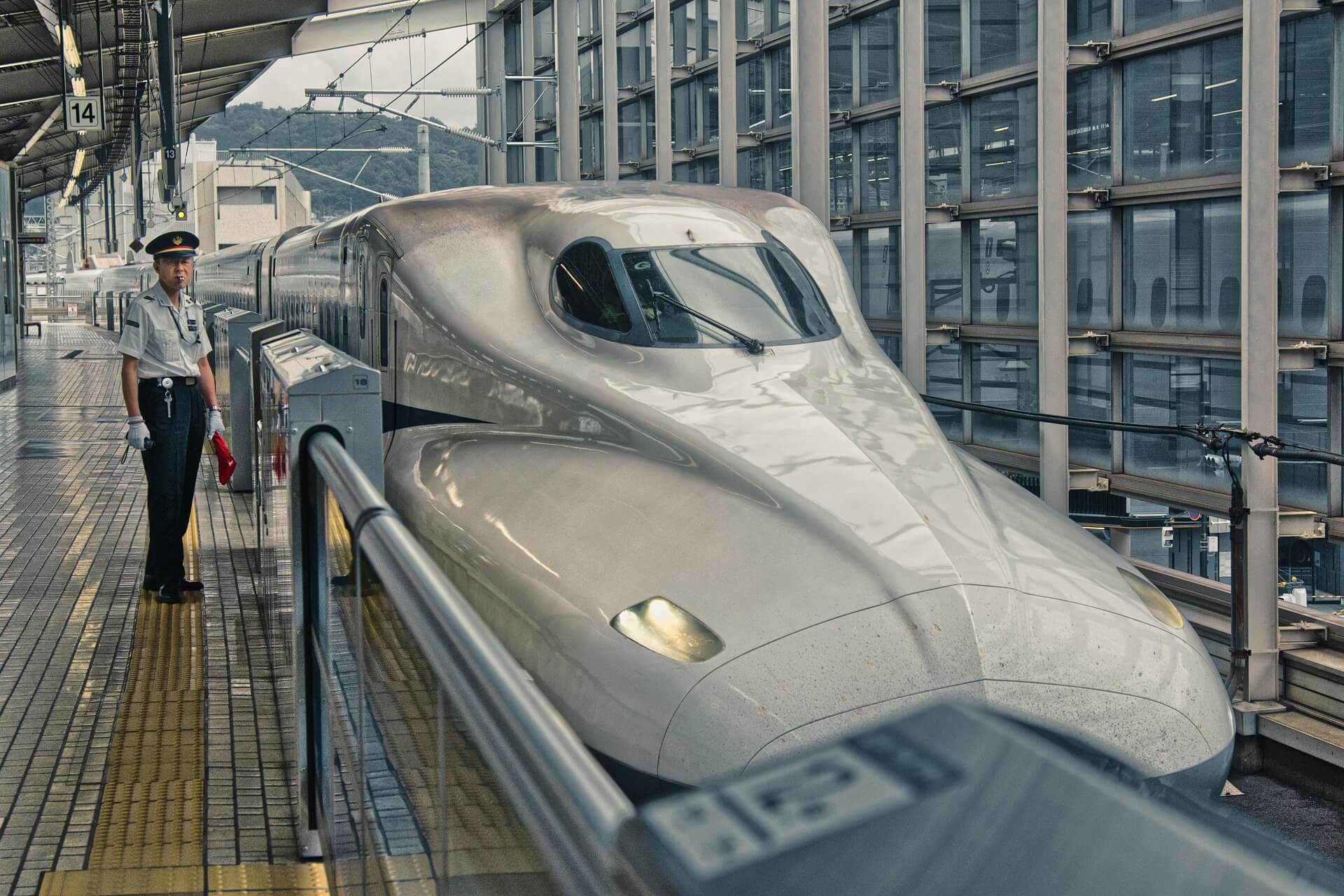
Getting around Kyoto is usually easiest using a combination of trains, subway, buses, and walking.
The official Kyoto tourism guide specifically recommends combining trains and buses, particularly because traffic congestion can make road journeys slower.
- 🚇 Subway: Useful for central and eastern parts of the city and for connecting with other transportation.
- 🚌 Buses: Reach many attractions that aren’t directly served by the subway.
- 🚆 Trains: Excellent for areas such as Fushimi, Arashiyama, and destinations outside central Kyoto.
- 🚕 Taxis: Useful when traveling between nearby attractions or when public transportation would require several transfers.
- 🚶 Walking: Ideal for historic districts such as Gion and Higashiyama.
For 2026, Kyoto’s Subway & Bus 1-Day Pass costs ¥1,100 for adults, while the Kyoto City Subway 1-Day Pass costs ¥800. Whether a pass saves money depends on your itinerary, so compare the individual fares before buying one.
💡 Transportation Tip: Don’t assume the bus is always the fastest option. Kyoto’s official transportation guidance recommends using trains and buses strategically to avoid congestion.
💵 How Much Does a Trip to Kyoto Cost?
Your total travel cost will depend on your accommodation, transportation, food choices, attractions, shopping, and activities.
💰 Budget Traveler
About $70–$110 per day
- 🛏️ Hostel or simple budget accommodation
- 🍜 Affordable local meals and convenience-store food
- 🚇 Public transportation
- 🆓 Free temples, neighborhoods, parks, and walking routes
- 💡 Limited paid activities
💵 Mid-Range Traveler
About $120–$250 per day
- 🏨 Comfortable hotel
- 🍽️ Mix of local restaurants and casual dining
- 🚇 Public transportation with occasional taxis
- 🎟️ Paid attractions and cultural experiences
💎 Luxury Traveler
About $300+ per day
- 🏨 Upscale hotel or ryokan
- 🍽️ Fine dining and traditional Kyoto cuisine
- 🚕 More frequent taxis or private transportation
- 🎟️ Premium tours and cultural experiences
These are planning estimates rather than fixed prices. Hotel rates can change significantly during cherry blossom and autumn foliage seasons.
💡 Money-Saving Tip: Stay slightly outside the most expensive tourist areas, use trains and buses instead of taxis when practical, and prioritize free attractions such as neighborhoods, parks, river walks, and temple grounds where no admission fee applies.
🛏️ Where to Stay in Kyoto
The best area to stay depends on your budget, interests, and travel style.
🏙️ Best for First-Time Visitors: Higashiyama / Gion
Staying around eastern Kyoto puts you close to some of the city’s most atmospheric streets, temples, and traditional neighborhoods.
It’s particularly convenient for travelers who want to explore Kiyomizu-dera, Gion, Yasaka Shrine, and nearby historic areas on foot.
💰 Best for Budget Travelers: Kyoto Station Area
The Kyoto Station area has a wide selection of business hotels and other accommodation options and provides excellent transportation connections.
The official tourism guide notes that the area has many large hotels and business hotels, along with luggage storage facilities.
🏛️ Best for History & Culture: Higashiyama
Higashiyama is an excellent choice if historic streets, temples, traditional architecture, and cultural attractions are your priority.
👨👩👧 Best for Families: Kyoto Station / Downtown
Families may appreciate staying near major transportation connections, restaurants, shopping, and larger hotels.
💡 Tip: Book accommodation well ahead of time for cherry blossom and autumn foliage periods. Kyoto’s official tourism guide specifically recommends making reservations early during these busy seasons.
🎒 Kyoto Travel Tips
Before visiting Kyoto, keep these practical tips in mind:
- 📱 Download a reliable map and transportation app.
- 💳 Carry a payment card, but don’t rely exclusively on cards.
- 💵 Keep some Japanese yen available for smaller purchases and situations where cash is preferred.
- 🚇 Learn the basic train, subway, and bus routes before each sightseeing day.
- 👟 Wear comfortable shoes because you’ll walk a lot.
- 🌤️ Check the weather before leaving your hotel.
- 📅 Reserve popular experiences and accommodation early during peak seasons.
- 🗣️ Learn a few simple Japanese phrases such as sumimasen and arigato gozaimasu.
- 🎒 Keep your belongings organized when using crowded transportation.
- ⏰ Start early at major attractions such as Fushimi Inari and Arashiyama.
- 📸 Respect photography restrictions at temples, shrines, shops, and private properties.
- 🏘️ Remember that many famous sightseeing streets are also residential areas.
- 🤫 Keep noise levels low when walking through traditional neighborhoods.
- 🚮 Carry your trash with you if you cannot find a public bin.
Kyoto has introduced responsible-tourism guidelines because many popular attractions are located near residential neighborhoods. Being respectful helps protect the city for both residents and visitors.
👉 For more practical advice, read my Kyoto Travel Tips guide.
🎫 Best Tours & Experiences in Kyoto
Tours and local experiences can be a great way to learn more about Kyoto or make the most of limited time.
Consider adding:
- 🏯 Historic Kyoto Walking Tour — Explore traditional neighborhoods while learning about Kyoto’s history.
- 🍜 Kyoto Food Tour — Discover local dishes, markets, and traditional food culture.
- 🚶 Higashiyama Walking Tour — Explore Kiyomizu-dera, traditional streets, and Gion.
- 🎋 Arashiyama Tour — Combine the bamboo grove with temples, gardens, and the surrounding area.
- 🍵 Traditional Tea Ceremony — Learn about one of Japan’s most recognizable cultural traditions.
When adding affiliate experiences, choose tours that genuinely complement the attractions and itinerary rather than adding links simply to increase the number of affiliate placements.
🛍️ What to Buy in Kyoto
Looking for souvenirs or something special to take home?
Consider:
- 🎁 Traditional Kyoto Crafts — Look for locally made crafts and decorative items.
- 🍵 Japanese Tea — Kyoto and nearby Uji are particularly associated with high-quality green tea.
- 🍬 Wagashi — Traditional Japanese sweets make attractive and easy-to-pack gifts.
- 👘 Textiles and Handicrafts — Kyoto has a long history of textile production and traditional crafts.
- 🎨 Ceramics — Kyoto-style pottery and tea-related ceramics can make memorable souvenirs.
For shopping, explore Nishiki Market, Shijo, traditional craft stores, department stores, and specialty shops throughout the city.
🎟️ Discover Kyoto with Ease
Take in Kyoto’s beautiful scenery and famous landmarks with a convenient sightseeing bus ticket designed for flexible city exploring.
Explore Kyoto →🗺️ Best Day Trips from Kyoto
Kyoto is also an excellent base for exploring the wider Kansai region.
🚆 Nara
Approximate travel time: Around 45–60 minutes depending on the train.
Nara is famous for its historic temples, traditional streets, parks, and free-roaming deer.
Highlights include Todai-ji, Kasuga Taisha, and Nara Park.
🍵 Uji
Approximate travel time: Around 20–30 minutes.
Uji is particularly famous for Japanese green tea and Byodo-in Temple.
It’s an easy trip for travelers who want a slower pace and an introduction to tea culture.
🏯 Osaka
Approximate travel time: Around 30–45 minutes depending on the train.
Osaka makes an excellent day trip for food, shopping, historic attractions, and modern city life.
The JR network provides convenient connections between Kyoto and Osaka, with current routes and service information available through JR West.
👉 See my Best Day Trips from Kyoto guide for more ideas.
🧳 What to Pack for Kyoto
What you need to pack will depend on the season and your activities.
- 👟 Comfortable walking shoes
- 🌤️ Weather-appropriate clothing
- ☔ Compact umbrella or light rain jacket
- 🔌 Travel adapter
- 📱 Phone and charging equipment
- 💳 Credit/debit cards
- 💵 Some Japanese yen
- 🎒 Comfortable day bag
- 🧴 Personal travel essentials
💡 Packing Tip: Comfortable shoes are especially important in Kyoto. A sightseeing day can involve long walks, stairs, temple grounds, and uneven traditional streets.
For summer, pack breathable clothing and sun protection. For winter, bring warm layers. During spring and autumn, layers are useful because temperatures can change throughout the day.
❓ Frequently Asked Questions About Kyoto
How many days do you need in Kyoto?
Three days is a good starting point for most first-time visitors. It gives you enough time to explore major areas such as Higashiyama, Fushimi, Arashiyama, and central Kyoto without rushing through every attraction.
What is the best time to visit Kyoto?
The most popular periods are generally spring and autumn, especially late March–April for cherry blossoms and late October–November for autumn foliage.
However, these seasons also bring significant crowds.
Is Kyoto expensive?
Kyoto can be visited on different budgets. Budget travelers can plan around $70–$110 per day, while mid-range travelers may spend roughly $120–$250 per day, excluding international flights.
Accommodation is usually the biggest variable.
Is Kyoto easy to get around?
Yes. Kyoto has an extensive transportation network combining trains, subway lines, buses, taxis, and walking. Trains can be especially useful for avoiding road congestion.
What food should I try in Kyoto?
Look for kaiseki, yudofu, kyozushi, matcha sweets, yatsuhashi, obanzai, soba, and seasonal wagashi.
Is Kyoto good for first-time visitors?
Yes. Kyoto is one of the best destinations in Japan for travelers interested in history, architecture, culture, gardens, traditional neighborhoods, and Japanese food.
The main challenge is deciding how to organize the city’s many attractions.
🌍 Final Thoughts on Visiting Kyoto
Kyoto is a destination where history, culture, food, architecture, gardens, and nature come together.
You can begin the morning walking through the torii gates of Fushimi Inari, spend the afternoon exploring historic streets around Kiyomizu-dera, enjoy traditional Kyoto cuisine for lunch, and finish the day wandering through Gion.
But Kyoto isn’t only about its famous landmarks.
Take time to explore quieter streets, local markets, gardens, neighborhood temples, traditional shops, and less-visited areas. The official Kyoto tourism guide highlights quieter destinations such as Ohara, Takao, Nishikyo, Yamashina, and Fushimi for travelers looking to go beyond the most famous attractions.
With a little planning, you can create a Kyoto itinerary that fits your budget, interests, and travel style.
🌏 Ready to explore Kyoto? Start planning your trip today!