Planning a trip to Tokyo or simply curious to learn more about this fascinating destination? Tokyo is a city where centuries-old traditions exist alongside futuristic architecture, busy shopping districts, historic temples, and an incredible food culture.
Here are 5 interesting facts about Tokyo that reveal the city’s history, culture, landmarks, food, and unique character. From its origins as Edo to the towering Tokyo Skytree, these facts offer a quick introduction to one of the world’s most fascinating cities.
Affiliate Disclosure: This post contains affiliate links. I may earn a small commission if you book through them, at no extra cost to you.
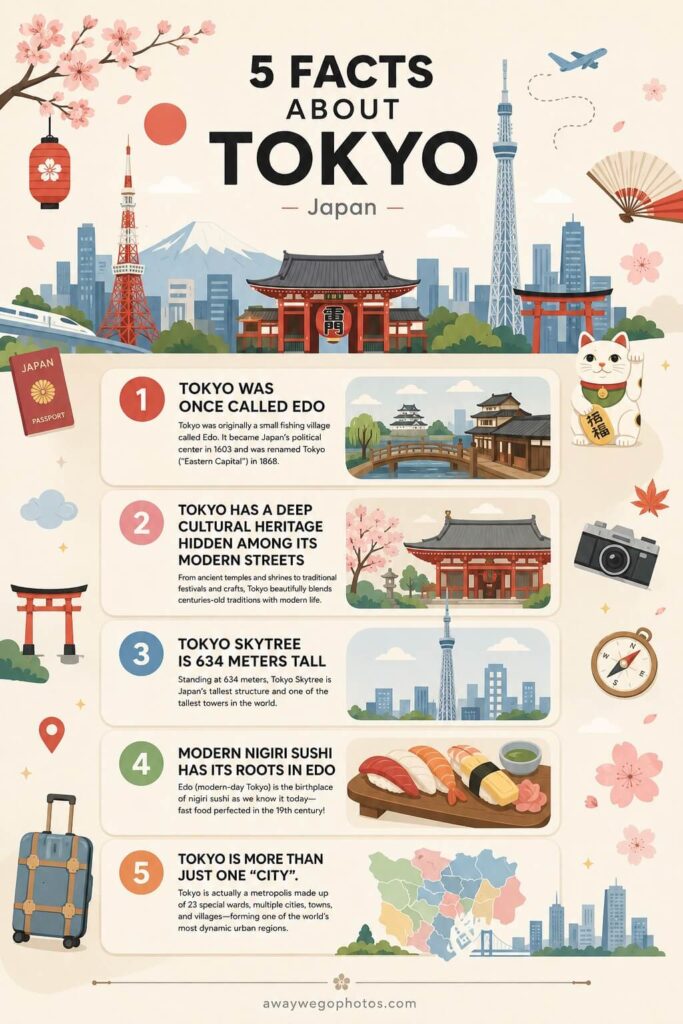
1. Tokyo Was Once Called Edo
Before Tokyo became Tokyo, the city was known as Edo.
Edo became the center of the Tokugawa shogunate in 1603, when Tokugawa Ieyasu established his government there. Over the following roughly 265 years, Edo grew from a relatively small settlement into a major city and became an important center of politics, commerce, and culture.
The Edo period also had an enormous influence on Japanese culture. Many traditions, art forms, foods, and entertainment styles associated with Japan today developed or flourished during this period. In 1868, following the Meiji Restoration, Edo was renamed Tokyo, meaning roughly “Eastern Capital,” and became Japan’s capital.
The city’s Edo heritage is still visible today. Historic neighborhoods, temples, traditional crafts, gardens, and cultural attractions provide glimpses of what Tokyo was like centuries ago.
Travel connection: Visit Asakusa to experience one of Tokyo’s best-known historic areas, or explore the Tokyo Metropolitan Edo-Tokyo Museum, which reopened in March 2026 and explores the city’s transformation from Edo into modern Tokyo.
2. Tokyo Has a Deep Cultural Heritage Hidden Among Its Modern Streets
Tokyo may look futuristic, but its traditional culture is still an important part of everyday life.
The city’s long history has created a fascinating mixture of old and new. Modern skyscrapers, high-tech shopping districts, and enormous train stations can exist only a short distance from Buddhist temples, Shinto shrines, traditional gardens, festivals, and historic streets.
Neighborhoods such as Asakusa, Ryogoku, and Yanaka offer visitors a different side of Tokyo. Asakusa is particularly famous for Sensoji Temple, one of the city’s oldest and most recognizable Buddhist temples. Ryogoku is closely associated with sumo wrestling, while other parts of the city preserve traditional crafts, festivals, and older neighborhoods.
Tokyo’s cultural identity was heavily shaped during the Edo period, when the city experienced economic growth and a flourishing of arts and entertainment. Many traditions that developed during that era continue to influence Tokyo today.
Travel connection: Walk through Asakusa, visit Sensoji Temple, explore traditional shops, or check the schedule for a sumo tournament in Ryogoku. These experiences offer a chance to see Tokyo beyond its modern skyline.
🎟️ Book a Tour
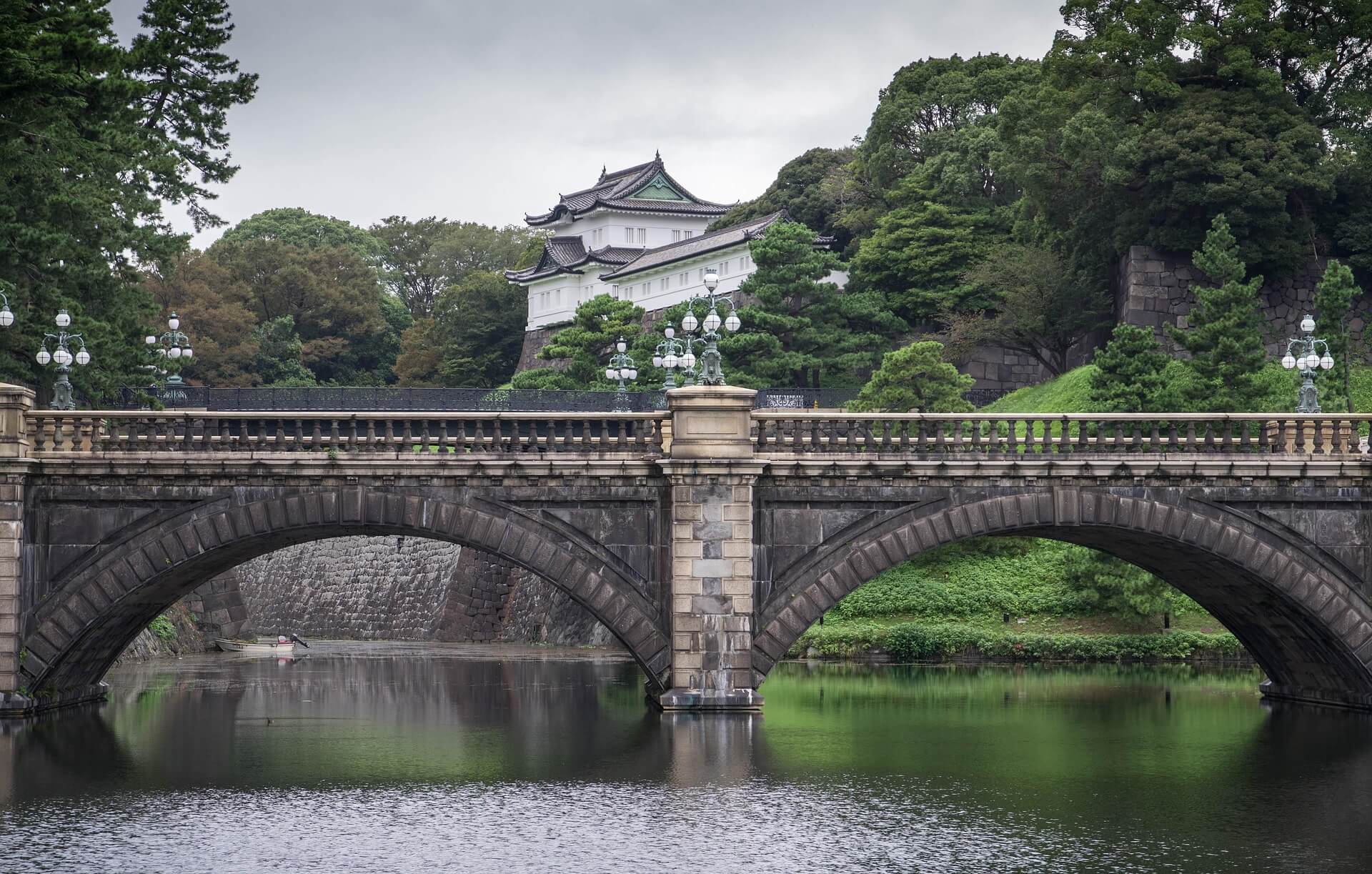
Step into Japanese history on the Imperial Palace: A Walk Through Japanese History tour and discover the fascinating stories, landmarks, and traditions surrounding Tokyo’s historic palace grounds.
Book the Tour →3. Tokyo Skytree Is 634 Meters Tall
One of Tokyo’s most recognizable landmarks, Tokyo Skytree rises 634 meters above the city.
Completed in 2012, Tokyo Skytree was built as a broadcasting tower and became one of the defining landmarks of modern Tokyo. Its height of 634 meters was carefully chosen, with the number associated with the traditional name “Musashi,” a historical region that included areas around present-day Tokyo.
The tower was also an impressive engineering project. Construction began in 2008 and was completed in 2012, with the tower designed to withstand the demanding conditions of a tall structure in an earthquake-prone country.
Visitors can go high above the city to enjoy panoramic views from its observation areas. The Tembo Deck is approximately 350 meters above the ground, while the Tembo Galleria reaches approximately 450 meters.
Travel connection: Visit Tokyo Skytree for panoramic views across Tokyo. On a clear day, the observation decks provide an impressive perspective of the enormous metropolis below, and you can combine the visit with nearby Asakusa.
4. Modern Nigiri Sushi Has Its Roots in Edo
The familiar hand-formed nigiri sushi enjoyed around the world has strong connections to old Tokyo.
During the Edo period, Tokyo was known as Edo and had developed into a large, busy metropolis. In the early 1800s, a faster style of sushi emerged in the city. Instead of requiring lengthy preparation and fermentation, chefs could serve pieces of vinegared rice topped with fish as a convenient meal.
This style became known as Edomae sushi. “Edomae” refers to Edo and traditionally relates to the seafood available from the waters in front of the city, particularly Edo Bay, now known as Tokyo Bay.
The style became popular as a convenient food for busy residents and eventually evolved into the nigiri sushi that is now recognized around the world.
Tokyo’s food culture goes far beyond sushi. Traditional local specialties include soba, tempura, monjayaki, Fukagawa-meshi, and other dishes that developed through the city’s long culinary history.
Travel connection: Try authentic Edomae sushi in Tokyo, particularly in areas with long culinary traditions such as Ginza, Nihonbashi, and the historic neighborhoods of the city. For a broader introduction to Tokyo’s cuisine, explore local dishes such as soba, tempura, and monjayaki.
🎟️ Book a Tour
Experience Tokyo after dark on the Shibuya Night Walking Tour, with vibrant streets, iconic landmarks, and stunning rooftop city views.
Book the Tour →5. Tokyo Is More Than Just One “City”
One of the most surprising things about Tokyo is that the Tokyo metropolitan area is administratively much more than a single traditional city.
Tokyo is officially a metropolis and consists of a diverse collection of areas with very different identities. Its administrative structure includes 23 special wards, 26 cities, five towns, and eight villages. The Tokyo metropolitan government describes the population as approximately 14 million people, making Tokyo one of the world’s great urban centers.
This helps explain why Tokyo can feel like many different destinations within one enormous metropolitan area. The atmosphere changes dramatically as you move between neighborhoods and regions.
You can spend the morning exploring historic temples in Asakusa, the afternoon shopping in Shibuya, and another day traveling into the greener western parts of Tokyo. The city’s geographic and administrative diversity means there is much more to Tokyo than its famous central districts.
Travel connection: Explore different parts of Tokyo rather than staying only around the major tourist districts. Visit areas such as Shibuya, Shinjuku, Asakusa, Ueno, Ginza, and Yanaka to experience the different personalities of the city.
Why These Facts Make Tokyo Special
These 5 facts about Tokyo reveal why the city is so fascinating. Tokyo isn’t simply a futuristic metropolis filled with skyscrapers and neon lights. Beneath its modern appearance is a history stretching back through the Edo period, along with traditional neighborhoods, temples, food traditions, and cultural practices that remain part of the city today.
Its transformation from Edo to Tokyo, its traditional culture, enormous landmarks such as Tokyo Skytree, and its influential food traditions all contribute to the city’s unique character.
Whether you’re planning your first visit or simply interested in learning more about Japan, understanding these details can make exploring Tokyo even more meaningful.
Frequently Asked Questions About Tokyo
What is Tokyo famous for?
Tokyo is famous for its combination of traditional Japanese culture and modern urban life. Major attractions include historic temples, Shibuya, Tokyo Skytree, the Imperial Palace, world-class food, shopping districts, and neighborhoods with distinctive personalities.
How old is Tokyo?
The area has a much older history, but the modern story of Tokyo is closely connected to Edo, which became the seat of the Tokugawa shogunate in 1603. Edo was renamed Tokyo in 1868 as Japan entered the Meiji era.
What is the most interesting fact about Tokyo?
One of the most interesting facts is that the city was once called Edo and grew into one of the world’s major cities during the Edo period. Its historical identity still influences Tokyo’s food, neighborhoods, traditions, and culture today.
What should I visit in Tokyo?
Some of the city’s most popular experiences include Sensoji Temple and Asakusa, Tokyo Skytree, the Imperial Palace, Shibuya, Shinjuku, Meiji Jingu, and Ueno.
What is Tokyo known for culturally?
Tokyo is known for its combination of traditional and contemporary Japanese culture. Visitors can experience temples, shrines, sumo, traditional festivals, crafts, food traditions, modern fashion, pop culture, and cutting-edge technology within the same metropolitan area.
🧭 More Tokyo Travel Guides