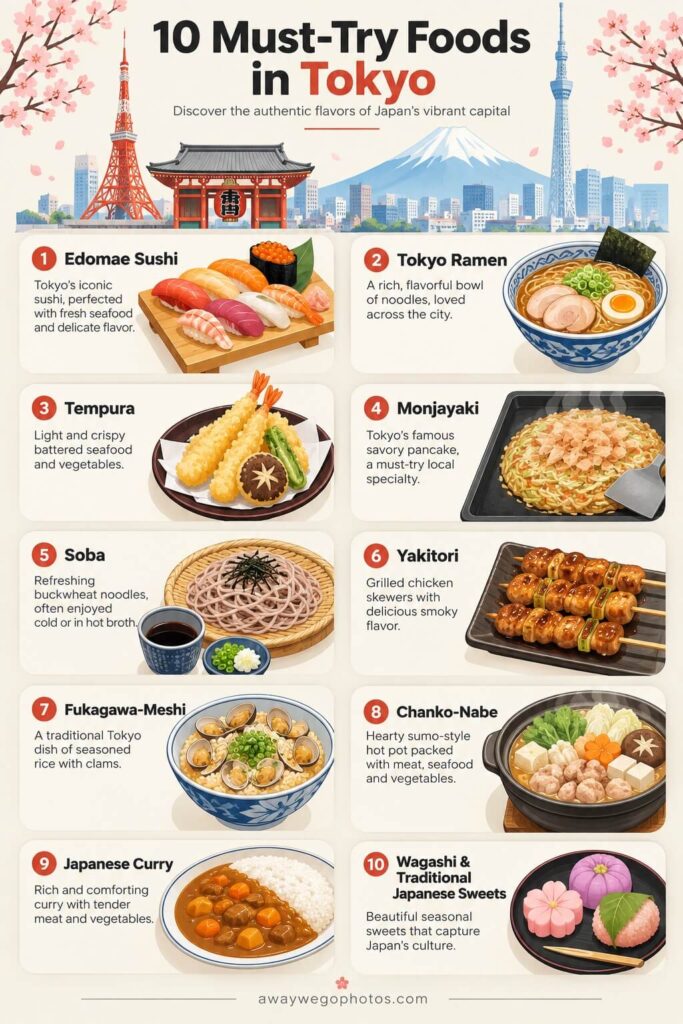
Planning a trip to Tokyo? One of the best ways to experience the city is through its food.
From fresh sushi and steaming bowls of ramen to traditional soba, crispy tempura, and Tokyo’s unique monjayaki, the Japanese capital offers an incredible variety of dishes to discover. Tokyo’s food culture has been shaped by centuries of history, particularly the Edo period, when the city developed many of the culinary traditions visitors can still experience today.
Whether you’re visiting Tokyo for the first time or returning to discover more of the city, these 10 must-try foods in Tokyo should be on your list.
In this guide, you’ll discover what each food is, why it is worth trying, where to find it, and useful tips for enjoying it during your trip.
Affiliate Disclosure: This post contains affiliate links. I may earn a small commission if you book through them, at no extra cost to you.
🍣 1. Edomae Sushi
Edomae sushi is one of the foods most closely connected with Tokyo’s history and culinary identity.
What Is Edomae Sushi?
Edomae sushi developed in Edo, the former name of Tokyo, during the 19th century. The style traditionally features vinegared sushi rice topped with seafood, with early versions using fish and seafood from the waters around Edo.
Today, you can find everything from casual sushi restaurants to high-end sushi counters throughout Tokyo.
Why Try It?
Tokyo is one of the world’s great destinations for sushi, making it an excellent place to experience both traditional and modern interpretations of this Japanese classic.
Where to Try It
Look around Ginza, Tsukiji, and Toyosu for a wide range of sushi restaurants. The official Tokyo tourism guide particularly recommends Ginza and areas around Tsukiji Outer Market and Toyosu for fresh seafood.
💡 Tip: If you’re new to sushi, start with a mixed nigiri set so you can sample several types of fish.
🎟️ Book a Tour
Taste your way through Tokyo on the Shinjuku Food Tour, featuring 15 dishes across 4 local eateries and a chance to discover the flavors of one of Tokyo’s most exciting neighborhoods.
Book the Tour →🍜 2. Tokyo Ramen
Ramen is one of the easiest and most satisfying foods to try during a Tokyo trip.
What Is Tokyo Ramen?
Ramen consists of noodles served in a flavorful broth with toppings such as sliced pork, green onions, egg, bamboo shoots, or seaweed. Tokyo has many different ramen styles, so the exact flavor and ingredients vary from restaurant to restaurant.
Although ramen has Chinese origins, it has developed into a distinctly Japanese food with countless regional and local variations.
Why Try It?
Ramen is affordable, filling, quick, and available throughout the city. It’s also a great way to experience one of Japan’s most popular everyday foods.
Where to Try It
Shinjuku, Ikebukuro, Takadanobaba, and Tokyo Station are particularly well known for ramen restaurants. Tokyo Station’s underground Ramen Street is another popular option.
💡 Tip: Popular ramen shops can have long lines, so visiting outside the busiest meal periods can save time.
🍤 3. Tempura
Crispy, delicate tempura is another classic Japanese food that deserves a place on your Tokyo food list.
What Is Tempura?
Tempura consists of seafood, vegetables, or other ingredients coated in a light batter and deep-fried until crisp. Good tempura is known for its delicate coating rather than a heavy, greasy crust.
Why Try It?
Tokyo has a long history of tempura, and you can find everything from casual tempura meals to carefully prepared dishes served at specialty restaurants.
Where to Try It
Traditional neighborhoods such as Asakusa, Kanda, and Nihonbashi are good areas to look for traditional Japanese restaurants serving tempura.
💡 Tip: Try tempura with rice as tendon if you want a more filling meal.
🍲 4. Monjayaki
If you want to try something that is particularly associated with Tokyo, don’t skip monjayaki.
What Is Monjayaki?
Monjayaki is a savory dish made with a thin, runny flour-based batter mixed with ingredients such as cabbage, seafood, meat, cheese, or other toppings. It is cooked directly on a hot griddle at the table.
Why Try It?
Monjayaki is one of Tokyo’s distinctive local foods and offers a completely different experience from sushi or ramen.
Part of the fun is cooking and eating it directly from the hot plate.
Where to Try It
Head to Tsukishima Monja Street, which is lined with more than 80 restaurants specializing in monjayaki.
💡 Tip: Don’t worry if it looks unusual at first. Use the small spatula provided to scoop portions directly from the griddle.
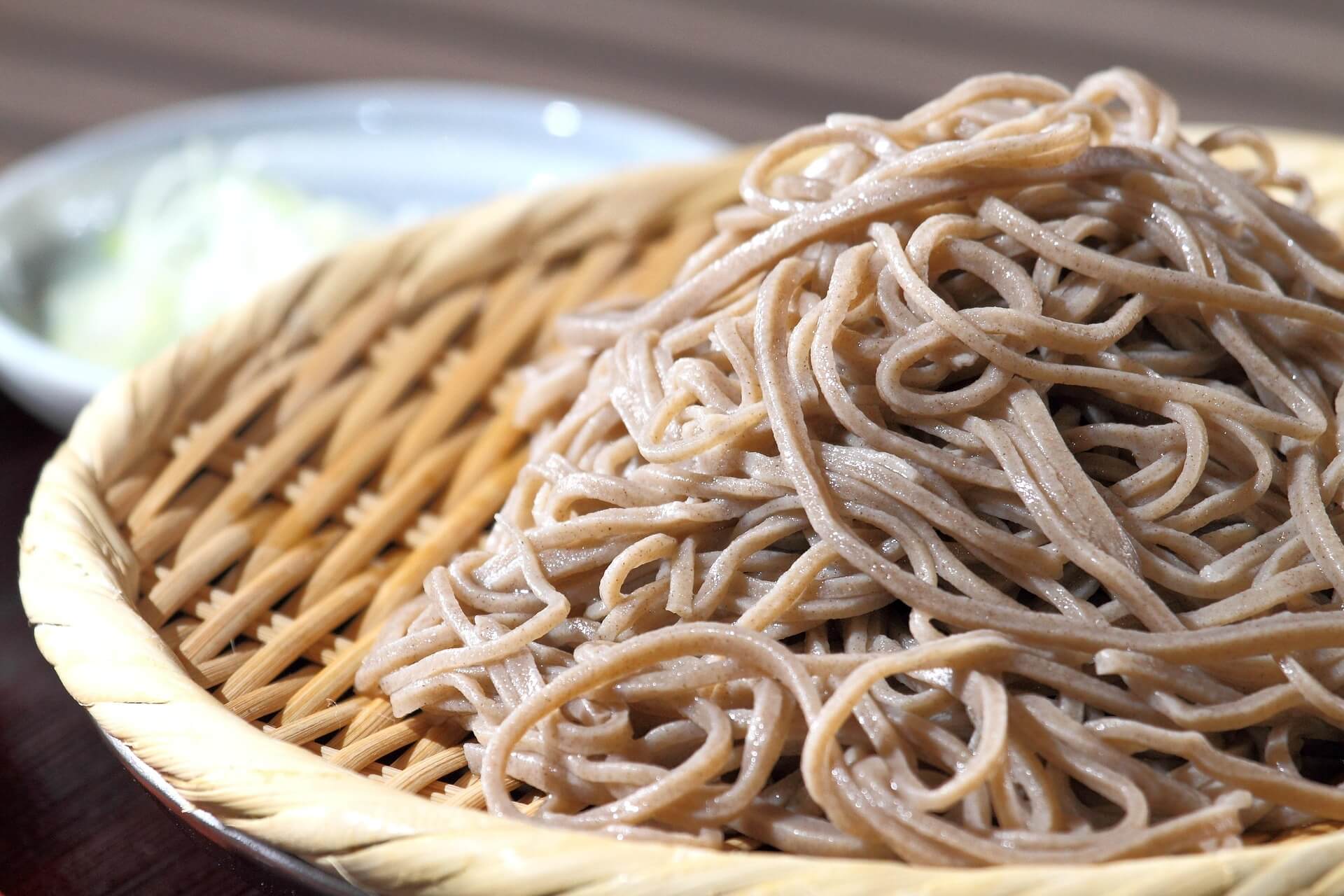
🥢 5. Soba
For a simple but traditional Tokyo meal, try soba.
What Is Soba?
Soba is made from buckwheat and can be served either hot in broth or chilled with a dipping sauce. It has been a popular food in Tokyo since the Edo period and became known as an everyday fast food for city residents.
Why Try It?
Soba is simple, affordable, filling, and deeply connected with Tokyo’s culinary history.
Where to Try It
Look for traditional soba restaurants in neighborhoods such as Kanda, Nihonbashi, and Asakusa.
💡 Tip: If you order cold soba, try dipping the noodles lightly into the sauce rather than soaking them completely.
🎟️ Book a Tour
Explore Tokyo’s food scene on the Ueno Food Tour, featuring delicious sushi, ramen, and local favorites while discovering the flavors of one of Tokyo’s lively neighborhoods.
Book the Tour →🍢 6. Yakitori
Yakitori is an easy choice for travelers who want something casual and flavorful.
What Is Yakitori?
Yakitori consists of bite-sized pieces of chicken grilled on skewers over a charcoal or open flame. Different parts of the chicken can be used, and the skewers are typically seasoned with salt or a savory-sweet sauce.
Why Try It?
It’s casual, affordable, and perfect for trying several different flavors in one meal.
Tokyo has countless places serving grilled skewers, from simple neighborhood restaurants to specialized yakitori establishments.
Where to Try It
Look around Shinjuku, Yurakucho, Shibuya, and traditional yokocho areas for casual yakitori restaurants and grilled-skewer shops.
💡 Tip: Order several different skewers rather than choosing just one type so you can discover which flavors you like.
🍚 7. Fukagawa-Meshi
For something with a strong connection to Tokyo’s local history, try Fukagawa-meshi.
What Is Fukagawa-Meshi?
Fukagawa-meshi is a traditional dish made with rice and Japanese littleneck clams, commonly combined with ingredients such as miso, tofu, and chopped leeks. It originated in the Fukagawa area during the Edo period, when clam gathering was an important local activity.
Why Try It?
Unlike internationally famous dishes such as sushi and ramen, Fukagawa-meshi gives travelers a taste of a more specifically Tokyo-based food tradition.
Where to Try It
Look for it in Fukagawa and eastern Tokyo, particularly at traditional Japanese restaurants.
💡 Tip: This is a great choice if you want to try something with a strong connection to Tokyo’s Edo-era history.
🥘 8. Chanko-Nabe
Chanko-nabe offers a delicious connection between Tokyo food and the city’s famous sumo culture.
What Is Chanko-Nabe?
Chanko-nabe is a hearty Japanese hot pot containing ingredients such as meat, seafood, vegetables, tofu, and noodles or other additions depending on the restaurant.
It is famously associated with sumo wrestlers, who eat large quantities of the dish as part of their traditional diet.
Why Try It?
It’s warm, filling, and gives you the opportunity to connect Tokyo’s food culture with its sumo tradition.
Where to Try It
Head to Ryogoku, Tokyo’s traditional sumo district, where restaurants specializing in chanko-nabe can be found.
💡 Tip: Chanko-nabe is usually designed to be shared, making it a great choice when traveling with family or friends.
🍛 9. Japanese Curry
Japanese curry is a comforting and easy-to-find meal throughout Tokyo.
What Is Japanese Curry?
Japanese curry is typically thicker and milder than many South Asian curry styles. It is commonly served over rice with meat or vegetables and can be customized with different toppings.
Why Try It?
It is inexpensive, filling, and an important part of modern Japanese everyday food culture.
Japanese cuisine has evolved over time to include yoshoku, Japanese adaptations of foreign foods, and curry is one example of this culinary development.
Where to Try It
You can find Japanese curry restaurants throughout Tokyo, from casual neighborhood eateries to specialty curry shops.
💡 Tip: Start with a standard curry and rice if you’re trying Japanese curry for the first time, then experiment with different toppings.
🎟️ Book a Tour
Experience Japanese culture with a Traditional Sweets Making and Tea Ceremony, where you can create traditional sweets and enjoy an authentic Japanese tea experience.
Book the Tour →🍡 10. Wagashi & Traditional Japanese Sweets
Save room for something sweet.
What Are Wagashi?
Wagashi are traditional Japanese sweets often made using ingredients such as rice flour, beans, and sugar. Popular examples include mochi and dango, and they are often beautifully shaped and presented.
Why Try Them?
Wagashi offer more than just a sweet treat—they reflect Japanese aesthetics, seasonality, and traditional food culture.
Where to Try Them
Look for traditional sweet shops, department-store food halls, tea houses, and specialty confectionery shops throughout Tokyo.
💡 Tip: Pair traditional wagashi with Japanese green tea for a classic combination.
🍽️ Where to Try These Foods in Tokyo
Tokyo’s food scene is spread across the entire city, but several neighborhoods are particularly useful for travelers.
Best Areas for Food
- 🍣 Ginza — Excellent for sushi, traditional Japanese cuisine, and higher-end dining.
- 🐟 Tsukiji — A great area for seafood, sushi, and casual food around the famous outer market.
- 🍜 Shinjuku — A huge variety of ramen, yakitori, and casual restaurants.
- 🍲 Tsukishima — One of Tokyo’s best-known destinations for monjayaki.
- 🥢 Asakusa — Traditional restaurants, soba, tempura, sweets, and classic Japanese food.
- 🍲 Ryogoku — A great area to experience chanko-nabe and Tokyo’s sumo culture.
Tokyo’s official tourism guide specifically highlights Ginza, Tsukiji/Toyosu, Shinjuku, Asakusa, Tsukishima, and Ryogoku for different aspects of the city’s food culture.
💡 Tip: Don’t limit your food experience to one neighborhood. Exploring different areas lets you experience several sides of Tokyo’s culinary culture.
💰 How Much Does Food Cost in Tokyo?
Tokyo offers options for almost every budget. You don’t need to visit expensive restaurants to experience good Japanese food; the city’s official tourism guide notes that dining in Tokyo does not necessarily have to be expensive.
As a general guideline:
- Street food / snacks: ¥300–¥1,000
- Casual meal: ¥800–¥1,500
- Mid-range restaurant: ¥1,500–¥4,000
- Specialty / higher-end dining: ¥5,000+
Prices vary significantly depending on the restaurant, neighborhood, ingredients, and meal.
🌏 Food Culture in Tokyo
Tokyo’s food culture has been shaped by centuries of history. During the Edo period (1603–1867), the city developed into a major urban center, and foods such as sushi, soba, and tempura became important parts of everyday life.
Today, Tokyo combines these traditional foods with modern culinary trends. You can eat at a centuries-old restaurant in one neighborhood and find an innovative contemporary restaurant just a few train stops away.
The city’s food culture is also incredibly diverse because Tokyo attracts ingredients and culinary influences from across Japan. Seasonal ingredients, seafood, rice, noodles, vegetables, and traditional cooking techniques all play important roles in the city’s dining scene.
Trying local food is therefore more than simply finding something delicious to eat—it is a way to experience Tokyo’s history, traditions, neighborhoods, and everyday life.
📝 Tips for Trying Food in Tokyo
Before starting your Tokyo food adventure, keep these tips in mind:
- 🍴 Try local specialties: Don’t only eat internationally famous foods. Try Tokyo specialties such as monjayaki and Fukagawa-meshi.
- 🕐 Avoid peak times: Popular restaurants can become crowded, especially around lunch and dinner.
- 💵 Carry some cash: Smaller restaurants may not accept credit cards.
- 🥢 Learn basic etiquette: Avoid rubbing disposable chopsticks together, which can be considered insulting to the establishment.
- 🍜 Don’t worry about slurping noodles: Slurping soba is considered acceptable and can help appreciate the noodles’ aroma.
- 📍 Explore beyond tourist areas: Some excellent food experiences can be found in ordinary neighborhood restaurants.
- ⭐ Look for busy local spots: A restaurant popular with local customers can be worth considering.
- 🌱 Check ingredients if necessary: Tokyo has restaurants catering to vegetarian, vegan, halal, and other dietary needs, but researching ahead is recommended.
- 💴 Don’t expect to tip: Tipping is generally not common practice in Tokyo.
🍴 Final Thoughts
From Edomae sushi and ramen to monjayaki, soba, tempura, and traditional Japanese sweets, Tokyo offers an incredible variety of foods to discover.
The best part is that experiencing Tokyo’s food culture doesn’t require an expensive restaurant. You can enjoy a simple bowl of noodles, grab a few yakitori skewers, explore a traditional sweet shop, or sit down for a memorable sushi meal.
If you only have time to try a few dishes, start with Edomae sushi, ramen, and monjayaki. Together, they offer a great introduction to Tokyo’s traditional and modern food culture.
Which of these foods would you try first?
🧭 More Tokyo Travel Guides