Tokyo is enormous, but you can still experience a memorable slice of the city in just one day if you plan your route carefully. Rather than trying to see Shibuya, Shinjuku, Asakusa, Ginza, and every famous attraction in a single day, this itinerary focuses on eastern and central Tokyo, where historic temples, traditional neighborhoods, museums, markets, grand architecture, and modern city life can be combined without excessive backtracking.
This 1 Day in Tokyo itinerary is especially suited to first-time visitors who enjoy history, culture, architecture, local food, and exploring on foot. The route moves from traditional Asakusa to cultural Ueno, then toward Tokyo Station and Marunouchi for an evening surrounded by some of the city’s most impressive architecture.
📌 Planning Note: This itinerary assumes you are visiting on a day when the Tokyo National Museum is open. The museum is normally closed Mondays, except when a Monday is a holiday, with other closures possible. Always check official schedules before visiting.
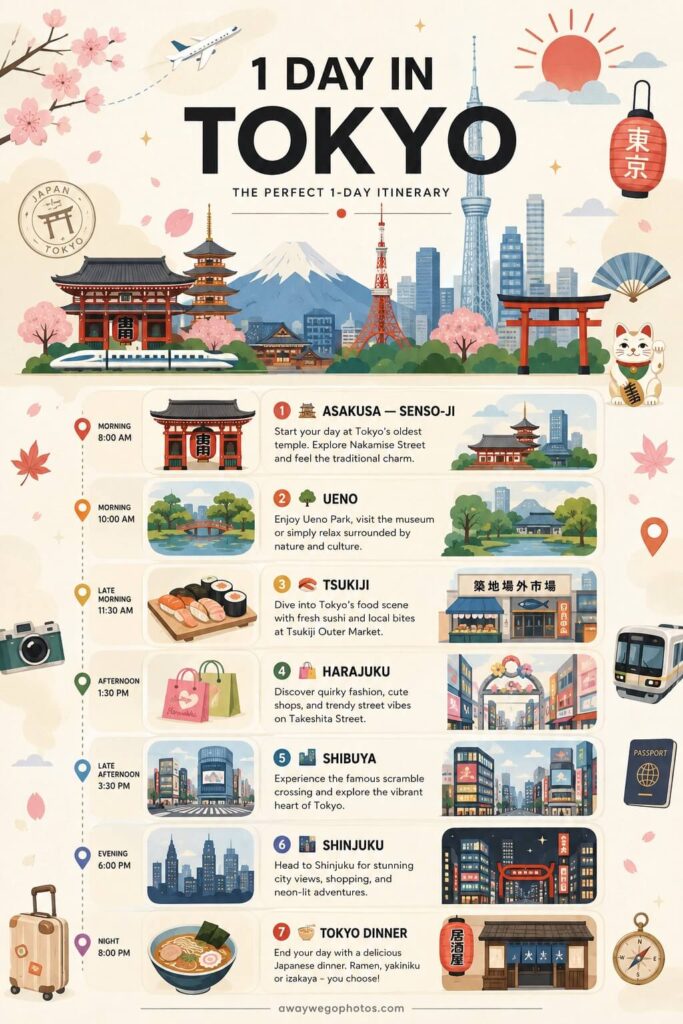
🗺️ 1-Day Itinerary at a Glance
🌅 Morning: Asakusa, Kaminarimon Gate & Senso-ji Temple
🍜 Lunch: Traditional Japanese food around Asakusa or Ueno
🏛️ Afternoon: Ueno Park & Tokyo National Museum
🏙️ Late Afternoon: Tokyo Station & Marunouchi
🌆 Evening: Marunouchi and Ginza
The itinerary is intentionally focused. You will not see every famous Tokyo attraction, but you will experience several different sides of the city in one logical route.
Affiliate Disclosure: This post contains affiliate links. I may earn a small commission if you book through them, at no extra cost to you.
📍 Morning — Discover Historic Asakusa
8:00–9:00 — Kaminarimon Gate & Nakamise Street
Start your day in Asakusa, one of Tokyo’s best areas for experiencing the city’s traditional character.
Begin at Kaminarimon, or Thunder Gate, the enormous entrance gate to Senso-ji. Its giant red lantern has become one of Tokyo’s most recognizable landmarks.
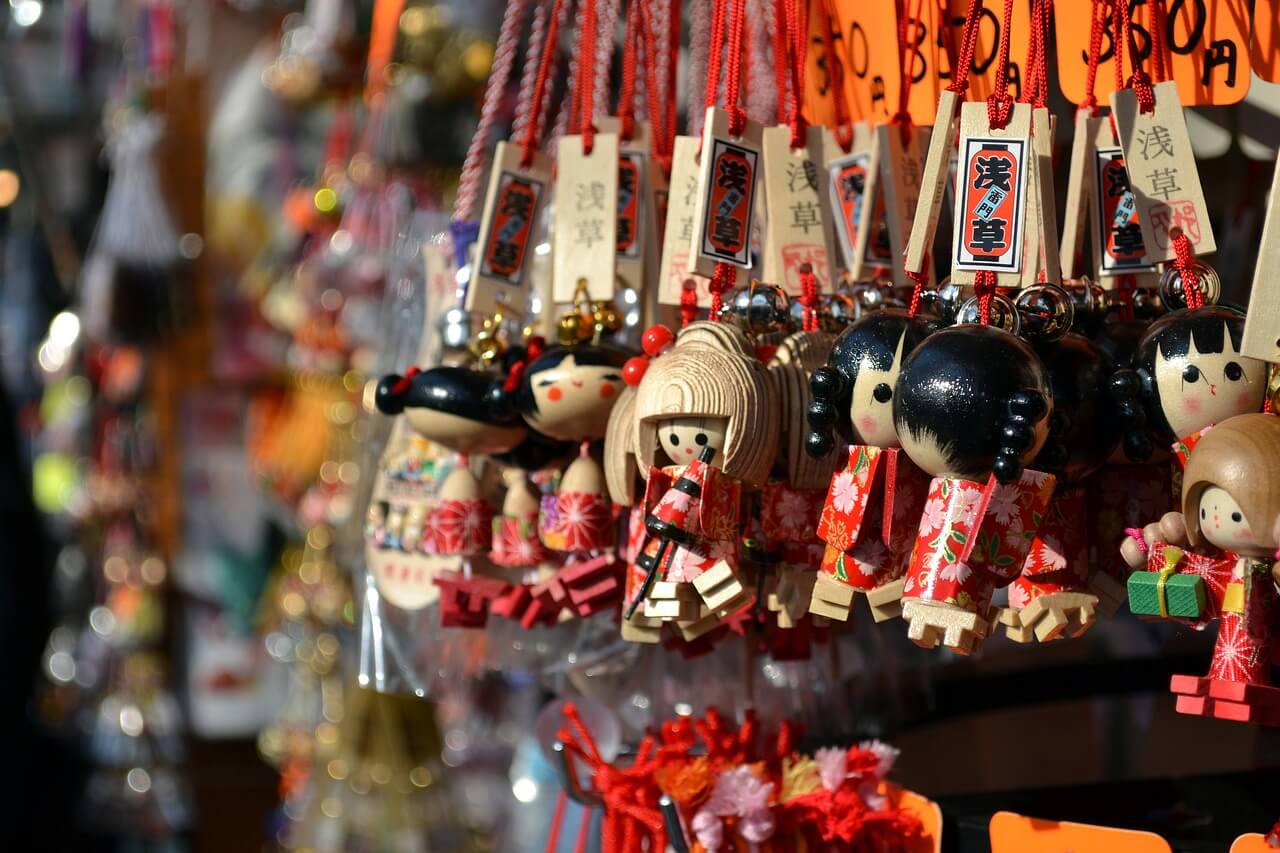
From the gate, walk along Nakamise, the traditional shopping street leading toward Senso-ji. The area is filled with small shops selling Japanese snacks, souvenirs, crafts, sweets, and traditional goods. GO TOKYO describes Asakusa as a center of Japanese tradition, with Senso-ji, Nakamise, traditional streets, and the Sumida River all within the area.
Early morning is a particularly good time to explore because the area can become extremely busy later in the day.
🏛️ 9:00–10:15 — Senso-ji Temple
Continue to Senso-ji, Tokyo’s oldest temple.
The temple’s history traditionally traces back to 628, when a statue of Kannon was reportedly discovered in the Sumida River by two fishermen. The statue became the focus of a temple that developed into the major religious center you see today.
Take your time exploring the temple grounds rather than simply taking a photograph and leaving.
Look for:
- The Kaminarimon entrance
- Nakamise shopping street
- The main hall
- Traditional temple architecture
- Incense burners
- Smaller structures around the grounds
- Views toward the surrounding Asakusa streets
This is one of the best places in Tokyo to understand the contrast between the city’s modern image and its older cultural traditions.
🚶 10:15–10:45 — Walk Toward Ueno
From Asakusa, take the Tokyo Metro Ginza Line toward Ueno. Asakusa and Ueno are directly connected by the Ginza Line, making this a particularly convenient transition for a one-day itinerary.
🎟️ Book a Tour
Explore Tokyo’s highlights on a Morning Bus Tour featuring the Imperial Palace, Asakusa, and Tokyo Tower.
Book the Tour →🏛️ Late Morning & Afternoon — Ueno's History, Museums & Local Life
11:00–12:30 — Tokyo National Museum
Head into Ueno Park and visit the Tokyo National Museum.
For travelers interested in Japanese history and culture, this is arguably the most important museum stop to include in a one-day Tokyo itinerary.
The museum’s collections cover Japanese art and archaeology as well as cultural material from across Asia. Its location in Ueno Park also makes it easy to combine with other attractions in the area.
Normal museum hours are 9:30 a.m. to 5:00 p.m., with later closing on certain Fridays, Saturdays, and some Sundays before holidays. Last admission is 30 minutes before closing.
You could easily spend several hours here, but with only one day in Tokyo, plan for roughly 90 minutes and concentrate on the galleries that interest you most.
📌 Tip: If museums are your top priority, give the Tokyo National Museum two hours and shorten the later shopping portion of the itinerary.
🌿 12:30–1:00 — Ueno Park
After the museum, take a short walk through Ueno Park.
The park has an important place in Tokyo’s history. It was established in 1873, early in the Meiji period, making it one of Japan’s first public parks. Today it remains one of Tokyo’s major cultural areas, with museums, galleries, temples, and other attractions nearby.
You don’t need to explore the entire park. A short walk gives you a break from the museum and a chance to experience one of Tokyo’s historic green spaces.
🍜 Lunch — Explore Ueno's Food Scene
1:00–2:00 — Ameyoko
Walk toward Ameyoko, the lively shopping and food area between Ueno and Okachimachi.
The market stretches for roughly 500 meters and contains hundreds of businesses selling food, seafood, sweets, clothing, cosmetics, and other goods. It is a very different atmosphere from the quiet temple grounds of Asakusa and the formal galleries of the Tokyo National Museum.
For lunch, look for a casual Japanese meal rather than spending too much time searching for a specific restaurant.
Good things to consider include:
- 🍣 Sushi
- 🍜 Ramen
- 🍛 Japanese curry
- 🍚 Donburi rice bowls
- 🥢 Soba or udon
- 🐟 Grilled seafood
Ameyoko is also a good place to sample smaller snacks if you don’t want a large lunch.
The goal is not to turn your one day into a restaurant crawl. Eat, explore the market, and continue.
🏙️ Afternoon — Tokyo Station & Marunouchi
2:00–2:30 — Ueno to Tokyo Station
From Ueno, take a JR train toward Tokyo Station.
Tokyo’s extensive rail and subway system makes this kind of itinerary practical, and the city’s public transportation network connects most major tourist areas.
2:30–3:30 — Tokyo Station
Tokyo Station is more than a transportation hub. Its historic red-brick Marunouchi side provides an impressive architectural contrast to the skyscrapers surrounding it.
Spend some time outside the Marunouchi side of the station and look back at the station building.
Then walk through the surrounding district rather than immediately taking another train.
If you want a quick food or shopping break, Gransta Tokyo and the areas around the station contain restaurants, sweets, souvenirs, and other shops.
🏛️ 3:30–4:30 — Marunouchi
Continue into Marunouchi, the district between Tokyo Station and the Imperial Palace.
This area provides a completely different perspective on Tokyo. Instead of temples and traditional shopping streets, you will see large office buildings, elegant streets, modern architecture, cafes, galleries, and carefully designed public spaces.
If you have enough time and your schedule falls within its opening hours, consider visiting the Imperial Palace East Gardens. The gardens are free to enter and do not require advance reservations. Opening hours vary by season; for example, from April 15 through the end of August they are generally open from 9:00 a.m. to 6:00 p.m., with last entry at 5:30 p.m.
If the gardens are closed or you simply want a slower afternoon, continue walking around Marunouchi instead.
🌆 Evening — Ginza & Central Tokyo
5:00–7:00 — Walk Toward Ginza
From Marunouchi, make your way toward Ginza.
Ginza is one of Tokyo’s most famous shopping and architectural districts, but you don’t have to spend the evening shopping. The area is enjoyable simply for walking and observing the contrast between historic department stores, contemporary architecture, busy intersections, illuminated buildings, and elegant streets.
This is a good time to slow the itinerary down.
After a full day of temples, museums, markets, and trains, you don’t need another major attraction.
🍜 7:00–8:30 — Dinner
Finish with dinner around Ginza, Tokyo Station, or the nearby Yurakucho area.
Choose a meal that you have not already eaten during the day. Depending on your interests, this could be:
- 🍣 Sushi
- 🍱 Japanese set meal
- 🍜 Ramen
- 🥢 Soba
- 🍛 Curry rice
- 🐟 Seafood
- 🍚 Donburi
Tokyo’s food scene is enormous, so don’t feel pressured to find the city’s “best” restaurant during a one-day visit. A good local meal in a convenient neighborhood is often a better use of your limited time.
🎟️ Book a Tour
Experience the Tokyo: Samurai Night Show with Dinner & Photos for an evening of traditional Japanese entertainment, delicious food, and memorable photo opportunities.
Book the Tour →🚇 Getting Around Tokyo
Tokyo’s transportation system is one of the reasons this itinerary works.
For this particular route, the Tokyo Metro Ginza Line is especially useful because it connects Asakusa and Ueno and continues through central Tokyo.
A simple transportation plan is:
Asakusa → Ueno: Tokyo Metro Ginza Line
Ueno → Tokyo Station: JR train
Tokyo Station → Marunouchi/Ginza: Walking or a short local train ride
Use an IC card such as Suica or PASMO where appropriate, or use individual tickets. GO TOKYO recommends IC cards and travel passes for convenient use of Tokyo’s subway, buses, and other public transportation.
🚶 Walking matters, too. Some of the best parts of this itinerary are between stations: Nakamise in Asakusa, Ueno Park, Ameyoko, Tokyo Station’s surrounding streets, and Marunouchi.
💡 1-Day Tokyo Tips
1. Start early.
Asakusa becomes much busier later in the morning. Starting early makes Senso-ji and Nakamise more enjoyable.
2. Don’t try to see all of Tokyo.
Shibuya and Shinjuku are famous, but adding them to this route would create unnecessary cross-city travel.
3. Check the Tokyo National Museum schedule first.
Its regular schedule includes Monday closures, with exceptions and additional changes possible. Verify the date before building your day around the museum.
4. Wear comfortable shoes.
Even with trains, a day combining Asakusa, Ueno, Tokyo Station, Marunouchi, and Ginza involves plenty of walking.
5. Keep lunch flexible.
Ameyoko has many food options, so you don’t need to reserve your entire afternoon around one restaurant.
6. Allow extra time for stations.
Tokyo’s stations can be much larger and more complicated than they appear on a map.
7. Have a backup for bad weather.
If rain makes walking uncomfortable, spend longer inside the Tokyo National Museum, explore Tokyo Station’s indoor shopping areas, or use the subway between major stops.
❓ FAQ: 1 Day in Tokyo
Is 1 day enough for Tokyo?
One day is not enough to see all of Tokyo, but it is enough to experience several important sides of the city. A focused itinerary is much more enjoyable than trying to visit every famous district.
What is the best area to visit in Tokyo for first-time visitors?
For history and culture, Asakusa is one of the strongest choices. Senso-ji, Nakamise, and the surrounding traditional streets provide an immediate introduction to Tokyo’s older cultural character.
Can I visit Tokyo National Museum in one day?
Yes. You do not need to see the entire museum. Allowing around 90 minutes to two hours lets you experience some of its major collections without sacrificing the rest of your itinerary.
Should I visit Shibuya during one day in Tokyo?
You can, but it is not necessary for this itinerary. If your priority is history, culture, architecture, and local exploration, Asakusa, Ueno, Tokyo Station, and Marunouchi provide a more cohesive route.
Where should I eat during one day in Tokyo?
Ameyoko is a convenient choice for lunch because it combines food, shopping, and local atmosphere. For dinner, Ginza, Marunouchi, Tokyo Station, and Yurakucho offer many options.
📌 Final Thoughts
A good 1 Day in Tokyo itinerary should not attempt to conquer the entire city. Instead, focus on a route that lets you experience several distinct sides of Tokyo without spending the whole day underground on trains.
Starting in traditional Asakusa, you can explore Senso-ji and Nakamise before moving to Ueno for museums, history, and the lively atmosphere of Ameyoko. From there, continue toward Tokyo Station and Marunouchi before ending your day around Ginza.
You will leave without seeing everything Tokyo offers—and that’s perfectly fine. The goal of one day is to experience the city’s history, culture, food, architecture, and energy well enough to make you want to come back.
🧭 More Tokyo Travel Guides