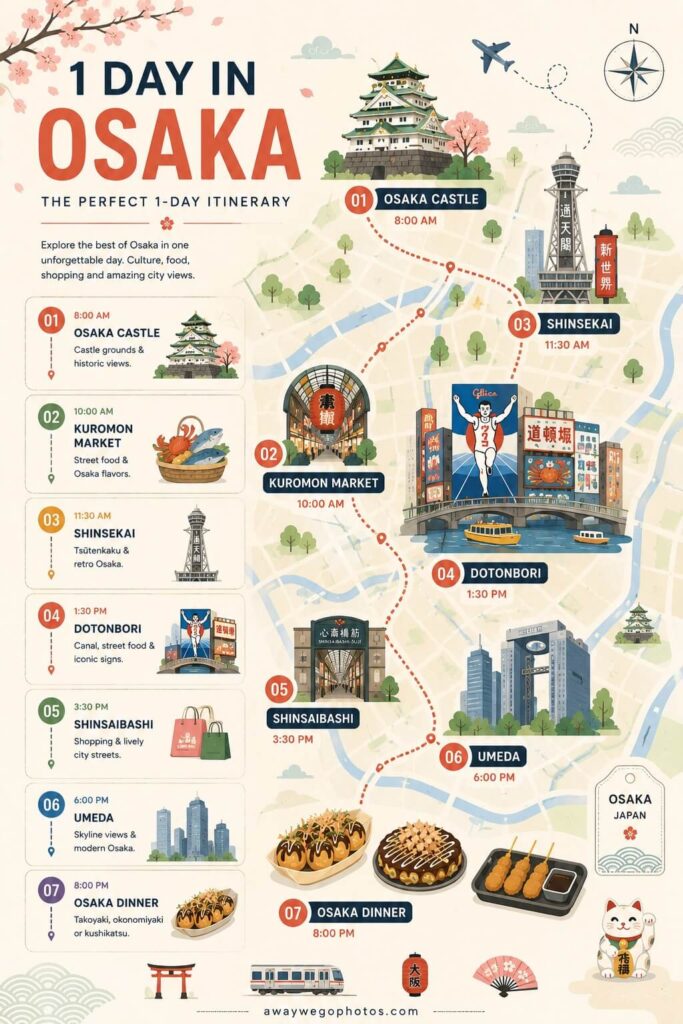
If you have only 1 day in Osaka, the key is not trying to see everything. Osaka is a large city, but many of its most memorable historic, cultural, and food experiences can be combined into a manageable route.
This Osaka itinerary focuses on Osaka Castle, Kuromon Market, Dotonbori, and the historic Shitennoji area, creating a day that balances history, architecture, local food, traditional culture, and the energetic streets that make Osaka distinctive.
The route also minimizes unnecessary backtracking. You will begin in the eastern part of central Osaka, move south toward Tennoji, and finish around Namba and Dotonbori.
Best for: First-time visitors, couples, solo travelers, families, and general travelers
Recommended start: Around 8:30–9:00 AM
Walking: Moderate to high
Main transportation: Osaka Metro + walking
🗺️ 1-Day Osaka Itinerary at a Glance
🌅 Morning: Osaka Castle and its historic park
🍜 Lunch: Kuromon Market and Osaka specialties
🏛️ Afternoon: Shitennoji Temple and Tennoji
🌆 Evening: Dotonbori and the Namba area
This is a full day, but it deliberately leaves enough time to actually enjoy each area rather than racing between attractions.
Affiliate Disclosure: This post contains affiliate links. I may earn a small commission if you book through them, at no extra cost to you.
📍 Morning — Osaka Castle & Osaka’s History
8:30–11:00 AM — Osaka Castle
Start your day at Osaka Castle, one of the city’s defining landmarks.
The original castle was begun by Toyotomi Hideyoshi in 1583 and became an important symbol of his power during Japan’s turbulent Sengoku period. The castle was later destroyed and rebuilt under the Tokugawa shogunate. The present main tower is a modern reconstruction, while the surrounding grounds preserve historic gates, stone walls, moats, and other important structures.
Inside the tower, the Osaka Castle Museum focuses heavily on Toyotomi Hideyoshi, the castle’s history, and the conflicts surrounding the Toyotomi and Tokugawa eras. The museum currently lists operating hours of 9:00 AM–6:00 PM, with last admission 30 minutes before closing.
Allow approximately 1.5–2 hours for the castle and surrounding park.
⭐ What to see:
- Osaka Castle main tower
- Massive stone walls and moats
- Otemon Gate
- Castle park
- Museum exhibits
- City views from the tower
Osaka Castle Park is much larger than the tower itself, so allow extra walking time. If you are particularly interested in photography or architecture, take some time to look at the stonework and defensive structures rather than heading directly to the museum.
🚇 Getting to the next stop
From Osaka Castle, take the Osaka Metro toward the Tennoji/Shitennoji area. Depending on your starting station and route, expect roughly 20–30 minutes including walking and transfers.
🚶 See Osaka on Foot
Explore Osaka's famous landmarks and streets on a walking tour led by a native expert, offering a local perspective on the city.
Book Your Tour →🍜 Lunch — Kuromon Market
11:45 AM–1:15 PM — Kuromon Ichiba Market
For lunch, head south to Kuromon Market, one of Osaka’s best places to experience the city’s food culture.
The market stretches for roughly 580 meters and has around 150 shops selling seafood, fruit, vegetables, prepared foods, snacks, and other goods. Its history reaches back to the late Edo period, when merchants sold fish around Enmyoji Temple. The market later became known as Kuromon Market after the temple’s black gate.
Today, it is often called “Osaka’s Kitchen.”
You do not need a formal restaurant lunch here. Instead, walk through the covered arcade and sample a few things that appeal to you.
🍜 Things to look for:
- Fresh seafood
- Sushi
- Seafood bowls
- Grilled seafood
- Tempura
- Fresh fruit
- Croquettes
- Japanese sweets
The market is best treated as a food experience rather than one specific lunch stop. A quick walk can take around 30 minutes, but allowing 1–2 hours gives you time to eat and browse. Opening hours vary by individual shop.
Related: 10 Must-Try Foods in Osaka
Tip: Kuromon Market can become extremely busy. If you prefer a calmer experience, arriving earlier is generally better.
🏛️ Afternoon — Shitennoji & Old Osaka
1:30–3:00 PM — Shitennoji Temple
After lunch, continue toward Shitennoji, one of Osaka’s most historically significant temples.
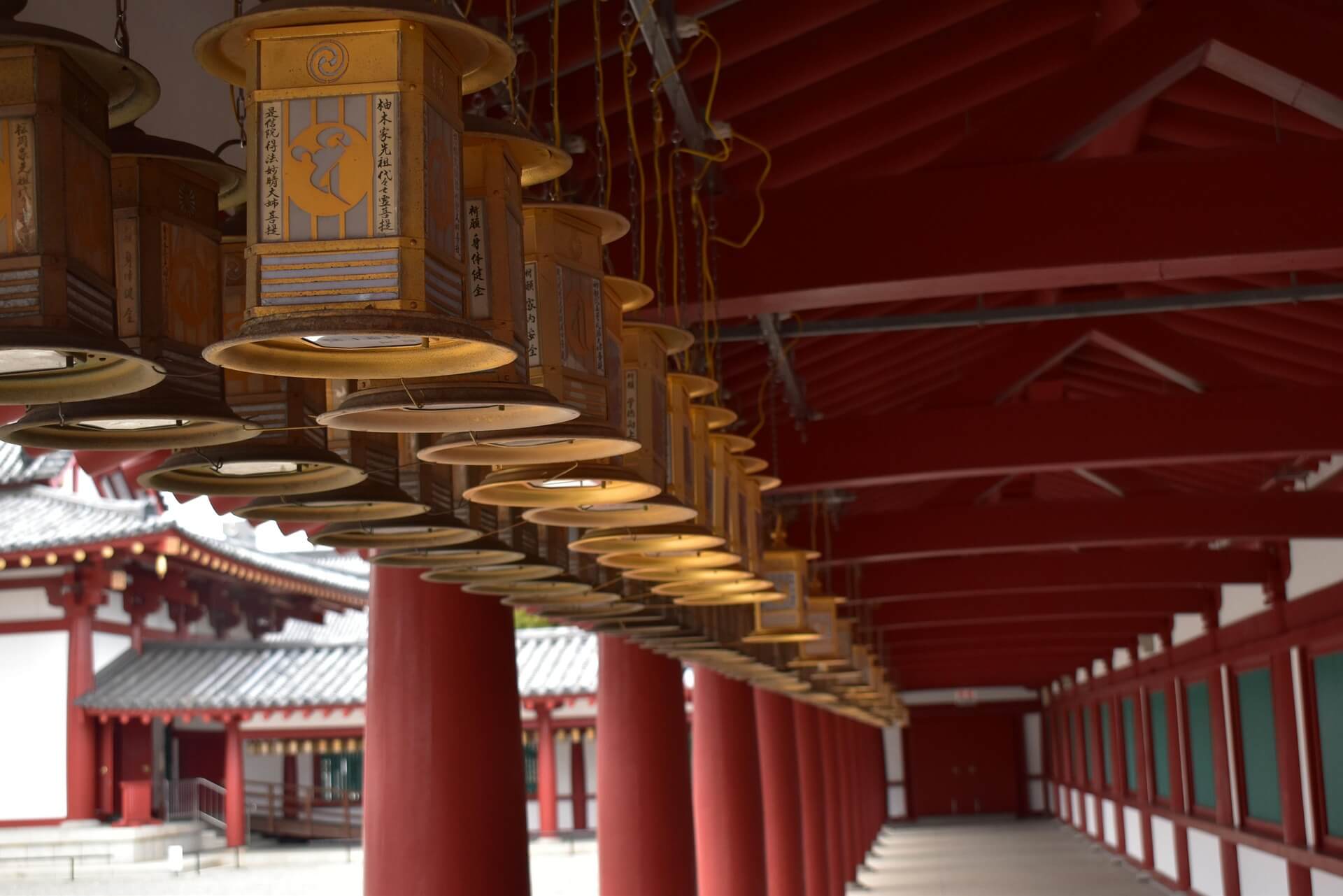
Tradition attributes its founding to Prince Shotoku in the late 6th century, making it one of Japan’s oldest Buddhist temple complexes. The site has suffered repeated disasters and has been rebuilt over the centuries, but its long history remains central to Osaka’s cultural identity.
The temple offers a completely different atmosphere from the busy streets of central Osaka.
Take time to explore:
- The central temple complex
- Five-story pagoda
- Temple gates
- Traditional architecture
- Temple grounds
- Gokuraku-jodo Garden, if open during your visit
The temple’s current visiting hours vary seasonally. From October through March, the temple buildings, central complex, and garden generally open from 8:30 AM to 4:00 PM; from April through September, they generally close at 4:30 PM.
Because hours can change for special religious events, check the official information before visiting.
Shitennoji Temple official visitor information
3:00–4:00 PM — Tennoji Area
After visiting Shitennoji, take a relaxed walk through the surrounding Tennoji area.
This gives you a chance to see a different side of Osaka beyond the famous tourist streets. Depending on your energy level, you could walk toward Tennoji Park, explore nearby streets, or simply take a café break.
If you are interested in architecture and city views, Abeno Harukas is also nearby. However, with only one day, treat it as an optional addition rather than a required stop.
⭐ Important: Do not try to squeeze every Tennoji attraction into this itinerary. The goal is to keep the afternoon relaxed before heading to Namba.
🌆 Evening — Namba & Dotonbori
4:30–7:30 PM — Dotonbori
Finish your day in Dotonbori, the energetic heart of Osaka’s Minami district.
This is where Osaka’s food culture, colorful architecture, shopping streets, historic entertainment traditions, and riverfront scenery come together.
Dotonbori’s history goes back to the early 17th century. The area developed around a canal excavated under the direction of Yasui Doton, and theaters later transformed the district into an important entertainment center. Kabuki, Bunraku, and other performing arts helped establish Dotonbori’s reputation long before its famous modern neon signs appeared.
Today, the easiest way to experience the area is simply to walk.
📸 Look for:
- Glico Running Man sign
- Ebisubashi Bridge
- Dotonbori River
- Tonbori River Walk
- Giant restaurant signs
- Hozenji Yokocho
- Shinsaibashi-suji nearby
🍽️ Dinner — Try Osaka’s Local Specialties
Dotonbori is an ideal place to finish your Osaka food experience.
Consider trying okonomiyaki, a savory cabbage-based dish cooked on a hot plate, or takoyaki, Osaka’s famous octopus-filled snack. Both are strongly associated with the city’s food culture.
Related: 10 Must-Try Foods in Osaka
You could also look for Osaka-style udon, kushikatsu, or pressed Osaka sushi if you want something different.
7:30–8:30 PM — Optional Evening Walk
If you still have energy, walk from Dotonbori toward Hozenji Yokocho and the surrounding Namba streets.
Hozenji Yokocho offers a more atmospheric contrast to Dotonbori’s giant illuminated signs. Alternatively, simply stay around the riverfront and enjoy Osaka’s evening atmosphere.
There is no need to add nightlife to the itinerary. Osaka is just as enjoyable in the evening through its food streets, historic lanes, architecture, and illuminated riverfront.
🚇 Getting Around Osaka in One Day
For this itinerary, Osaka Metro is the most useful transportation network.
The route is essentially:
Osaka Castle → Shitennoji/Tennoji → Kuromon Market → Namba/Dotonbori
Use an IC card when convenient, or consider a one-day Osaka Metro/Osaka City Bus pass if you expect to make enough trips to justify it.
For the current 2026–2027 period, the Enjoy Eco Card costs ¥820 for adults on weekdays and ¥620 on Saturdays, Sundays, and holidays, providing unlimited rides on Osaka Metro and Osaka City Bus services covered by the pass.
Osaka Metro official fares and passes
🚶 How much will you walk?
Quite a bit.
Osaka Castle Park itself involves substantial walking, and Kuromon Market, Shitennoji, and Dotonbori are all best experienced on foot.
Wear comfortable shoes and avoid planning a long shopping session immediately before the castle.
🌿 Discover Kansai in One Day
From Nara's famous deer to Fushimi Inari's red torii gates and Arashiyama's scenic landscapes, experience several Kansai highlights in one trip.
View the Tour →💡 1-Day Osaka Travel Tips
- Start early. Beginning around 8:30–9:00 AM gives you more time and helps avoid the busiest periods.
- Check attraction hours before leaving. Museums and temple facilities can have seasonal schedules.
- Do not overpack the itinerary. Osaka Castle, Kuromon, Shitennoji, and Dotonbori already make a full day.
- Use an IC card or appropriate transit pass. It makes moving around Osaka much easier.
- Carry comfortable shoes. This itinerary involves significant walking.
- Save room for food. Osaka is known for dishes such as takoyaki and okonomiyaki, so grazing throughout the day works well.
- Expect crowds in Dotonbori. Visit the famous signs, but also explore the smaller streets nearby.
- Check market shop hours. Kuromon Market does not operate as one single business, so individual stores have different schedules.
❓ FAQ: 1 Day in Osaka
Is 1 day enough for Osaka?
One day is enough to experience several of Osaka’s major highlights, especially if you concentrate on one logical route. You will not see everything, but Osaka Castle, Shitennoji, Kuromon Market, and Dotonbori provide a good introduction to the city’s history, culture, food, and atmosphere.
What should I prioritize in Osaka if I only have one day?
For a first visit, prioritize Osaka Castle, one historic temple, a food market, and Dotonbori. This gives you a better balance than spending the entire day visiting shopping districts.
Can I visit Osaka Castle and Dotonbori in one day?
Yes. They are in different parts of central Osaka, but the Metro makes the journey practical. Allow roughly half a day for the castle and nearby areas, then spend the afternoon and evening around southern Osaka.
What food should I try in Osaka?
Start with takoyaki and okonomiyaki, two of Osaka’s best-known local specialties. Kuromon Market is also useful for sampling seafood, sushi, fruit, and other Japanese foods.
Is Osaka easy to explore without a car?
Yes. Osaka’s Metro and rail networks make a car unnecessary for this itinerary. Walking is also an important part of experiencing neighborhoods such as Dotonbori and the streets around Kuromon Market.
📌 Final Thoughts
A well-planned 1 Day in Osaka can give you a surprisingly rich introduction to the city. Begin with the history and architecture of Osaka Castle, explore Osaka’s food culture at Kuromon Market, slow down at historic Shitennoji, and finish among the bright streets and riverfront scenery of Dotonbori.
The biggest mistake is trying to see every attraction in a single day. Instead, follow a logical route, leave room for food and wandering, and allow Osaka’s neighborhoods to become part of the experience. If you have more time, a 3-day Osaka itinerary would allow you to explore additional neighborhoods, museums, markets, and day-trip possibilities at a much more relaxed pace.