Planning a trip to Osaka or simply curious to learn more about one of Japan’s most fascinating cities? Osaka has a remarkable story shaped by ancient trade, powerful warlords, merchants, food culture, and centuries of cultural exchange.
From its origins as an important gateway to Asia to its reputation as “the Kitchen of the Nation,” these five facts reveal some of the history, culture, landmarks, and traditions that make Osaka unique.
Affiliate Disclosure: This post contains affiliate links. I may earn a small commission if you book through them, at no extra cost to you.
🏯 1. Osaka Has More Than 1,400 Years of History
Osaka’s history stretches back well over 1,000 years, with its origins as an important port and center of international exchange.
The area now known as Osaka was already an important gateway by the 5th century, when Naniwazu served as a port connecting Japan with Korea, China, and other parts of Asia. New technologies, crafts, information, and Buddhism reached Japan through these connections, helping Osaka develop into an important center of exchange.
The city’s importance continued to grow. In 593, Prince Shotoku established Shitennoji, one of Japan’s oldest Buddhist temples, while in 645, Emperor Kotoku moved the imperial capital to Naniwa, in present-day Osaka. Although the capital later moved elsewhere, Osaka remained an important center for trade and diplomacy.
📍 Travel connection: Visitors can explore this history at places such as Shitennoji, the Naniwa Palace Ruins, and Osaka Castle. These sites reveal different chapters of Osaka’s long development.
🏯 Discover Osaka's Culture
See Osaka's top sights and cultural landmarks while exploring the city on foot alongside a knowledgeable native guide.
View the Tour →🎎 2. Osaka Became Known as the “Kitchen of the Nation”
Osaka has been famous for food and commerce for centuries and earned the nickname “Kitchen of the Nation.”
During the Edo period, Osaka became one of Japan’s most important economic centers. Rice and other goods from across Japan were transported to the city, traded, and distributed elsewhere. The Dojima Rice Market became particularly important, with rice prices there serving as a national reference.
This commercial history helped shape Osaka’s distinctive food culture. The city became associated with affordable, flavorful dishes enjoyed by ordinary people, including takoyaki, okonomiyaki, kushikatsu, and udon.
📍 Travel connection: Head to areas such as Dotonbori, Kuromon Market, and Shinsekai to experience Osaka’s famous food culture. Trying takoyaki or okonomiyaki is an easy way to connect with the city’s culinary identity.
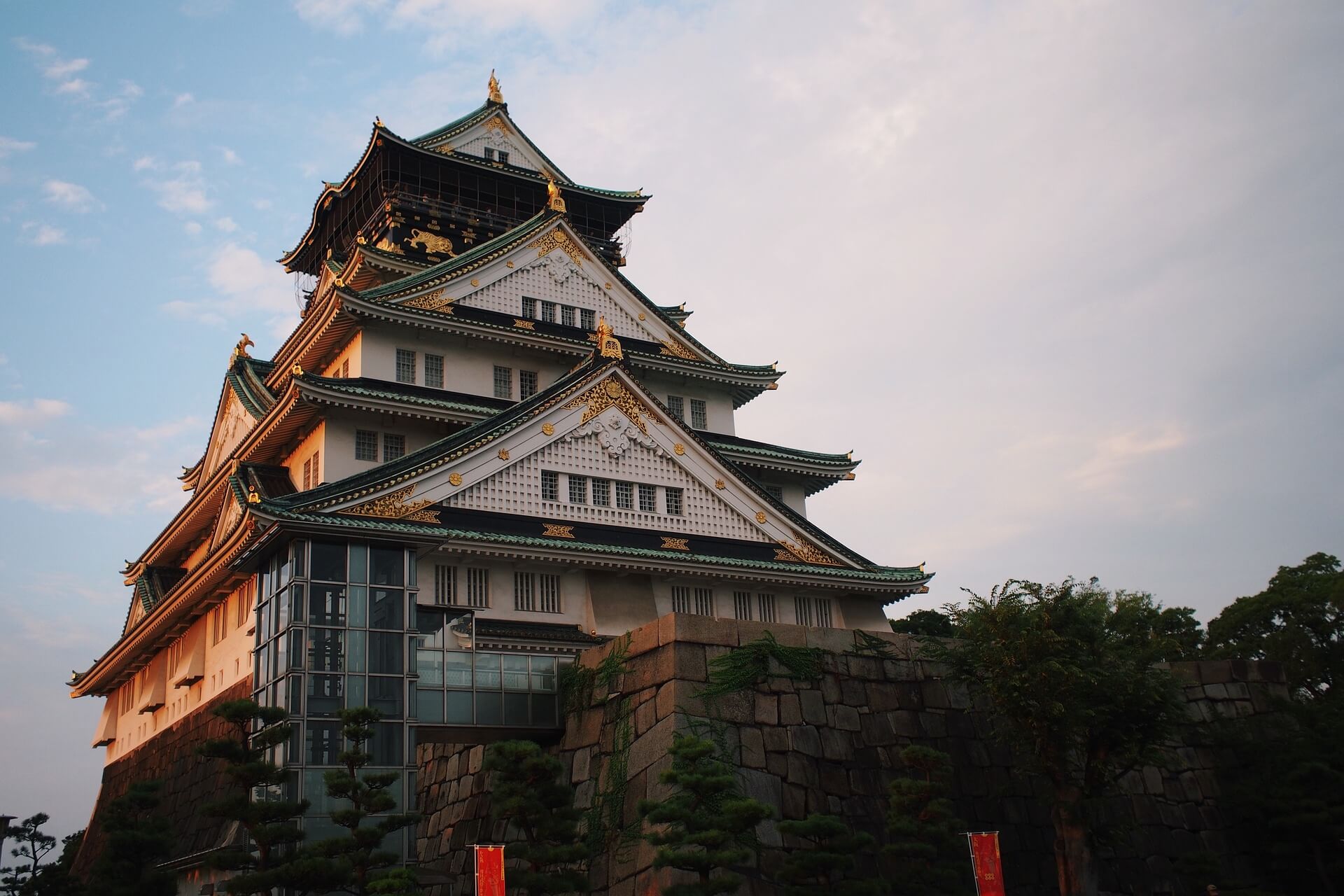
🏰 3. Osaka Castle Was Built by Toyotomi Hideyoshi
Osaka Castle is one of Japan’s most recognizable landmarks and is closely connected with Toyotomi Hideyoshi’s attempt to unify Japan.
Construction of Osaka Castle began in 1583 under Toyotomi Hideyoshi on the former site of Ishiyama Honganji Temple. Hideyoshi used Osaka as his base while consolidating his control over Japan, and the castle became the center of a large and powerful castle town.
The original castle was destroyed during the Siege of Osaka in 1615. It was later rebuilt under the Tokugawa shogunate but suffered further destruction, including the loss of its main tower in a lightning strike in 1665. The present main tower was reconstructed in 1931, funded through donations from Osaka residents.
📍 Travel connection: Today, Osaka Castle Park is one of the city’s major attractions. Inside the reconstructed tower is the Osaka Castle Museum, which focuses on Toyotomi Hideyoshi, the Sengoku period, and the history of the castle.
🍜 4. Takoyaki Became an Osaka Favorite in the 20th Century
Takoyaki is one of Osaka’s most famous foods, but the dish is actually much more recent than many visitors might expect.
The first takoyaki shops began appearing in Osaka in the 1930s, and the dish developed from earlier flour-based street foods such as choboyaki and radioyaki. Osaka’s proximity to Osaka Bay also helped make octopus a readily available ingredient.
The result was a simple but distinctive street food: small balls of batter cooked around pieces of octopus and commonly served with sauce and other toppings. Takoyaki eventually became strongly associated with Osaka and is now recognized around Japan and internationally as one of the city’s signature foods.
📍 Travel connection: Visitors can find takoyaki throughout Osaka, particularly in busy food districts such as Dotonbori and Namba. Try it freshly cooked from a local shop for the classic Osaka experience.
✨ 5. Osaka Is Home to a UNESCO World Heritage Site of Ancient Burial Mounds
One of the most surprising facts about Osaka is that the region is home to the Mozu-Furuichi Kofun Group, a UNESCO World Heritage Site.
The Mozu-Furuichi Kofun Group consists of ancient Japanese burial mounds dating primarily from the 3rd to 6th centuries CE. UNESCO recognizes 49 kofun within the property, which represent an important period in the development of ancient Japanese society.
Some of these enormous burial mounds have distinctive keyhole-shaped designs, while others are circular, square, or scalloped. They were built for members of the ancient elite and contain evidence of sophisticated construction techniques, including stone paving and clay haniwa figures.
The site is particularly fascinating because it provides a glimpse into Japan long before the Osaka of castles, merchants, department stores, and neon-lit streets existed.
📍 Travel connection: The kofun are located primarily around Sakai and Habikino, within Osaka Prefecture. Visitors interested in ancient Japanese history can explore the surrounding areas and learn more about the burial mounds and the society that created them.
🌸 Why These Facts Make Osaka Special
These 5 facts about Osaka reveal a city with much more depth than its modern reputation for food and entertainment might suggest.
Osaka has been a center of international exchange for more than a millennium, became one of Japan’s most important commercial cities, played a major role in the rise of Toyotomi Hideyoshi, developed a distinctive food culture, and preserves remarkable archaeological sites from ancient Japan.
Today, Osaka combines this history with energetic neighborhoods such as Umeda, Namba, and Dotonbori, creating a destination where ancient temples, castles, markets, traditional food, and modern city life can all be experienced in one trip.
🦌 Discover Nara & Kyoto Highlights
Visit Nara, Fushimi Inari Taisha, and Arashiyama in one day while enjoying a convenient sightseeing trip from Kyoto or Osaka.
View the Tour →❓ Frequently Asked Questions About Osaka
🍱 What is Osaka famous for?
Osaka is particularly famous for its food culture, Osaka Castle, lively neighborhoods, commerce, and distinctive local culture. The city is especially associated with foods such as takoyaki and okonomiyaki and has long been known as the “Kitchen of the Nation.”
🏯 How old is Osaka?
Osaka’s history goes back at least 1,400 years, with the area already serving as an important port and center of international exchange by the 5th century. The city has also played an important political and economic role at various points throughout Japanese history.
✨ What is the most interesting fact about Osaka?
One of the most surprising facts is that the Osaka region contains the Mozu-Furuichi Kofun Group, a UNESCO World Heritage Site containing 49 ancient burial mounds dating from the 3rd to 6th centuries CE.
📍 What should I visit in Osaka?
Some of the city’s major attractions include:
- 🏰 Osaka Castle
- 🌃 Dotonbori
- 🏯 Shitennoji Temple
- 🍜 Kuromon Market
- 🏙️ Umeda
- 🗼 Shinsekai
- 🚶 Namba
- 🏛️ Osaka Museum of History
🎎 What is Osaka known for culturally?
Osaka is known for its distinctive food culture, merchant heritage, traditional performing arts, comedy, and energetic local character. Manzai, a form of Japanese comedy associated with Osaka, is one example of the city’s influence on Japanese popular culture.
🧳 Plan Your Trip to Osaka
Want to learn more before visiting Osaka? Check out these helpful travel guides: