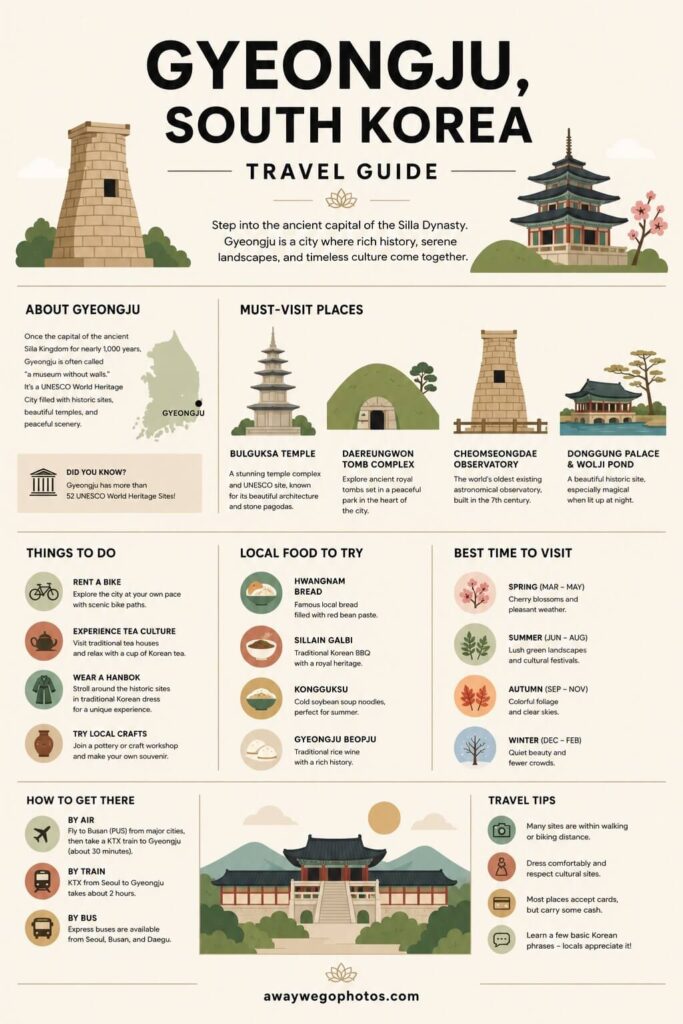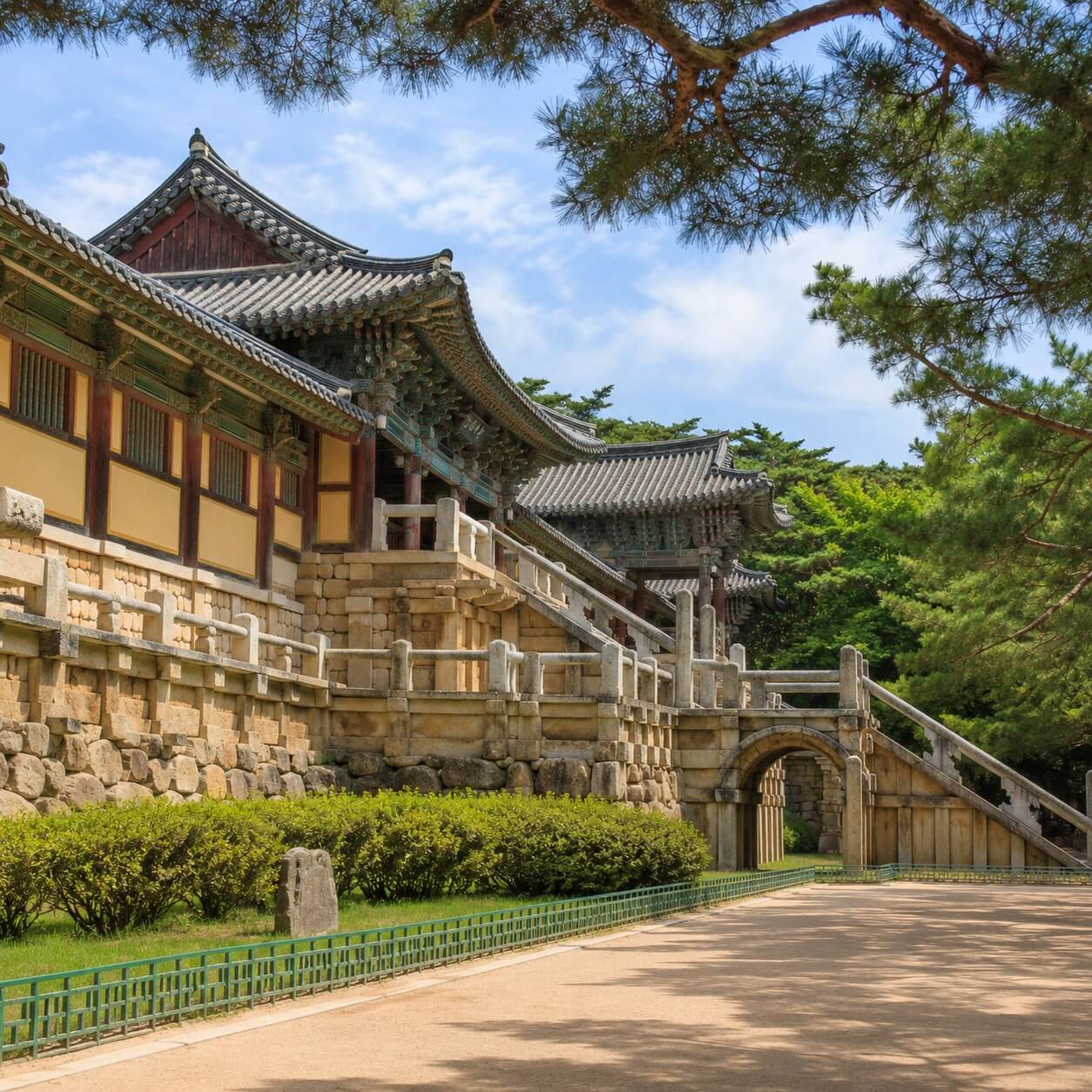
Gyeongju is one of the most fascinating destinations in South Korea. Known as the ancient capital of the Silla Kingdom, the city is home to centuries-old temples, royal tombs, historic observatories, and UNESCO World Heritage Sites. Unlike the fast-paced atmosphere of Seoul or Busan, Gyeongju offers a slower and more cultural travel experience where history comes alive around every corner.
For travelers interested in Korean culture, architecture, and history, Gyeongju is an essential destination. Visitors can explore ancient landmarks during the day, stroll through trendy cafe streets in the evening, and enjoy local specialties unique to the region. Whether you’re visiting for one day or planning a longer stay, Gyeongju combines traditional charm with modern conveniences, making it one of the most rewarding cities to visit in South Korea.
🌟 Why Visit Gyeongju?
Gyeongju is often called “The Museum Without Walls” because historical treasures are scattered throughout the city. It served as the capital of the Silla Kingdom for nearly 1,000 years and remains one of the most historically significant places in Korea.
Reasons to visit include:
✅ UNESCO World Heritage Sites
✅ Beautiful historic architecture
✅ Traditional Korean culture
✅ Scenic landscapes
✅ Cherry blossom and autumn foliage views
✅ Excellent food scene
✅ Relaxed travel atmosphere
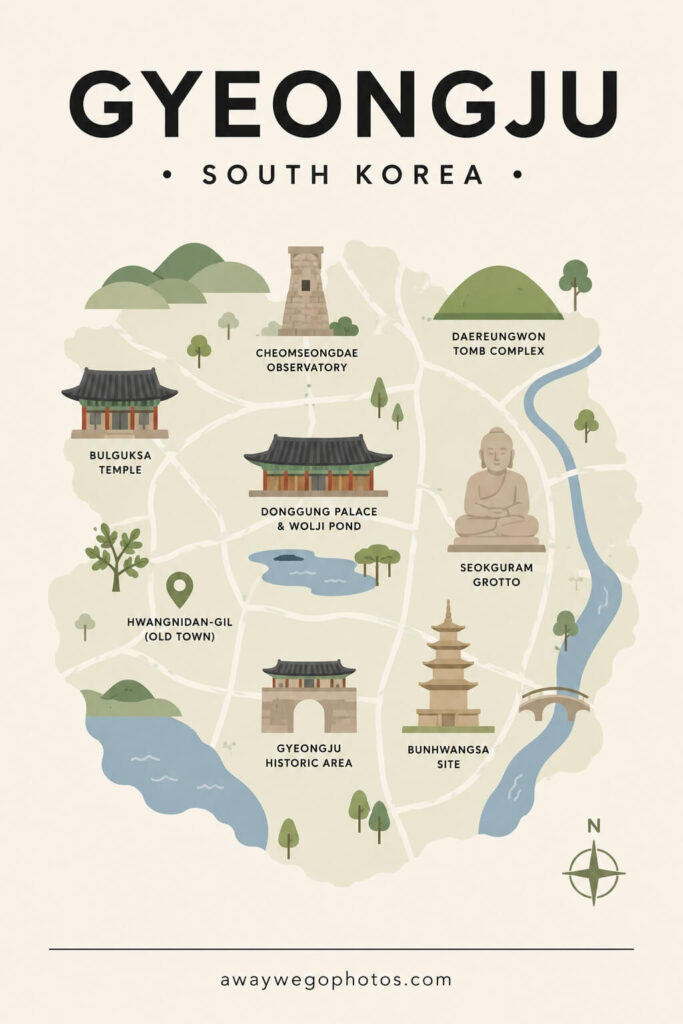
🏛️ Top 5 Things to Do in Gyeongju, South Korea
1. Visit Bulguksa Temple 🏯
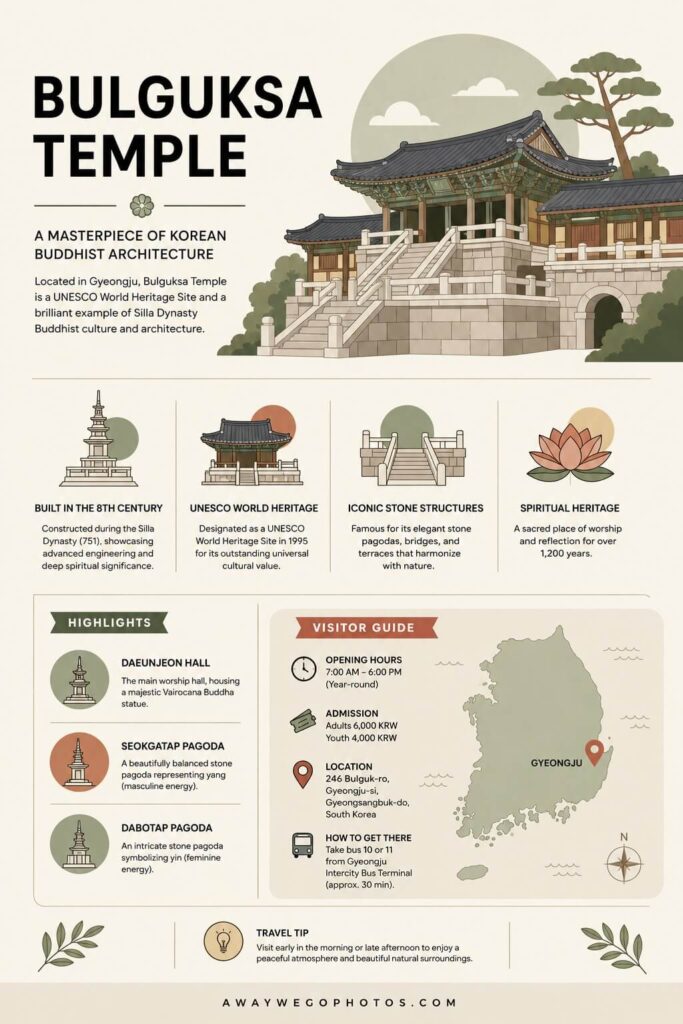
Bulguksa Temple is Gyeongju’s most famous attraction and one of South Korea’s most important Buddhist temples. Originally built during the Silla Dynasty, the temple showcases stunning architecture, stone pagodas, and peaceful mountain surroundings.
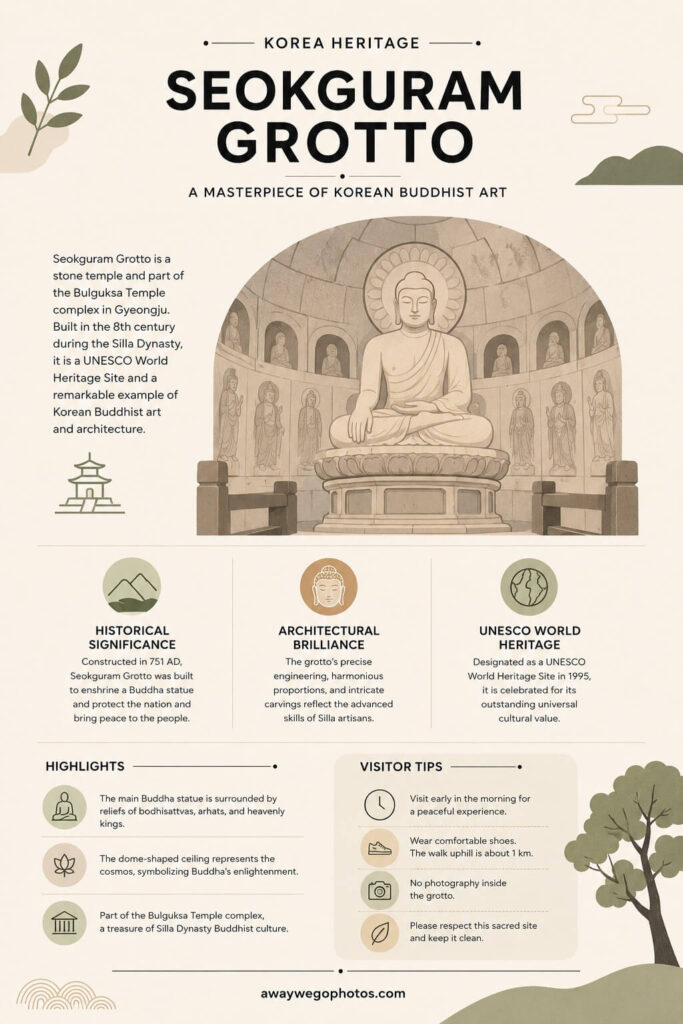
2. Explore Seokguram Grotto 🙏
Located on Mount Toham, Seokguram Grotto contains one of the most impressive Buddha statues in Asia. The site offers incredible views and a glimpse into the artistic achievements of the Silla Kingdom.
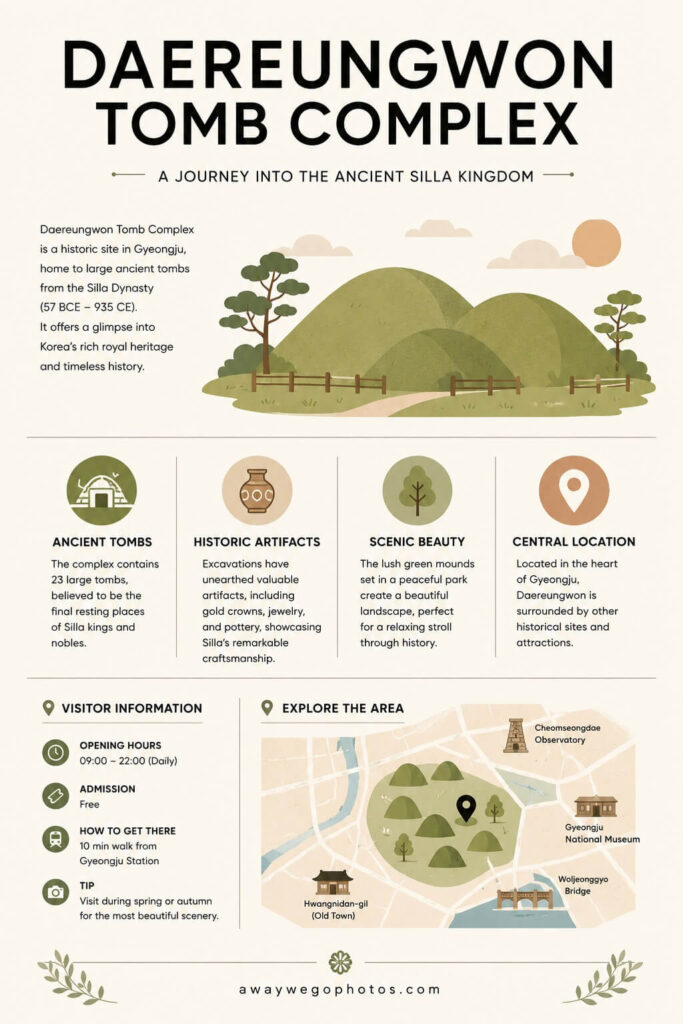
3. Walk Through Daereungwon Tomb Complex 🌳
The Daereungwon Tomb Complex contains large grassy burial mounds belonging to Silla kings and nobles. Walking among these ancient tombs is one of the most unique experiences in Korea.
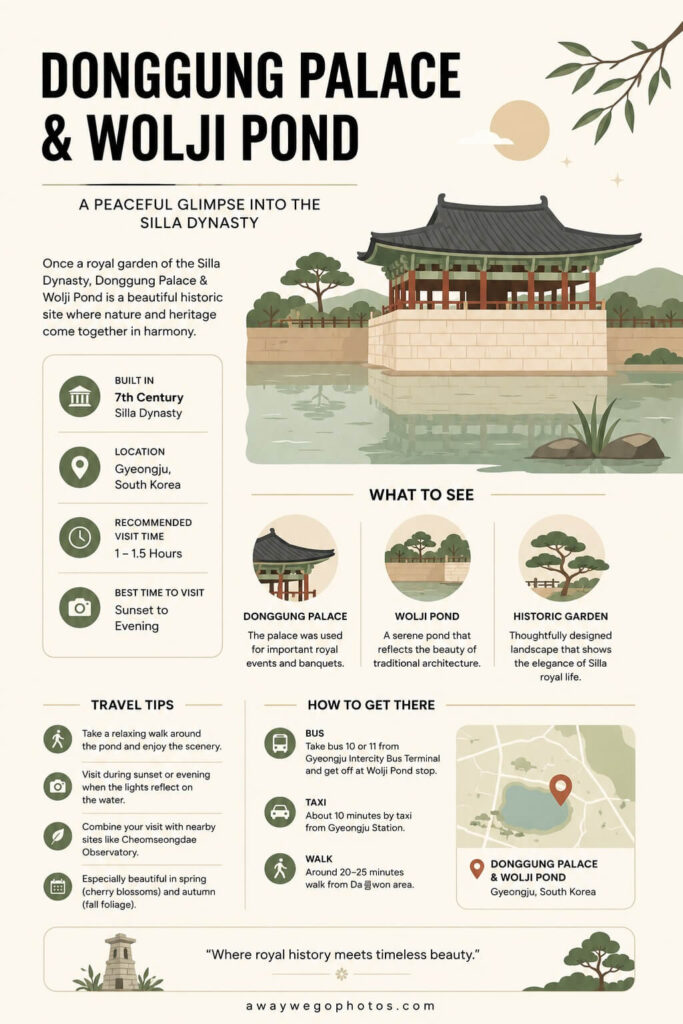
4. Visit Donggung Palace & Wolji Pond 🌙
This former royal palace and artificial pond become especially beautiful at night when the lights
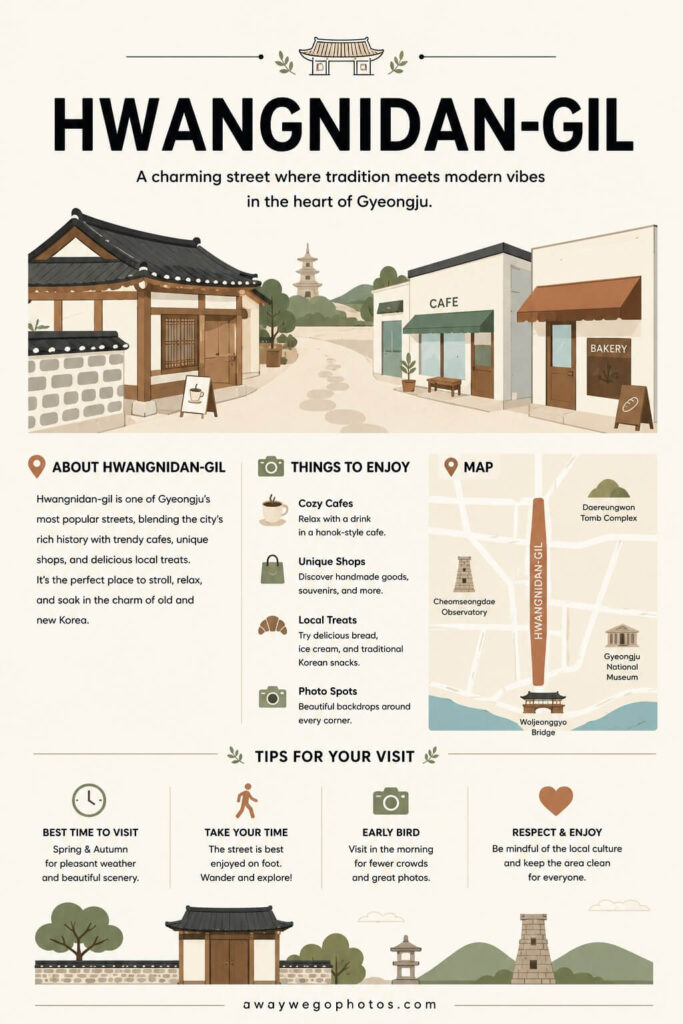
5. Explore Hwangnidan-gil ☕
Hwangnidan-gil is Gyeongju’s most popular street for cafes, restaurants, boutiques, and trendy shops. Traditional hanok buildings have been transformed into modern businesses, creating a unique atmosphere.
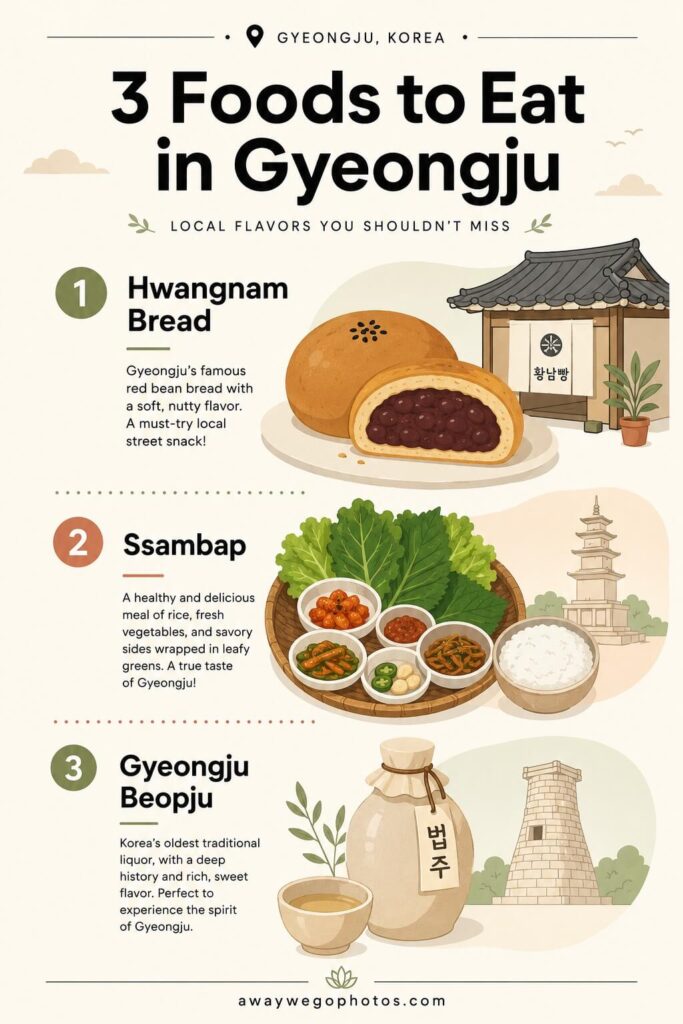
🍲 3 Foods to Eat in Gyeongju
1. Hwangnam Bread (황남빵)
A famous local pastry filled with sweet red bean paste.
2. Ssambap (쌈밥)
Rice, grilled meat, and side dishes wrapped in fresh vegetables.
3. Gyeongju Beopju
Traditional rice wine produced in the region for centuries.
🍽️ 3 Best Food Areas in Gyeongju
1. Hwangnidan-gil
Perfect for cafes, desserts, and modern Korean dining.
2. Gyochon Hanok Village
Known for traditional Korean meals and local specialties.
3. Downtown Gyeongju
Offers authentic local restaurants and famous ssambap eateries.
🛍️ 3 Shopping Areas in Gyeongju
1. Hwangnidan-gil
The city’s trendiest shopping district.
2. Seongdong Market
Traditional Korean market filled with local products and snacks.
3. Jungang Market
Great for food shopping, souvenirs, and local culture.
🏨 3 Places to Stay in Gyeongju
1. Bomun Tourist Complex
Best for luxury hotels, resorts, and families.
2. Downtown Gyeongju
Ideal for first-time visitors wanting easy access to attractions.
3. Hwangnidan-gil Area
Perfect for boutique hotels, cafes, and nightlife.
🌸 Best Time to Visit Gyeongju
Spring (March–May) 🌸
The most popular season thanks to cherry blossoms and comfortable temperatures.
Summer (June–August) ☀️
Green scenery and festivals, though temperatures can be hot.
Autumn (September–November) 🍁
Arguably the best season for colorful foliage and pleasant weather.
Winter (December–February) ❄️
Fewer tourists and peaceful sightseeing opportunities.
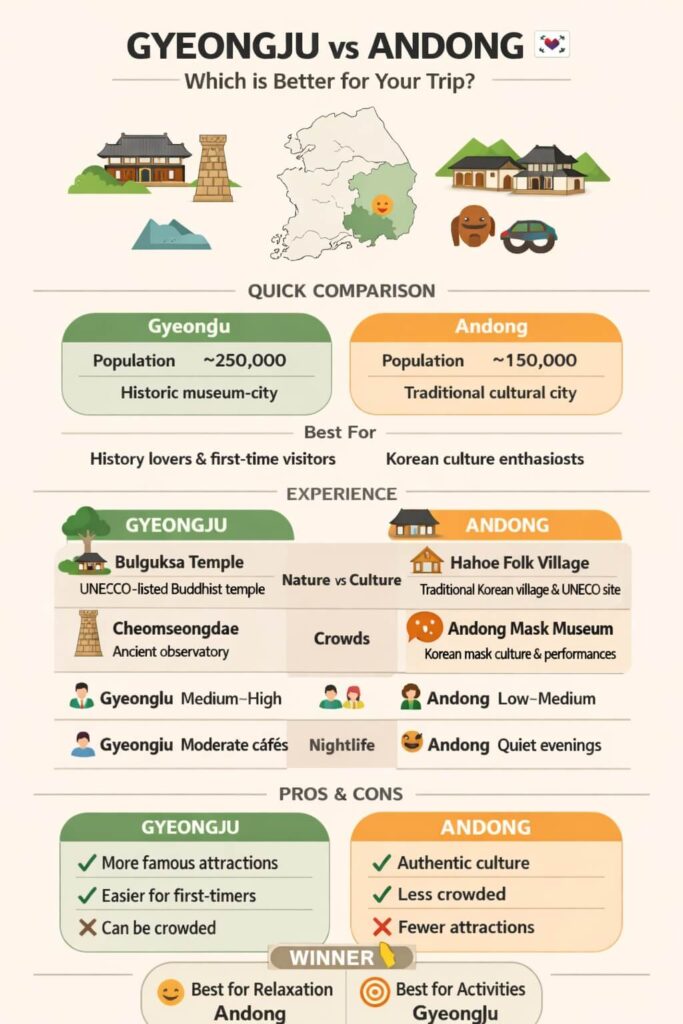
⚖️ Gyeongju vs Andong: Which is Better?
🏯 Choose Gyeongju if you want:
1. More Historical Landmarks
Gyeongju has a larger concentration of major historical sites.
2. Better Tourism Infrastructure
Hotels, transportation, and visitor facilities are more developed.
3. A Mix of History and Modern Cafes
Historic attractions combined with trendy districts like Hwangnidan-gil.
🎭 Choose Andong if you want:
1. Traditional Folk Culture
Andong offers deeper exposure to Confucian heritage.
2. Traditional Villages
Home to the famous Hahoe Folk Village.
3. A Quieter Atmosphere
Fewer tourists and a more rural feel.
🏆 Final Decision
For most travelers, Gyeongju is the better choice.
The city offers more attractions, easier sightseeing, better accommodation options, and some of South Korea’s most important UNESCO World Heritage Sites. If you can only visit one historical city in Korea, Gyeongju is usually the best option.
⏳ How Many Days in Gyeongju?
1 Day
Enough to see the main highlights but expect a busy schedule.
2 Days (Recommended)
The ideal amount of time for most visitors.
You’ll have enough time to explore major historical attractions, enjoy local food, and experience Gyeongju’s unique atmosphere.
3 Days
Perfect for a relaxed trip that includes Bomun Lake, museums, and hidden gems.
4+ Days
Best for history lovers, photographers, and slow travelers.
💡 Gyeongju Travel Tips
- Rent a bicycle to explore the city.
- Visit Wolji Pond after sunset.
- Wear comfortable walking shoes.
- Stay near downtown if it’s your first visit.
- Try Hwangnam Bread before leaving.
- Visit during spring or autumn for the best weather.
❤️ Final Thoughts
Gyeongju is one of South Korea’s most rewarding travel destinations. With its ancient temples, royal tombs, scenic landscapes, and rich cultural heritage, it offers an experience unlike anywhere else in the country. Whether you’re a history enthusiast, a photographer, or simply looking to explore a different side of Korea, Gyeongju deserves a place on your itinerary.
From UNESCO World Heritage Sites to charming hanok cafes, every corner of Gyeongju tells a story. Spend a few days exploring its timeless treasures and you’ll quickly understand why this ancient capital remains one of Korea’s most beloved destinations.
Like this Post? Save it on Pinterest!