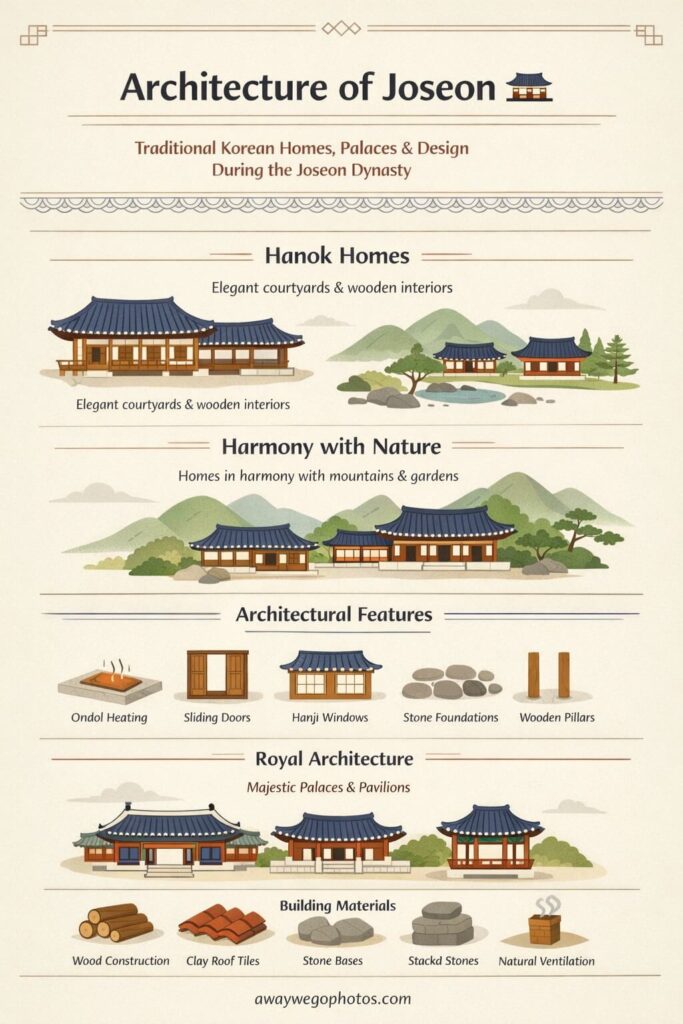
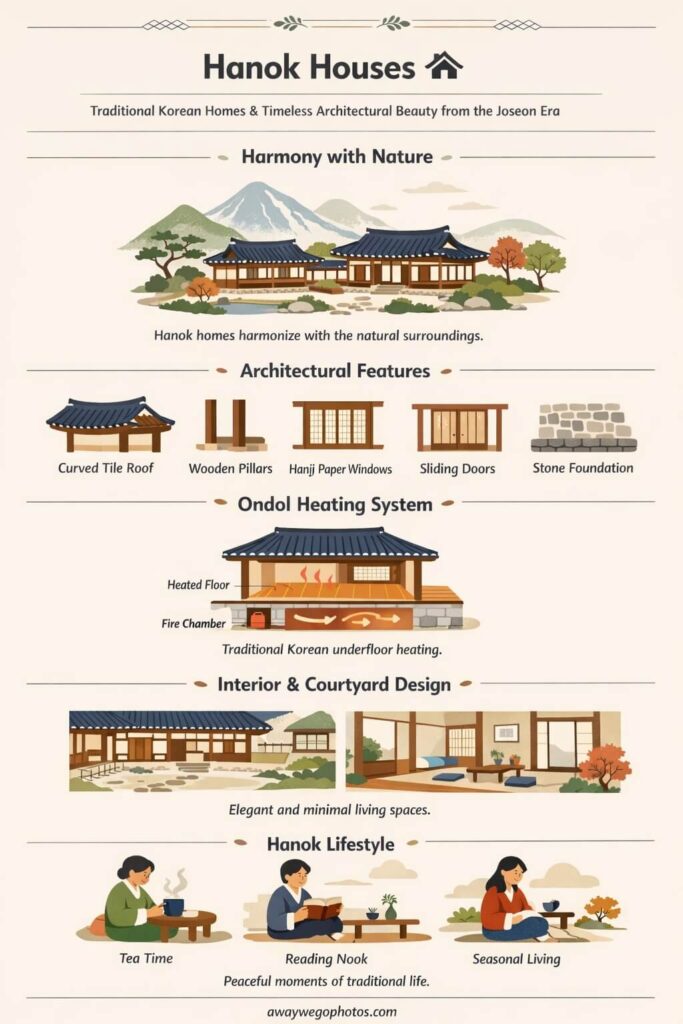
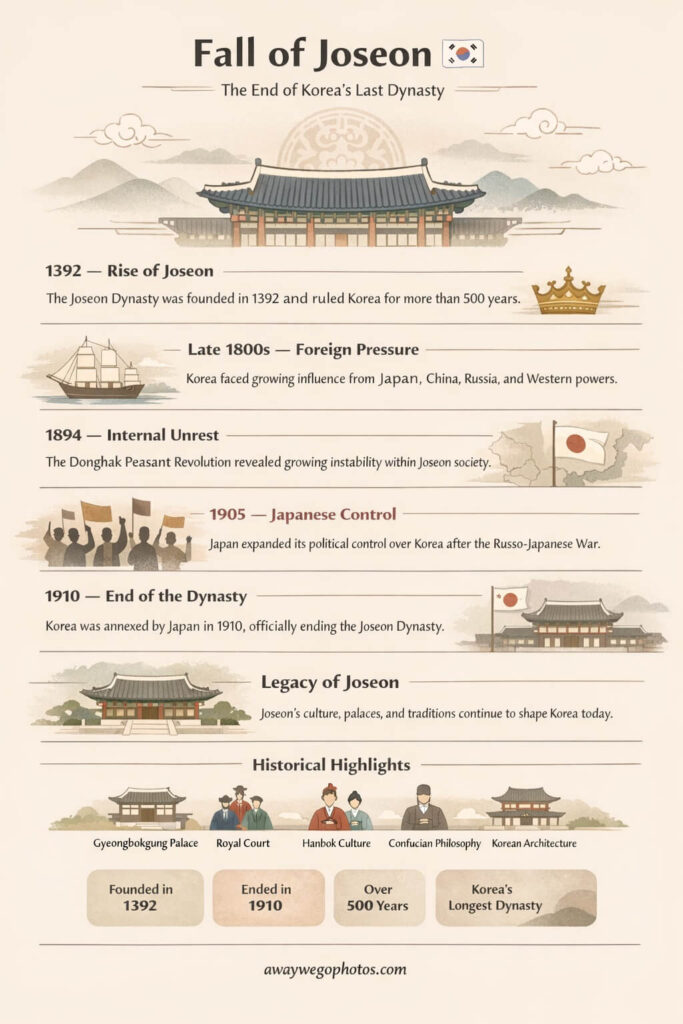
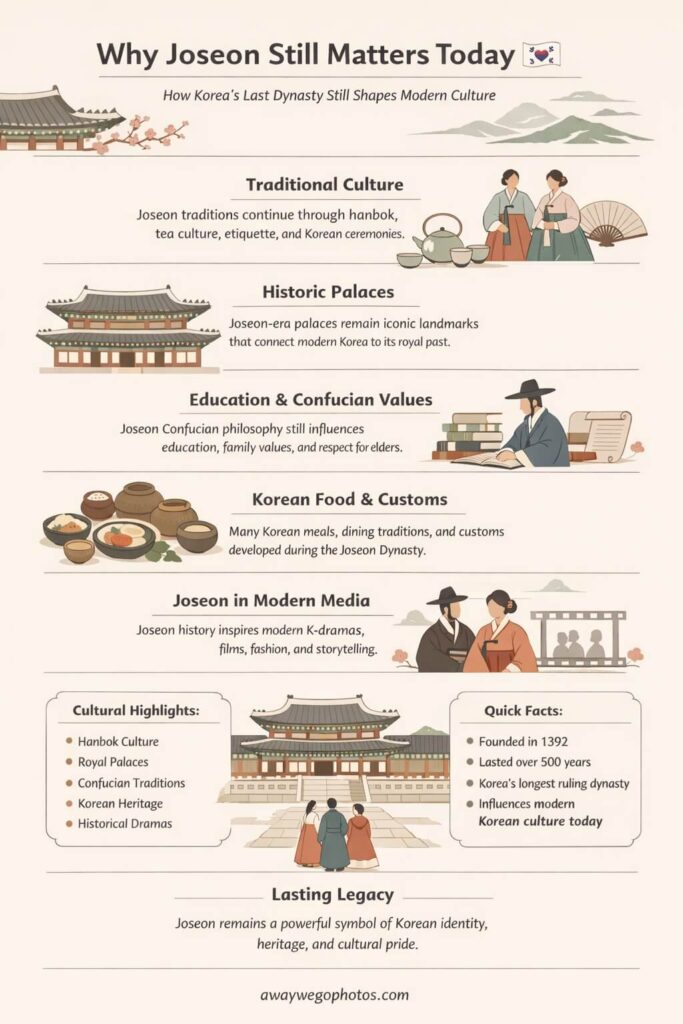
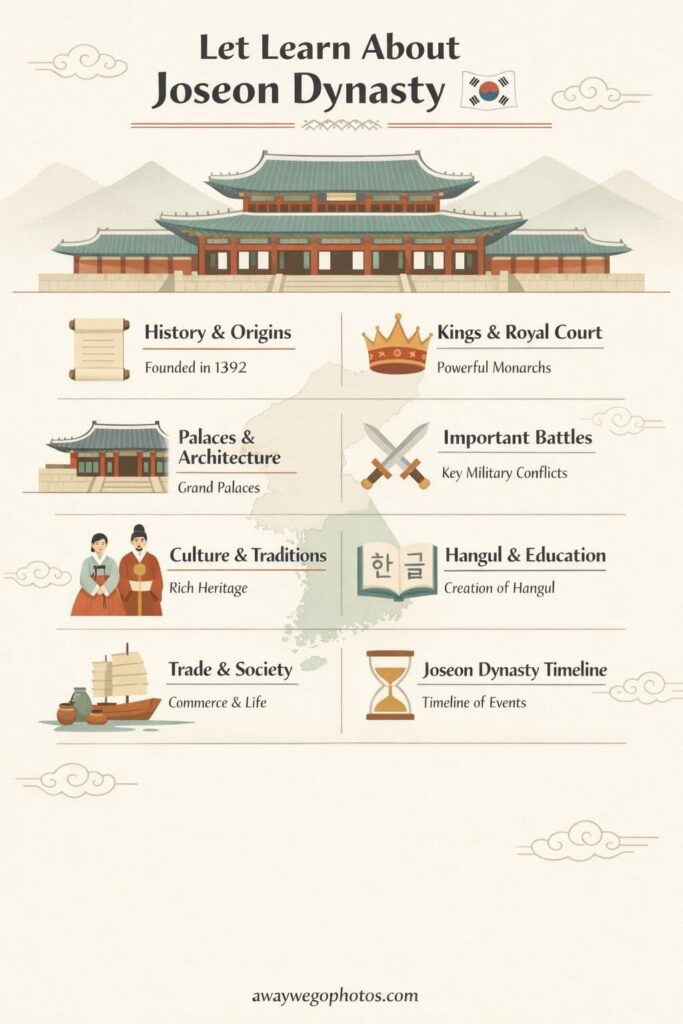
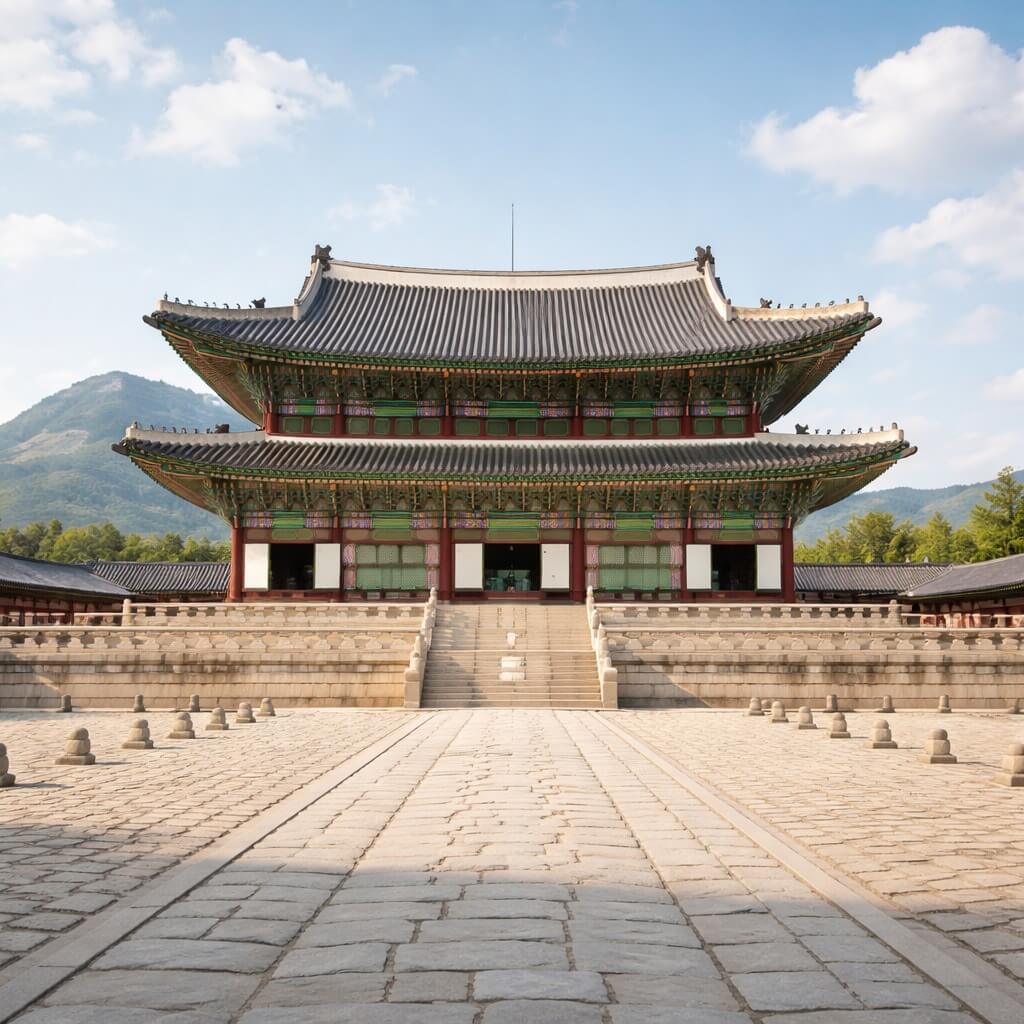
The Joseon Dynasty was the longest-ruling dynasty in Korean history and one of the most influential kingdoms in East Asia. Lasting for more than 500 years from 1392 to 1910, Joseon shaped nearly every aspect of Korean identity — from language and philosophy to architecture, food, education, and social customs.
When travelers explore modern South Korea today, traces of Joseon are everywhere. Ancient palaces stand among skyscrapers in Seoul, Confucian traditions continue in family ceremonies, and the Korean alphabet used daily was created during the Joseon period.
The dynasty witnessed remarkable achievements in science, literature, military defense, and governance while also surviving invasions, political conflicts, and dramatic social changes. It transformed Korea into a centralized Confucian kingdom that left a legacy still deeply visible today.
Whether you are a history enthusiast, traveler, or Korean culture fan, understanding Joseon helps explain how modern Korea became what it is today.
📜 History of Joseon
The Joseon Dynasty began in 1392 when General Yi Seong-gye overthrew the declining Goryeo Kingdom and established a new royal dynasty. He became King Taejo, the founder of Joseon.
The late Goryeo period had become politically unstable due to corruption, powerful aristocratic families, and conflicts between pro-Ming and pro-Yuan factions. Yi Seong-gye gained military popularity after refusing to attack Ming China and instead turning his army back toward the capital in a famous political coup.
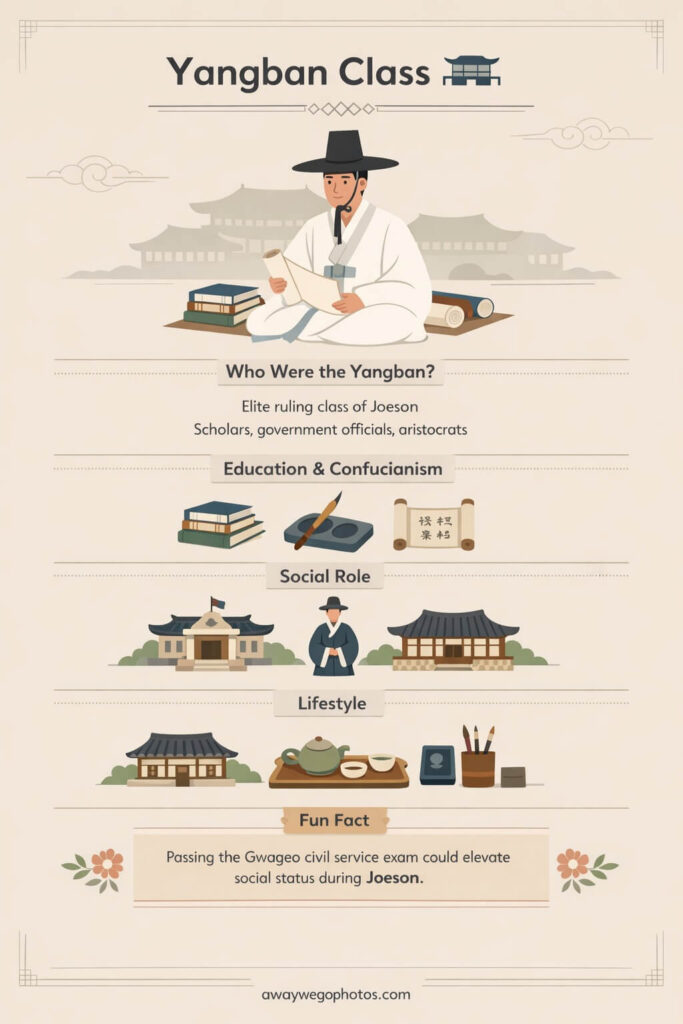
Once Joseon was established, the dynasty adopted Neo-Confucianism as the official state ideology. This dramatically reshaped Korean society. Buddhism, which had dominated during Goryeo, lost political influence while Confucian scholars gained power.
Joseon focused heavily on:
Education
Government administration
Moral ethics
Civil service exams
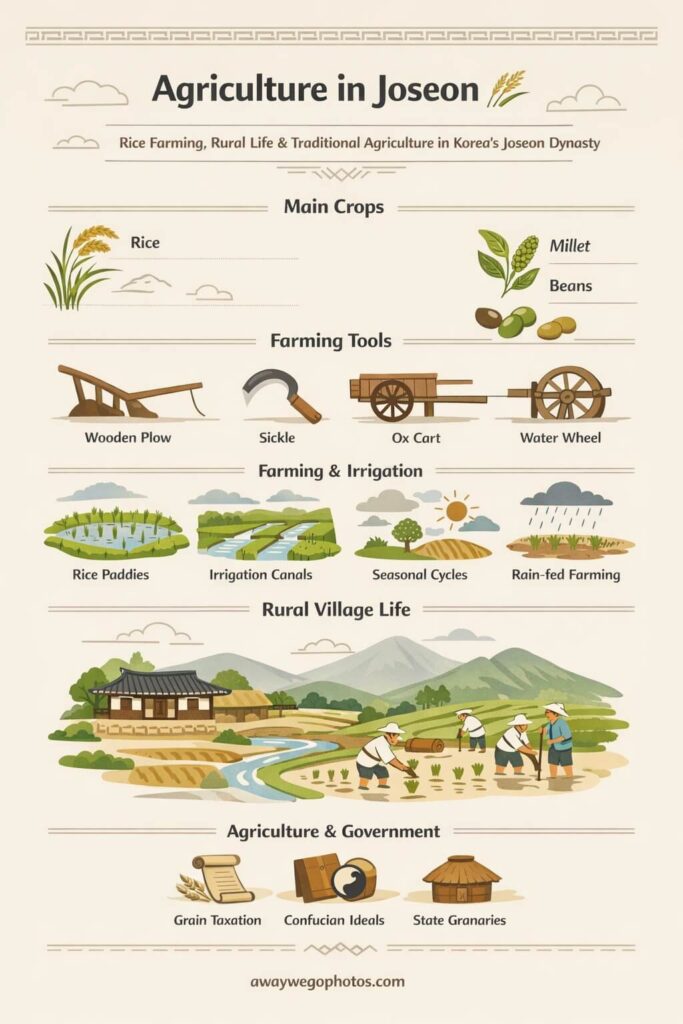
Agricultural development
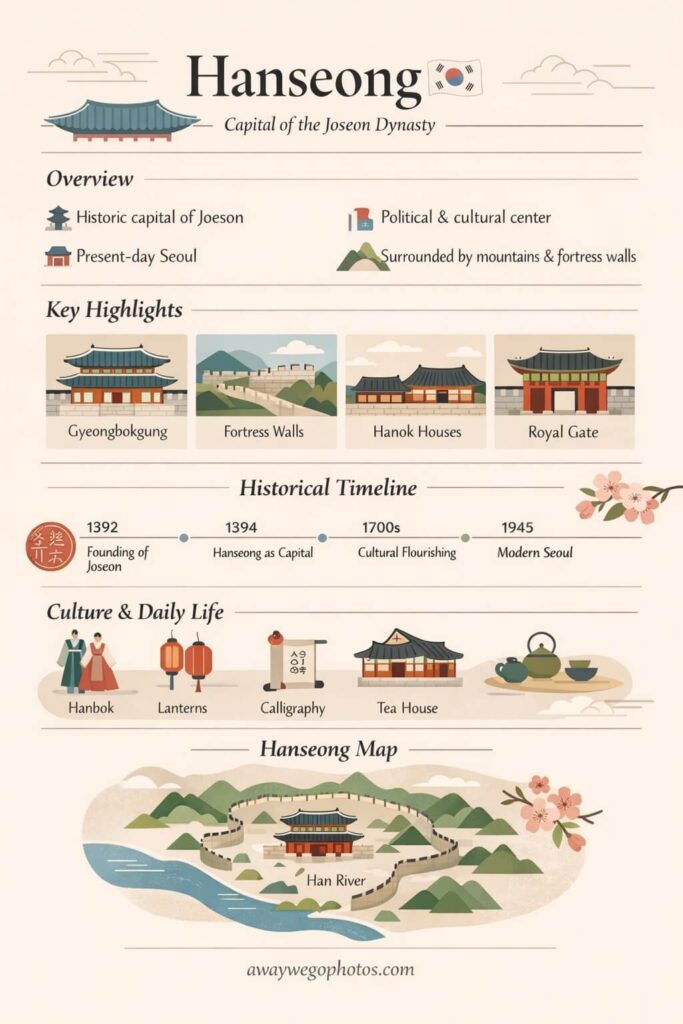
The dynasty eventually moved its capital to Hanseong, present-day Seoul, which became the political and cultural center of Korea.
Over the centuries, Joseon experienced both golden ages and devastating crises. Some periods saw extraordinary cultural development, scientific discoveries, and literary achievements, while others suffered invasions, famines, and internal political struggles.
Despite many challenges, Joseon survived for over five centuries before officially ending in 1910 during Japanese annexation.
🇰🇷 Seoul: Fully Customizable Private Tour for 2 Hours
Explore Seoul your way with a fully customizable private tour tailored to your interests. Whether you want to visit historic palaces, trendy neighborhoods, or hidden local spots, this flexible 2-hour experience lets you create your perfect itinerary.
*This post may contain affiliate links. I may earn a small commission at no extra cost to you.
🏙️ Key Regions (Cities) & Capitals
Seoul (Hanseong)
Modern-day Seoul served as the primary capital of Joseon and remains the heart of Korean history today.
The city was carefully designed according to Confucian and geomantic principles. Royal palaces, government offices, temples, and city gates were strategically positioned within protective mountains.
Major Joseon landmarks in Seoul include:
Gyeongbokgung Palace
Changdeokgung Palace
Deoksugung Palace
Jongmyo Shrine
Sungnyemun Gate
Seoul became the center of:
Politics
Scholarship
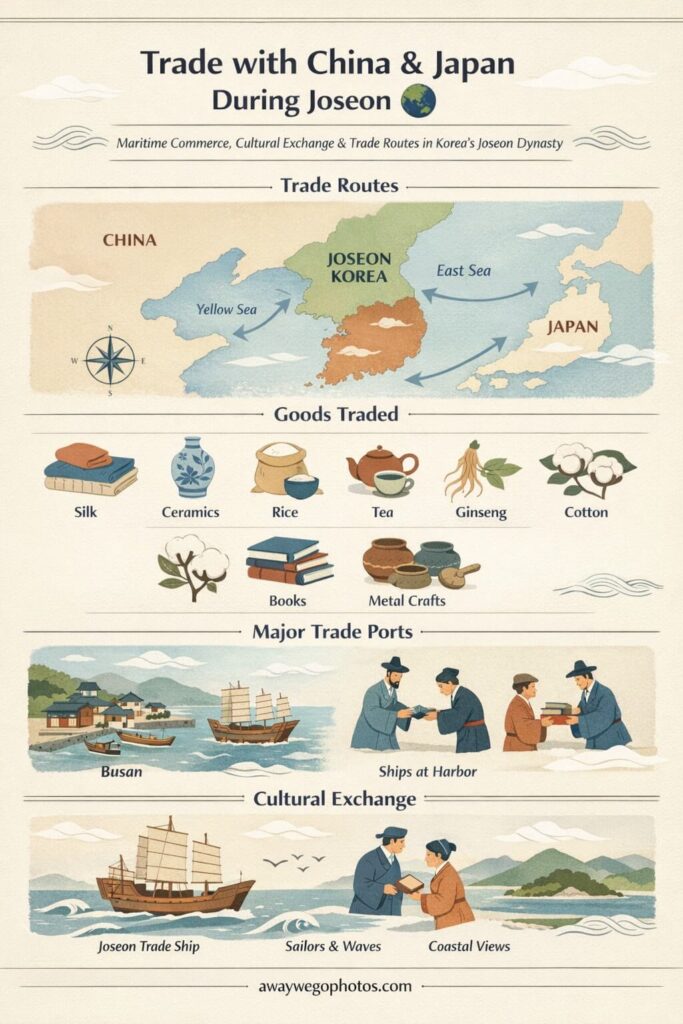
Trade
Royal culture
Diplomacy
Today, it remains one of the best places to experience Joseon history.
Kaesong
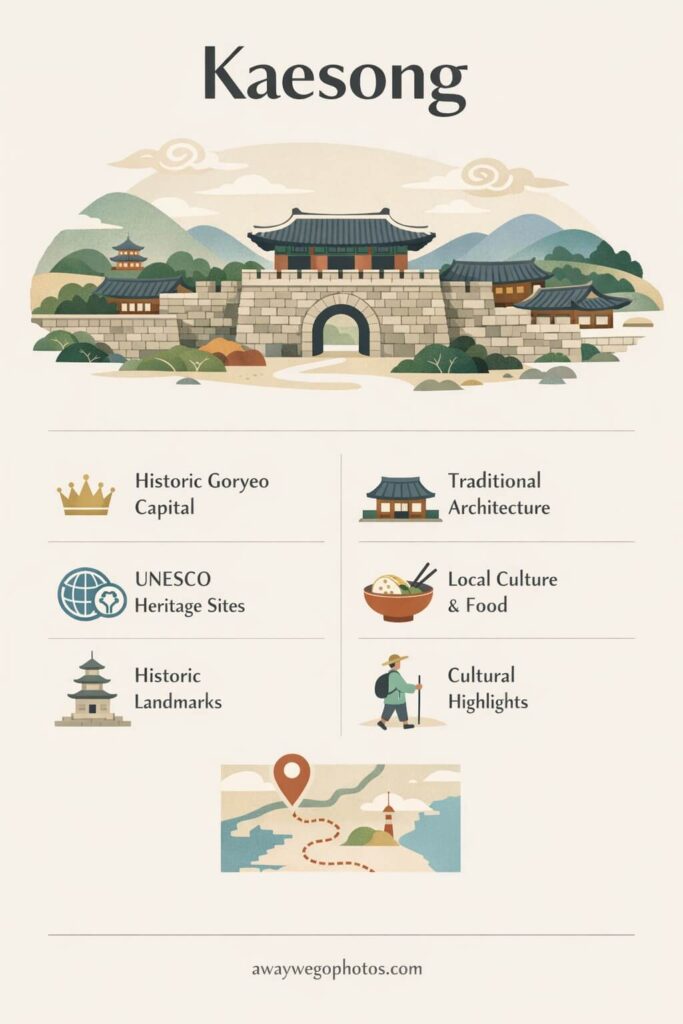
Before Seoul became the capital, Kaesong served as the capital of Goryeo. Even during Joseon, the city remained economically and historically important.
Kaesong became known for:
Commerce
Confucian academies
Historical preservation
Today it is located in North Korea.
Suwon
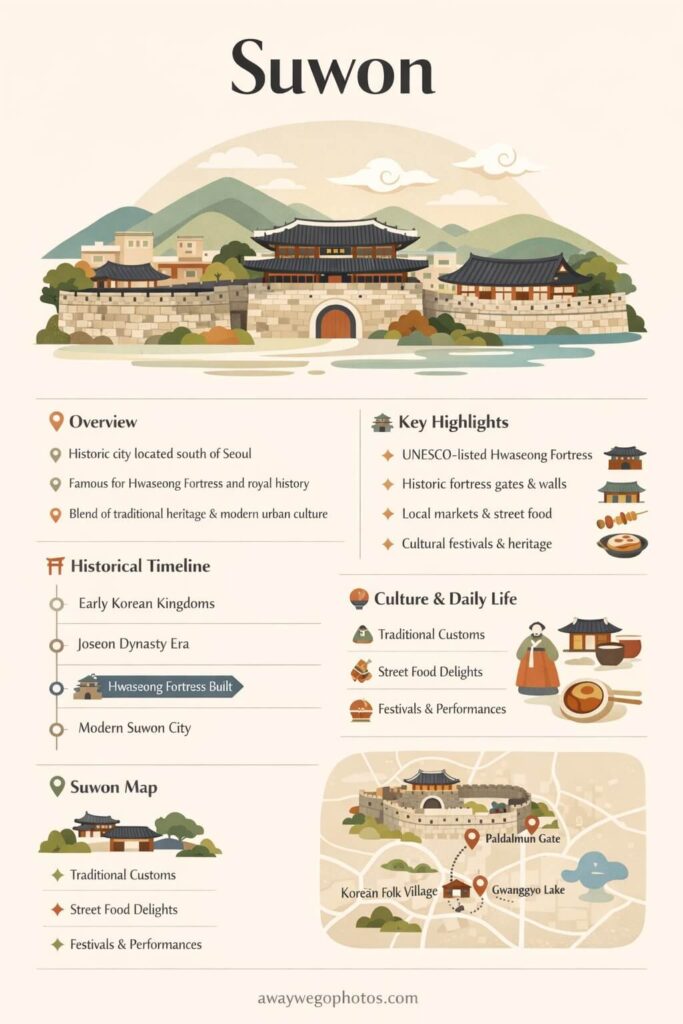
Suwon rose to prominence during the late Joseon period thanks to King Jeongjo. The city is famous for Hwaseong Fortress, one of Korea’s greatest architectural achievements.
Hwaseong Fortress demonstrated:
Military innovation
Urban planning
Scientific engineering
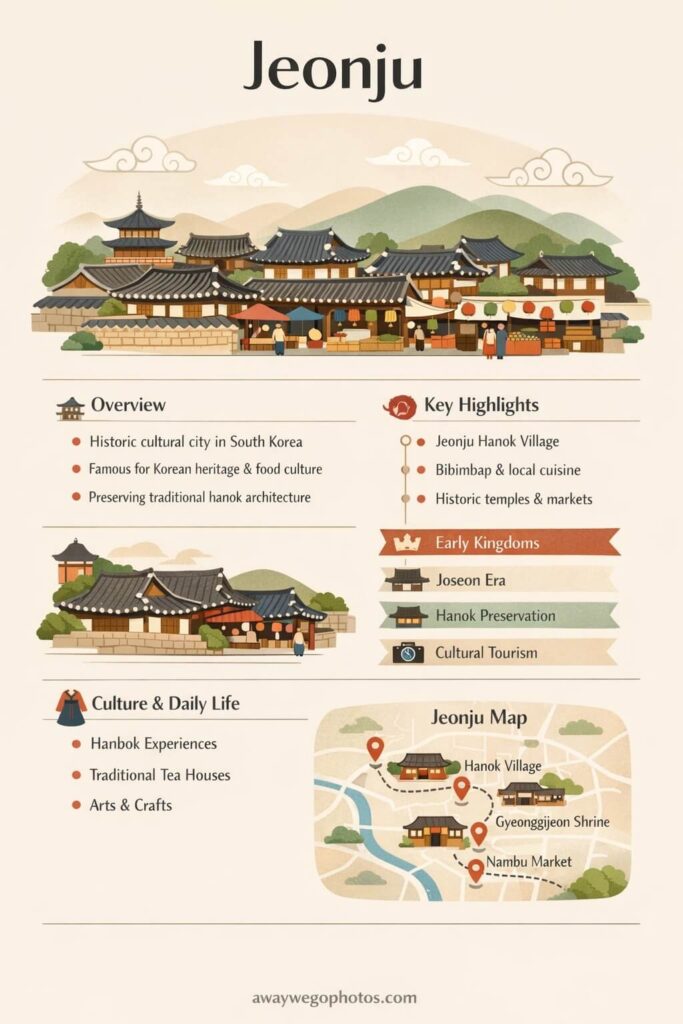
Jeonju
Jeonju holds special importance because it is considered the ancestral hometown of the Joseon royal Yi family.
The city remains famous for:
Traditional hanok villages
Korean cuisine
Preserved Joseon culture
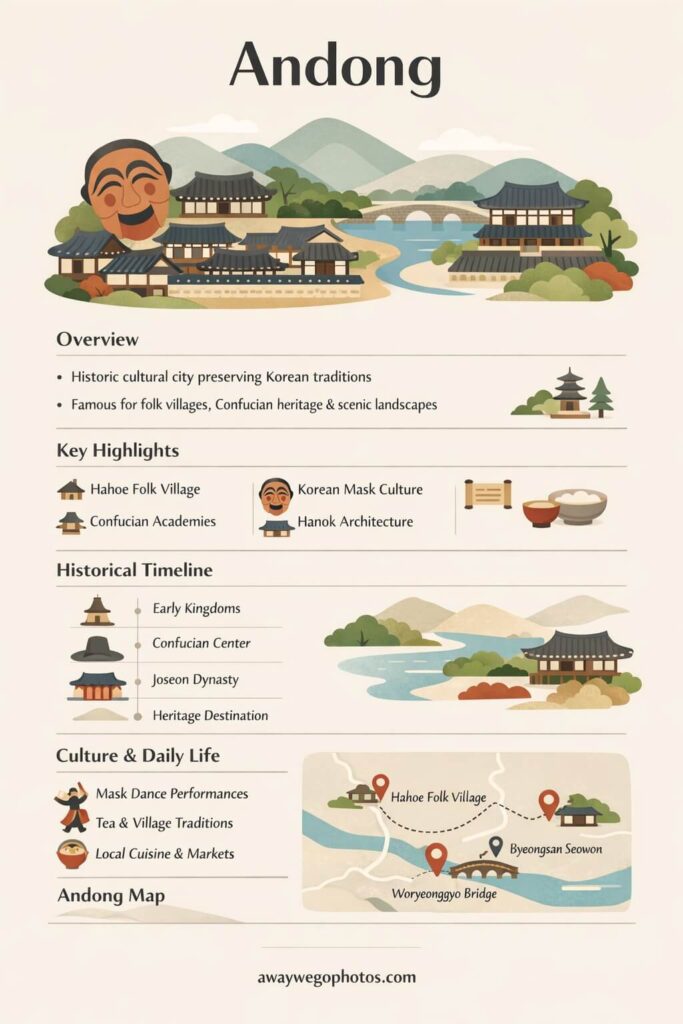
Andong
Andong became a major center of Confucian scholarship and aristocratic culture during Joseon.
The region is still known for:
Traditional villages
Confucian schools
Preservation of Korean customs
🇰🇷 Seoul Street Food Market Tour
Dive into Seoul’s vibrant food scene with a guided street food market tour. Taste popular Korean snacks, explore bustling markets, and learn about local flavors and culture from an expert guide.
*This post may contain affiliate links. I may earn a small commission at no extra cost to you.
⚔️ Important Battles & Key Figures of Joseon
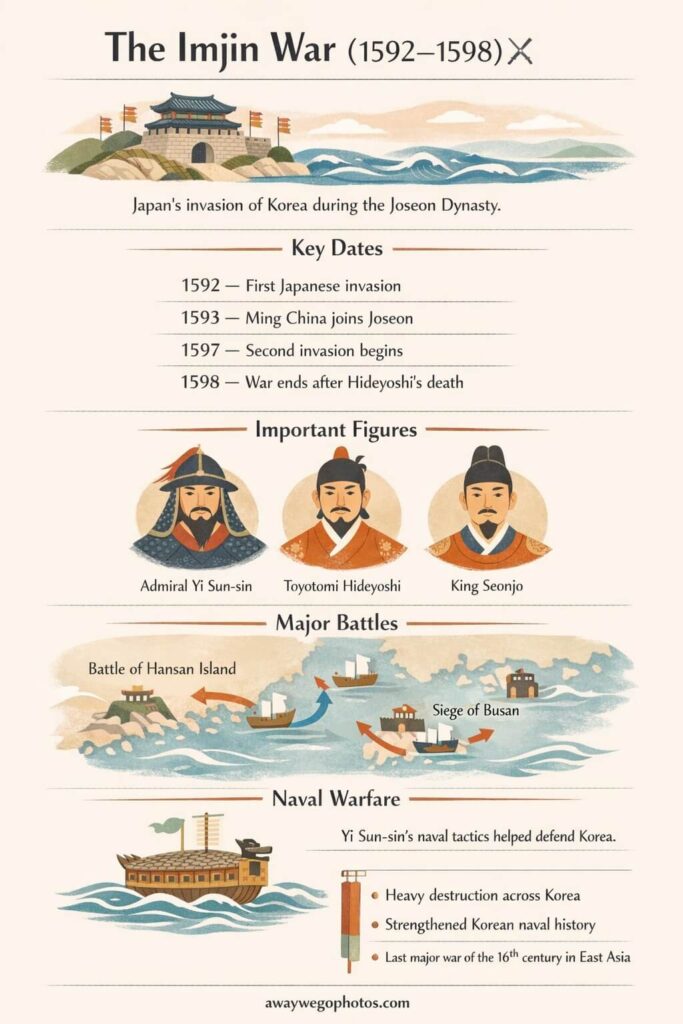
Imjin War (1592–1598)
One of the most devastating conflicts in Korean history occurred when Toyotomi Hideyoshi of Japan invaded Korea.
The Japanese army rapidly captured major cities including Seoul. However, Korean resistance eventually strengthened through local militias and naval victories.
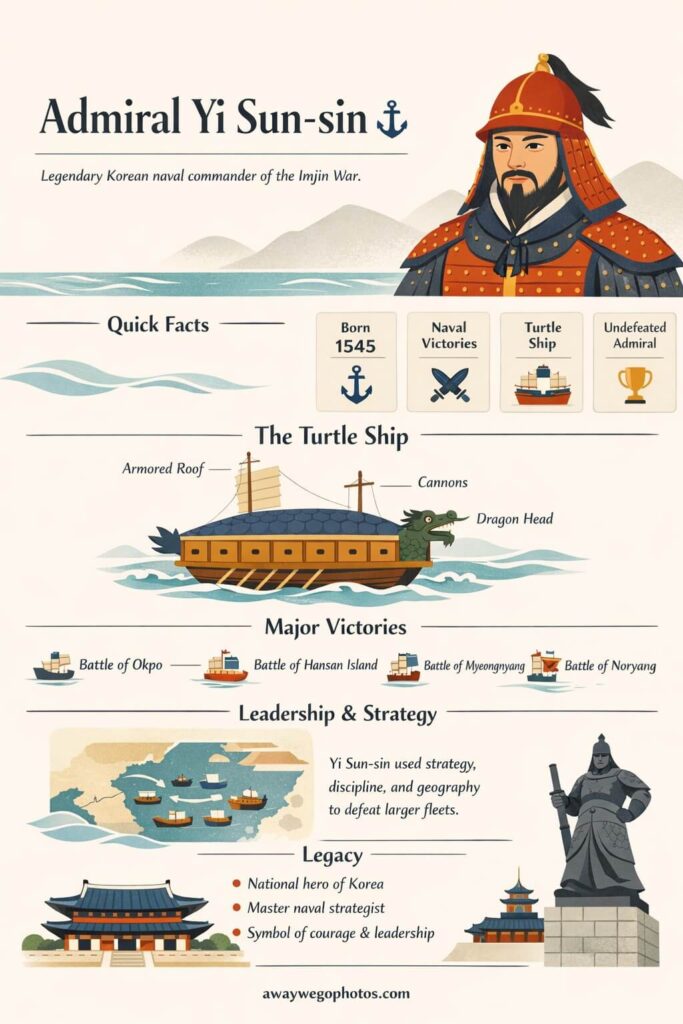
Admiral Yi Sun-sin
Admiral Yi Sun-sin became Korea’s greatest military hero during this war.
His achievements included:
Brilliant naval strategies
Turtle ships (armored warships)
Major victories against Japanese fleets
Despite difficult political circumstances, Yi never lost a naval battle.
His legacy remains legendary in Korea today.
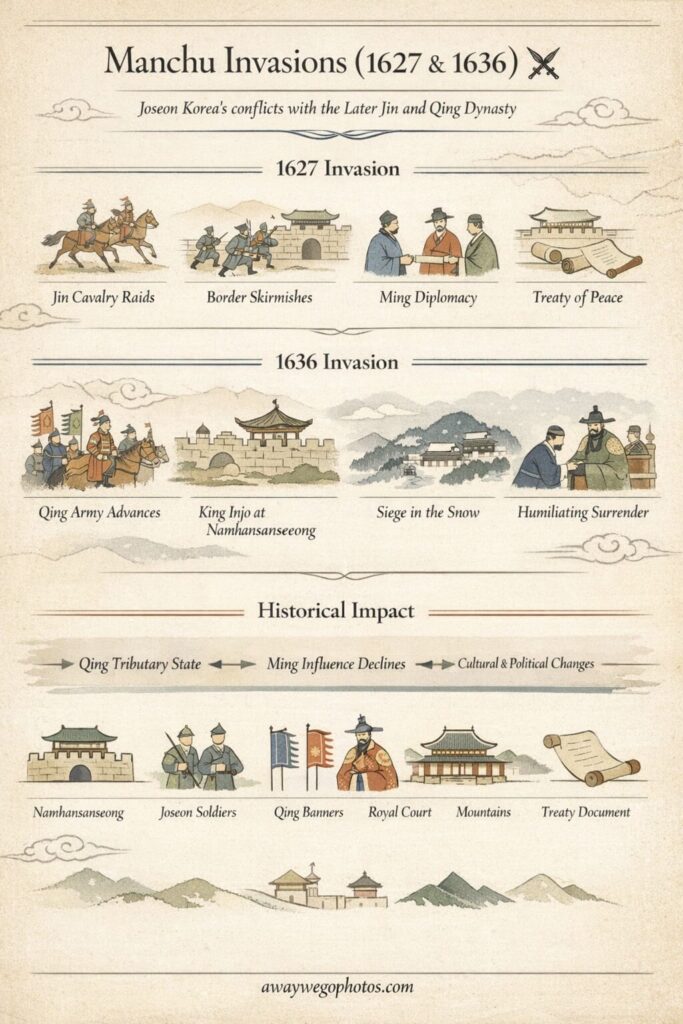
Manchu Invasions (1627 & 1636)
Joseon later faced invasions from the Manchu forces that would establish the Qing Dynasty in China.
These invasions forced Joseon into a tributary relationship with Qing China and deeply affected Korean politics and identity.
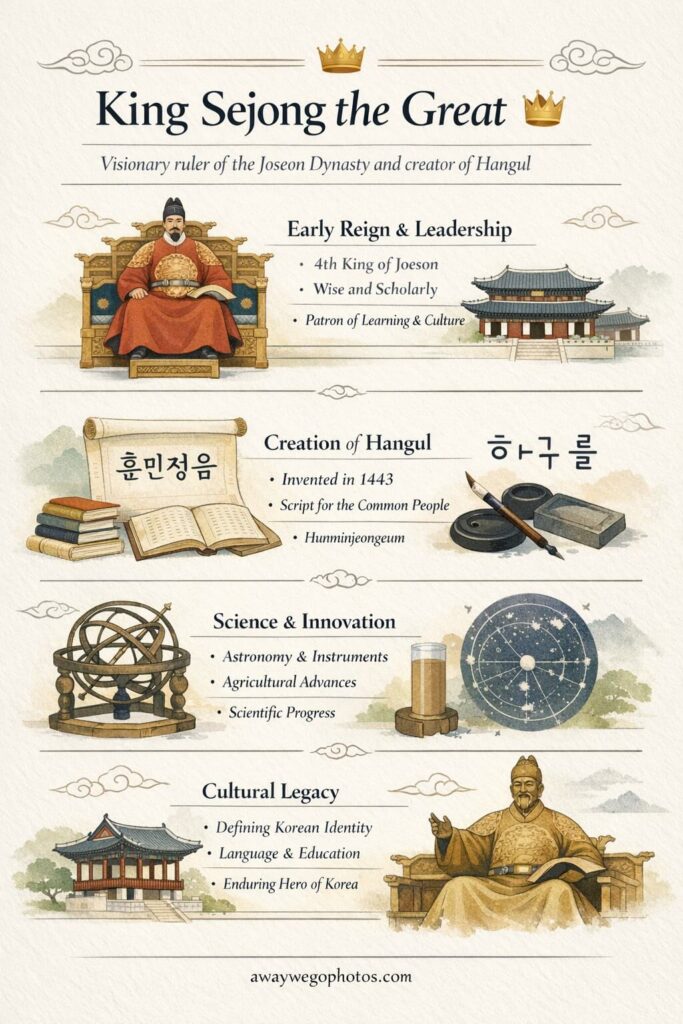
King Sejong the Great
King Sejong is widely regarded as Joseon’s greatest ruler.
His accomplishments include:
Creation of Hangul (Korean alphabet)
Scientific advancements
Agricultural reforms
Cultural development
Sejong believed literacy should be accessible to ordinary people, leading to the invention of Hangul in the 15th century.
Today he remains one of Korea’s most respected historical figures.
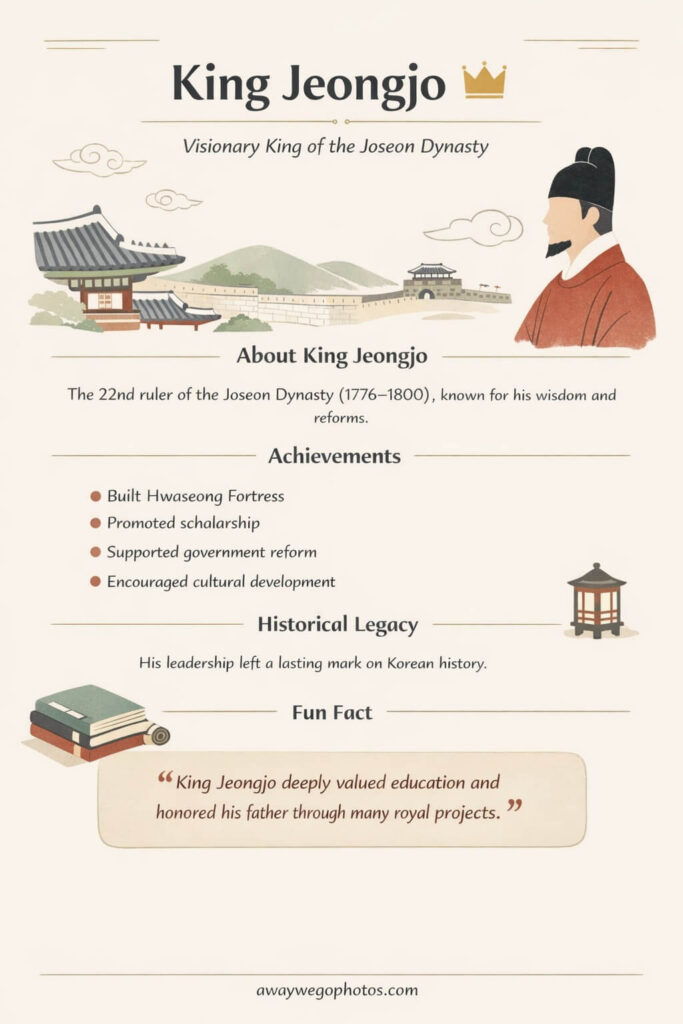
King Jeongjo
King Jeongjo attempted major reforms during the late Joseon period.
He promoted:
Scholarship
Government reform
Military improvements
Scientific learning
He also constructed Hwaseong Fortress in Suwon.
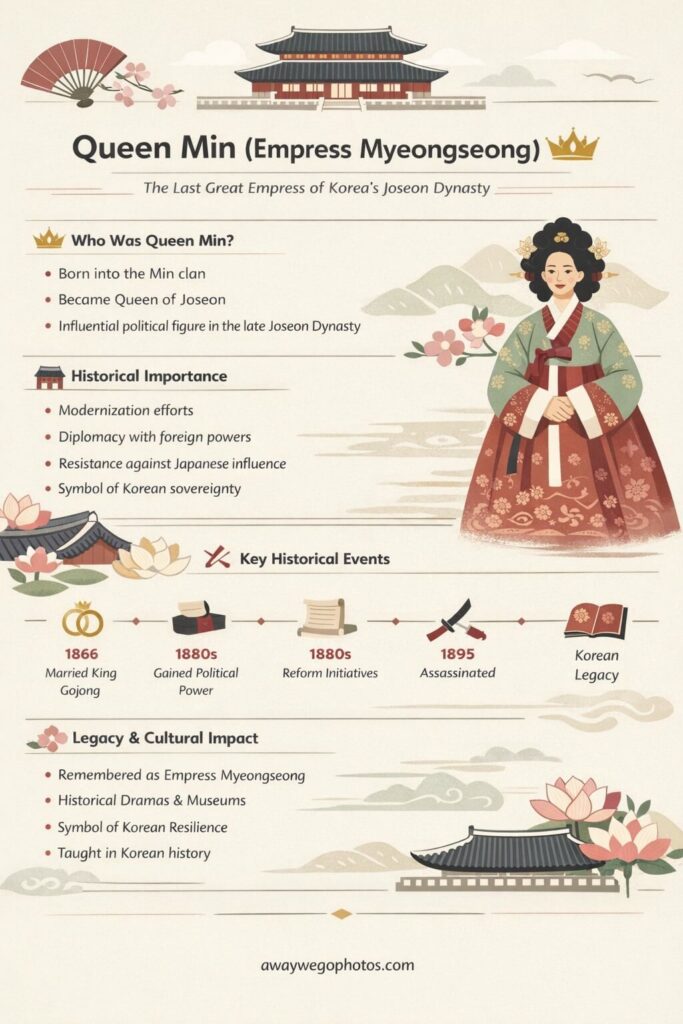
Queen Min (Empress Myeongseong)
Queen Min played a major political role during Joseon’s final decades.
She sought alliances with foreign powers to resist growing Japanese influence. In 1895, she was assassinated by Japanese agents, becoming a symbol of Korean resistance.
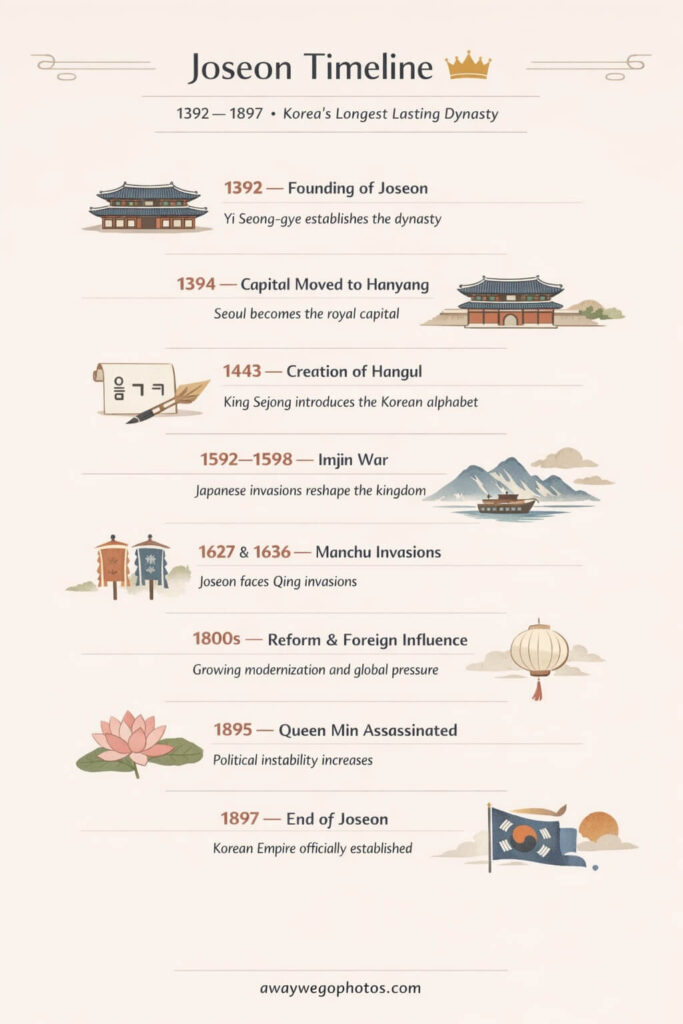
🕰️ Joseon Timeline
1392
Joseon Dynasty founded by Yi Seong-gye (King Taejo)
1394
Capital moved to Hanseong (Seoul)
1443
Creation of Hangul by King Sejong
1592–1598
Japanese invasions (Imjin War)
1627 & 1636
Manchu invasions
18th Century
Cultural and economic revival under reformist kings
1897
Korean Empire established
1910
Japan annexes Korea; Joseon officially ends
🈶 Language & Culture
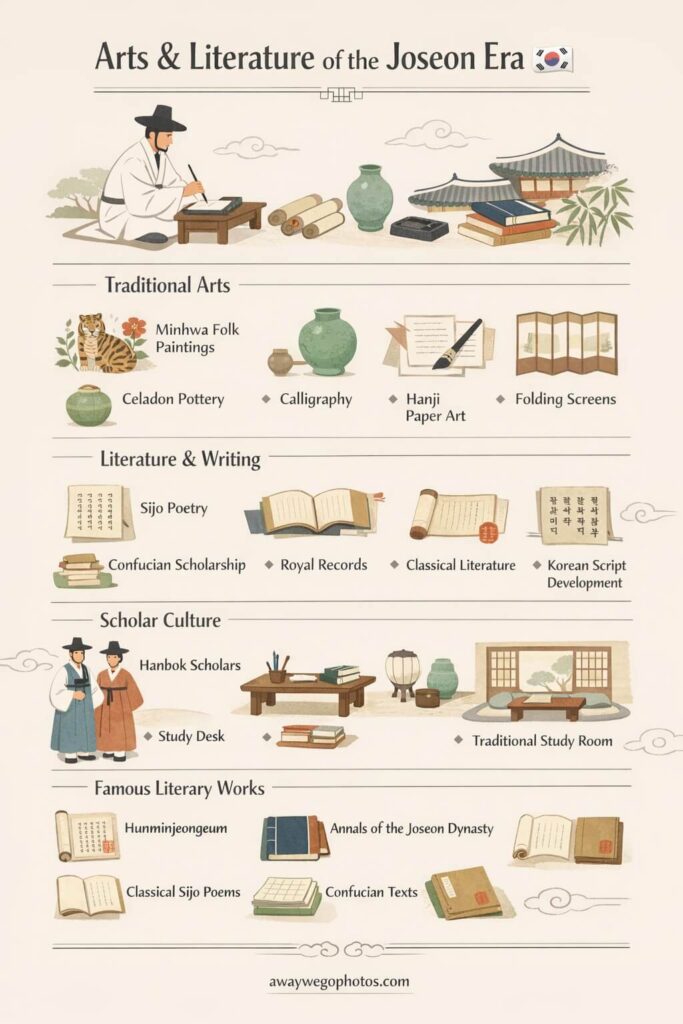
Creation of Hangul
One of Joseon’s greatest achievements was the creation of Hangul.
Before Hangul, educated Koreans primarily used Classical Chinese characters, making literacy difficult for common people.
King Sejong introduced Hangul in 1443 to create a writing system easier for ordinary Koreans to learn.
Today Hangul is considered one of the world’s most logical alphabets.
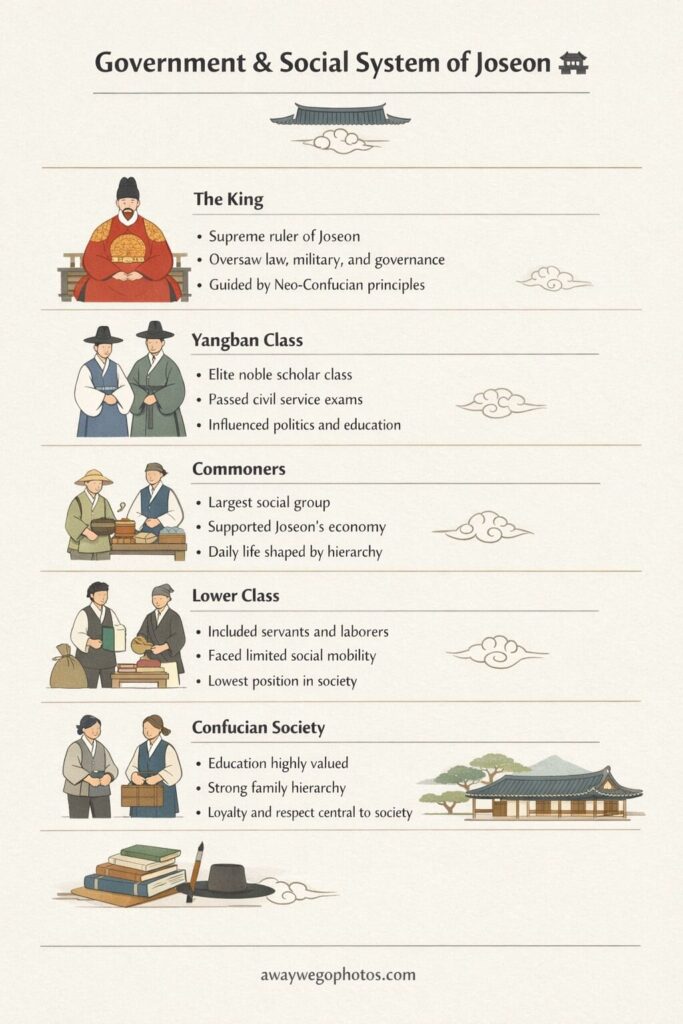
Confucian Values
Neo-Confucianism strongly shaped Joseon society.
Important values included:
Respect for elders
Family loyalty
Education
Moral behavior
Social hierarchy
Many Korean customs today still reflect Confucian traditions.
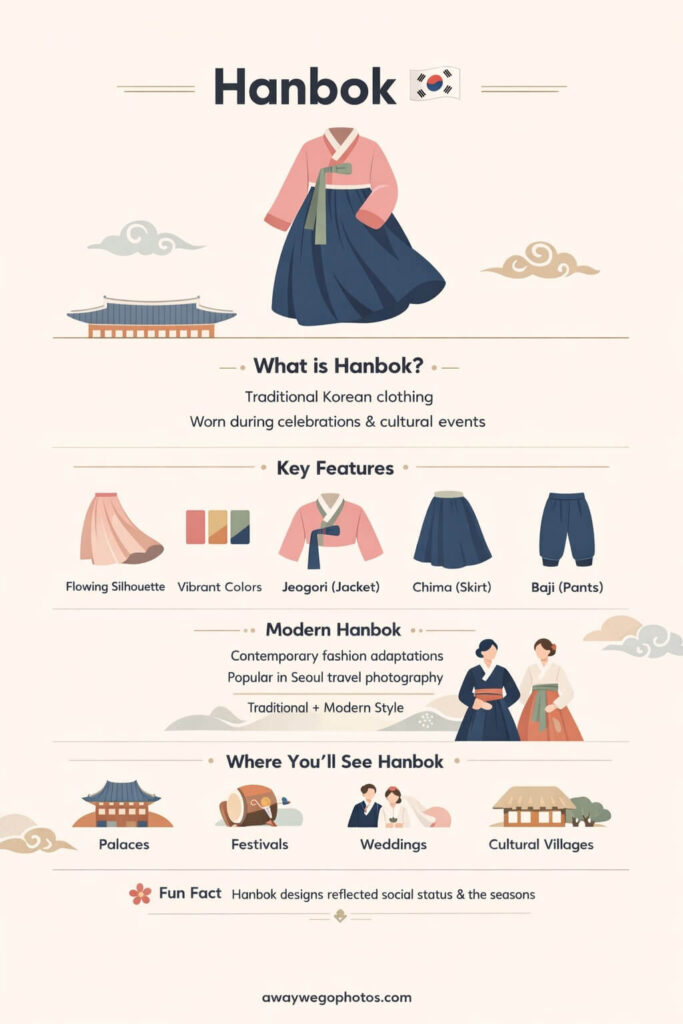
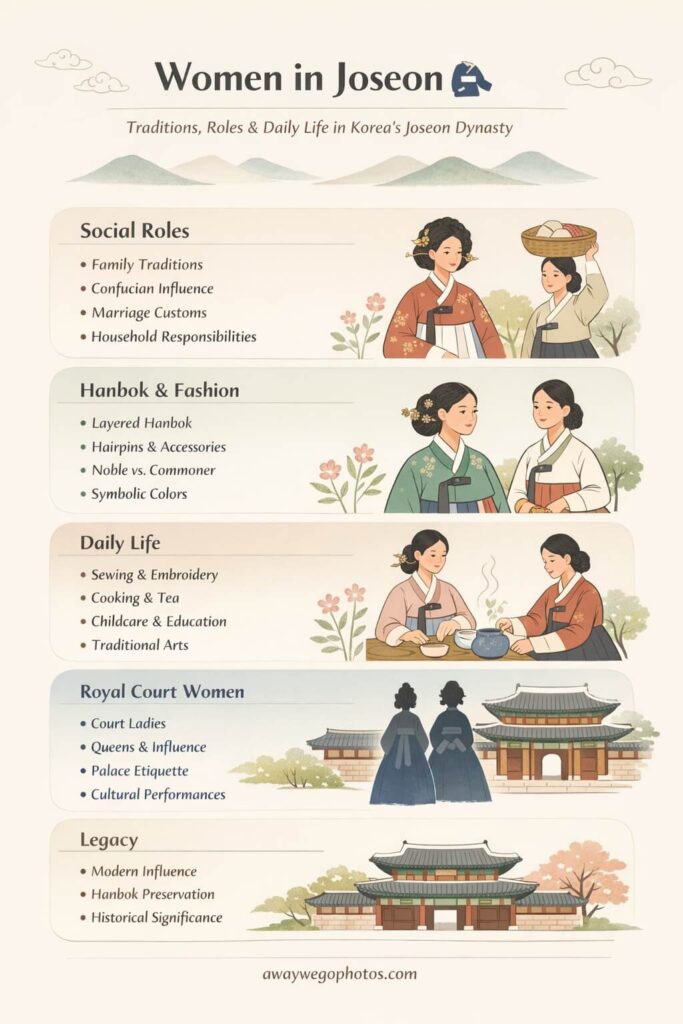
Hanbok
Traditional Korean clothing known as hanbok evolved significantly during Joseon.
Joseon-era hanbok emphasized:
Elegance
Simplicity
Social class distinctions
Royal clothing became highly elaborate while commoner clothing remained practical.
🇰🇷 Busan: Top Coastal Highlights with Sky Capsule Full Day Tour
Explore Busan’s stunning coastline in one full-day experience, including scenic viewpoints, iconic beaches, and a ride on the famous Sky Capsule. Perfect for travelers who want breathtaking ocean views and top attractions in one seamless itinerary.
The Joseon Dynasty was far more than a royal kingdom — it was the foundation of Korean civilization as we know it today. Across more than five centuries, Joseon transformed Korea through education, language, science, architecture, and philosophy.
Even in modern South Korea filled with skyscrapers, technology, and global pop culture, the spirit of Joseon still survives in traditions, customs, food, language, and historical landmarks.
For travelers exploring Korea, learning about Joseon adds deeper meaning to every palace gate, hanok village, and cultural ceremony. It reveals the roots of a nation that preserved its identity through centuries of change and challenge.
Understanding Joseon is ultimately understanding Korea itself.