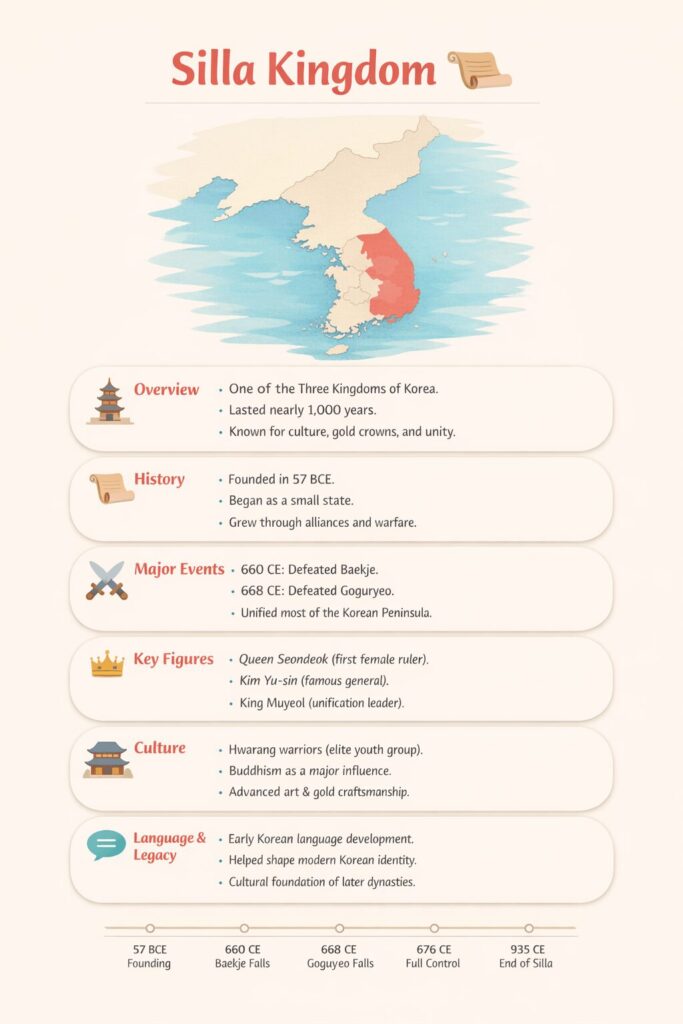
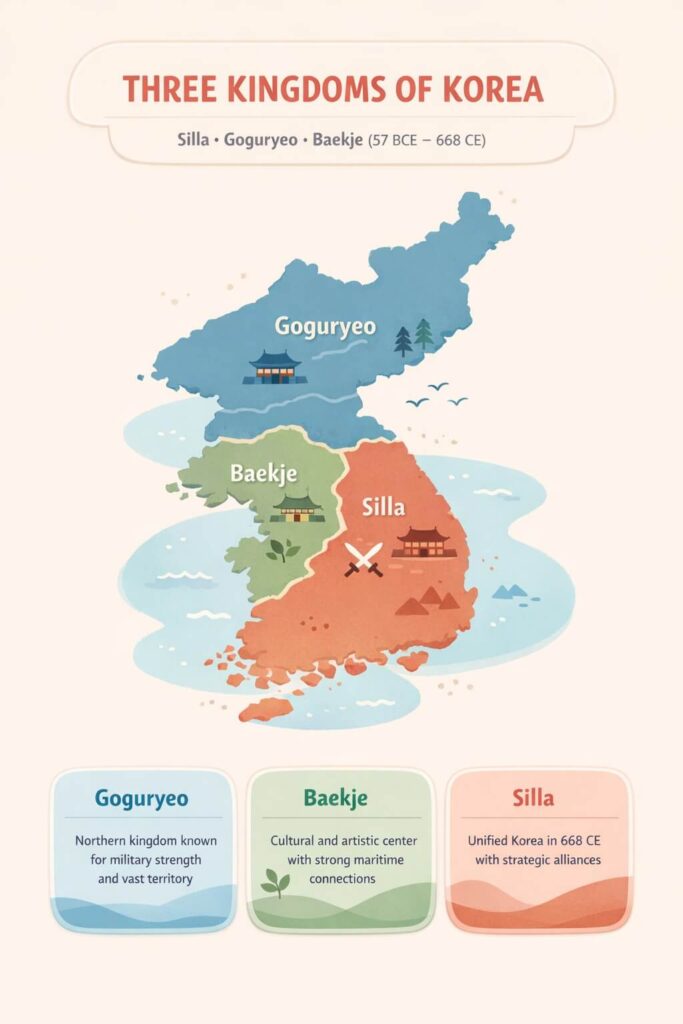
The Silla Kingdom was one of the Three Kingdoms of Korea, alongside Goguryeo and Baekje. Known for its cultural richness and strategic alliances, Silla eventually unified most of the Korean Peninsula. Its legacy lives on in Gyeongju, the ancient capital filled with historic treasures.
📜 History of Silla
Founded in 57 BCE, Silla began as a small tribal state and gradually expanded through diplomacy and warfare. By forming an alliance with the Tang Dynasty, Silla defeated its rivals and unified Korea in 668 CE. This marked the start of a golden age of culture, governance, and economic growth.
⚔️ Battle of Hwangsanbeol
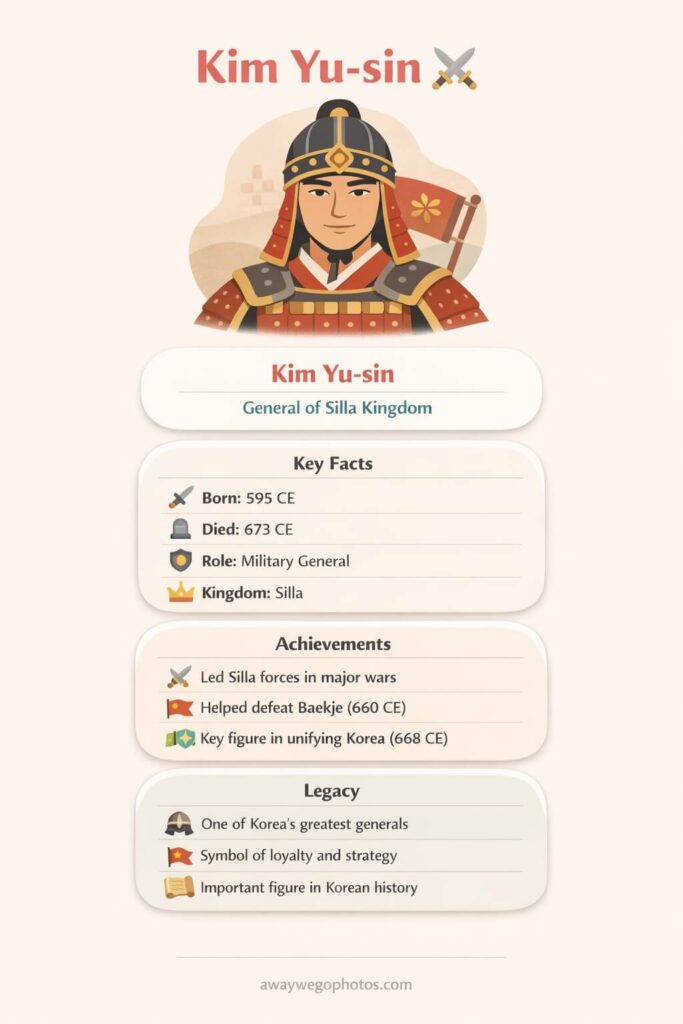
The Battle of Hwangsanbeol was a turning point in Silla’s rise. Led by General Kim Yu-sin, Silla forces defeated Baekje despite strong resistance. This victory opened the path to unification and demonstrated Silla’s military discipline and strategic strength.
👑 Key Figures of Silla
Several leaders shaped Silla’s success. King Muyeol of Silla strengthened alliances with China, while Kim Yu-sin led major military campaigns. Queen Seondeok promoted science, culture, and Buddhism, helping Silla flourish internally.
Kings & Queens of Silla
Notable Rulers
The Silla Kingdom was guided by strong monarchs who led its expansion. King Muyeol of Silla played a key role in forming alliances that led to unification and long-term dominance.
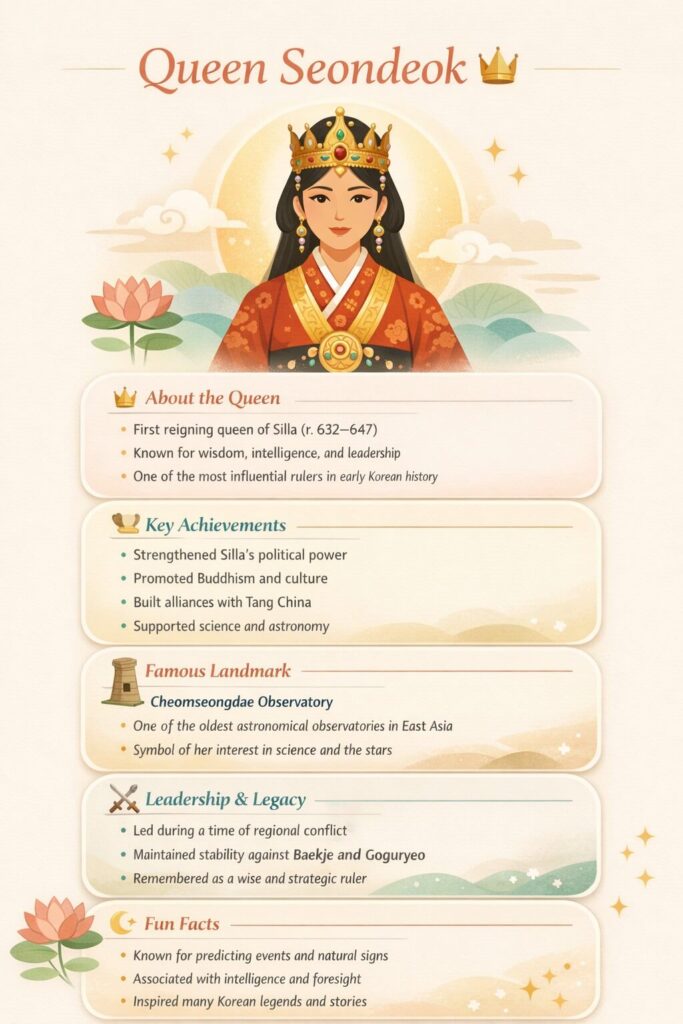
👸 Queen Seondeok
Queen Seondeok (r. 632–647) was one of Korea’s first female rulers. She supported science, astronomy, and Buddhism while commissioning major cultural projects. Her leadership strengthened Silla internally and prepared it for future expansion.
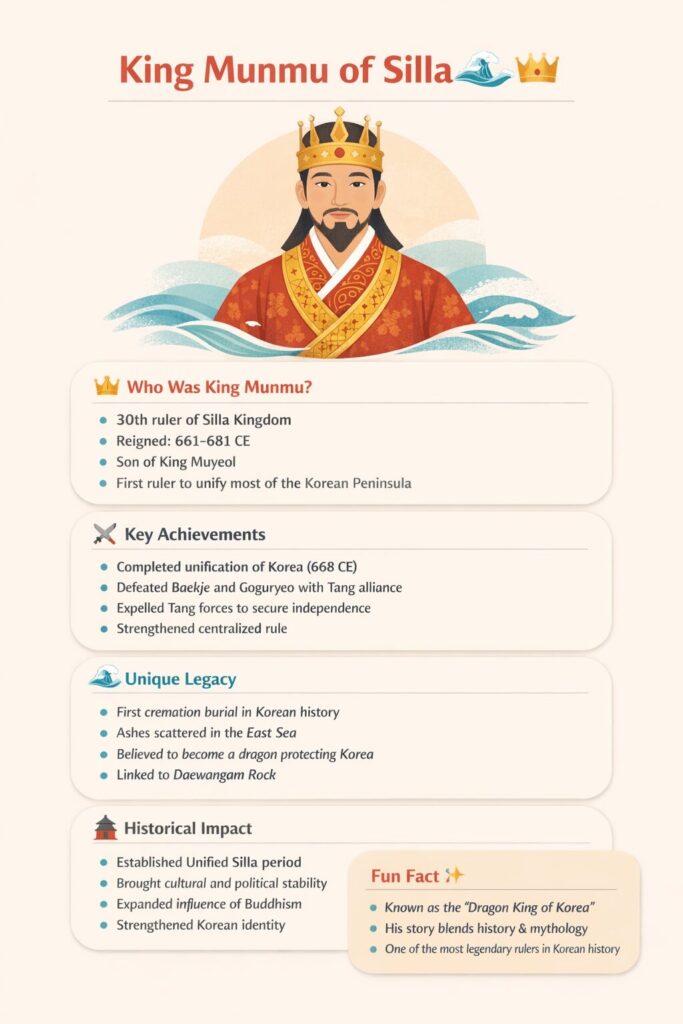
👑 King Munmu
King Munmu of Silla (r. 661–681) completed the unification of most of Korea. He later worked to remove Tang influence and secure independence. Legend says he became a dragon after death to protect Silla, symbolizing his lasting importance.
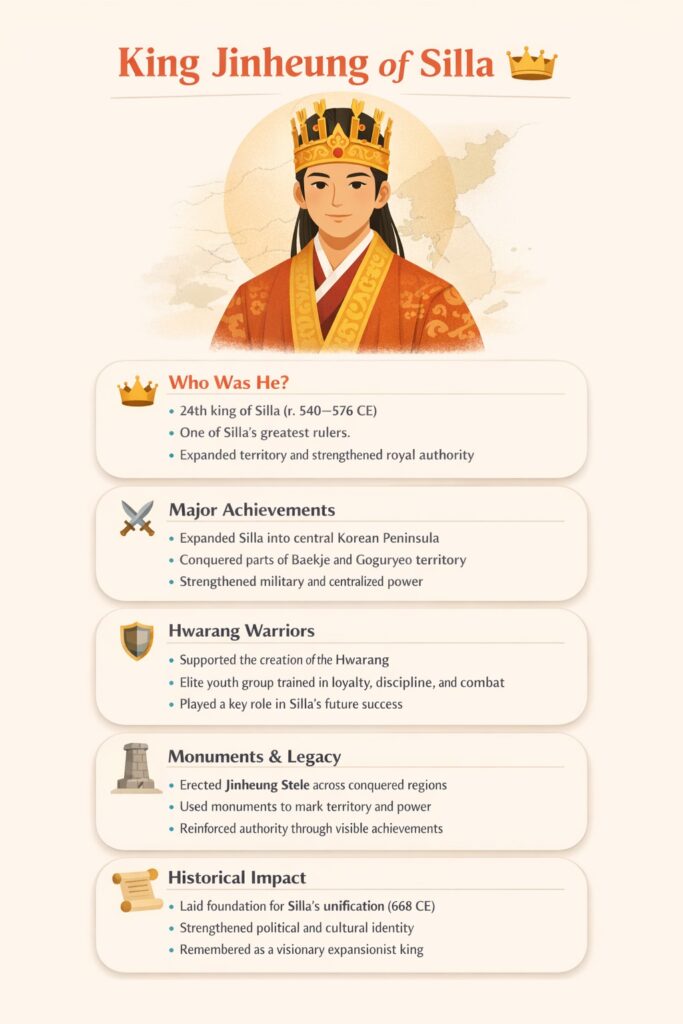
👑 King Jinheung
King Jinheung of Silla (r. 540–576) expanded Silla’s territory and strengthened its military. He supported the Hwarang warriors and laid the foundation for future unification and political stability.
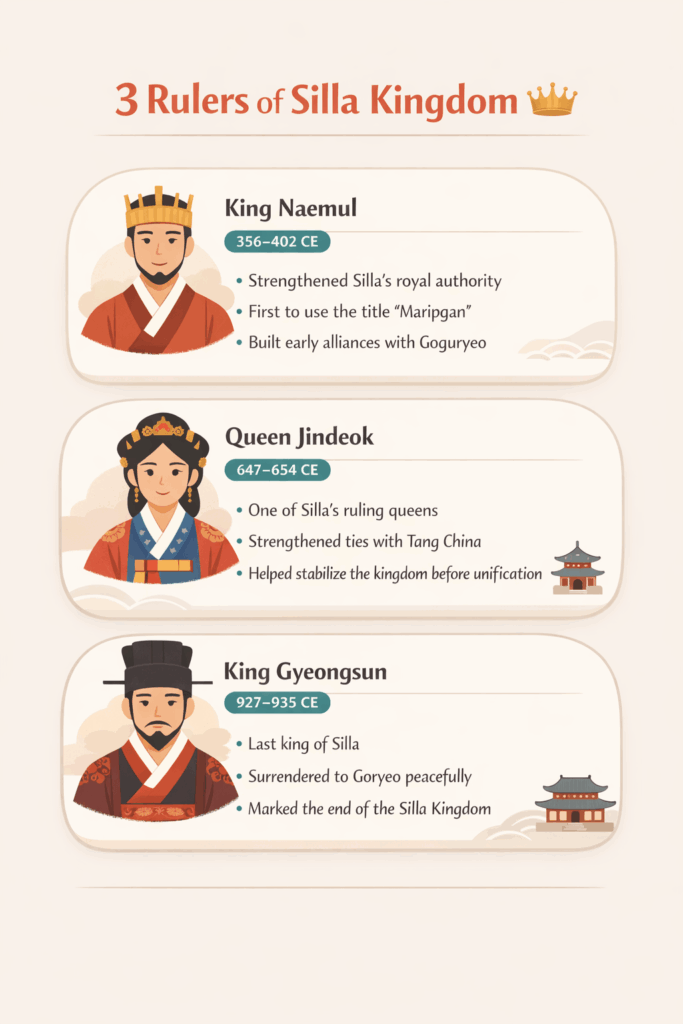
📌 Other Notable Rulers
- King Naemul of Silla – strengthened royal authority
- Queen Jindeok – expanded diplomacy
- King Gyeongsun – last ruler of Silla
🕰️ Timeline
Key Events
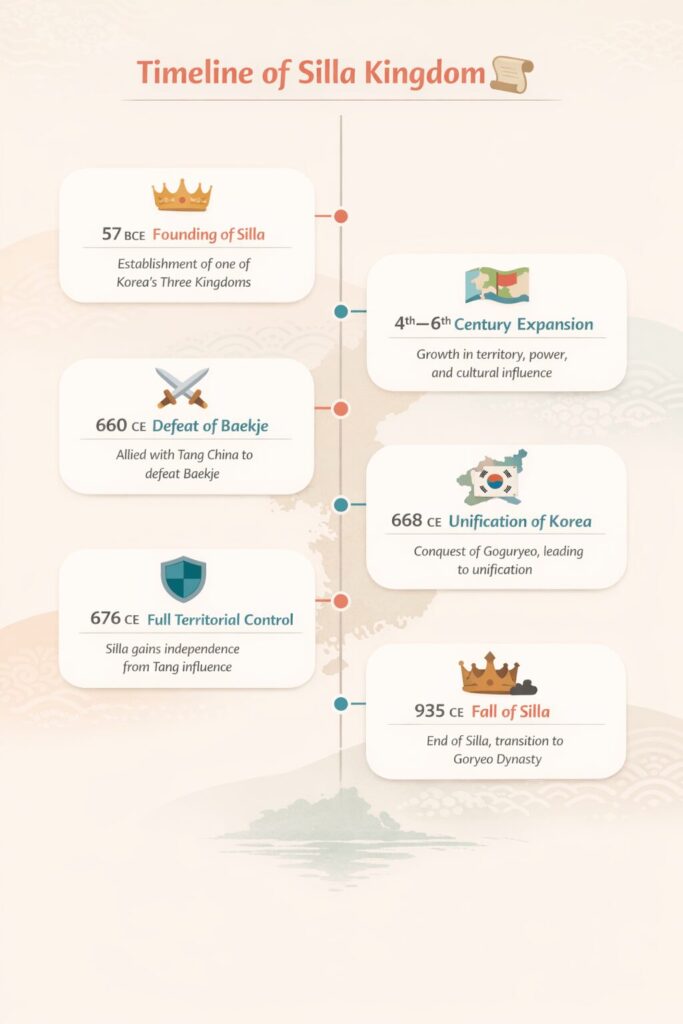
- 57 BCE: Founding of Silla
- 4th–6th century: Expansion
- 660 CE: Defeat of Baekje
- 668 CE: Unification of Korea
- 676 CE: Full territorial control
- 935 CE: Fall of Silla
🧠 Government & Social System
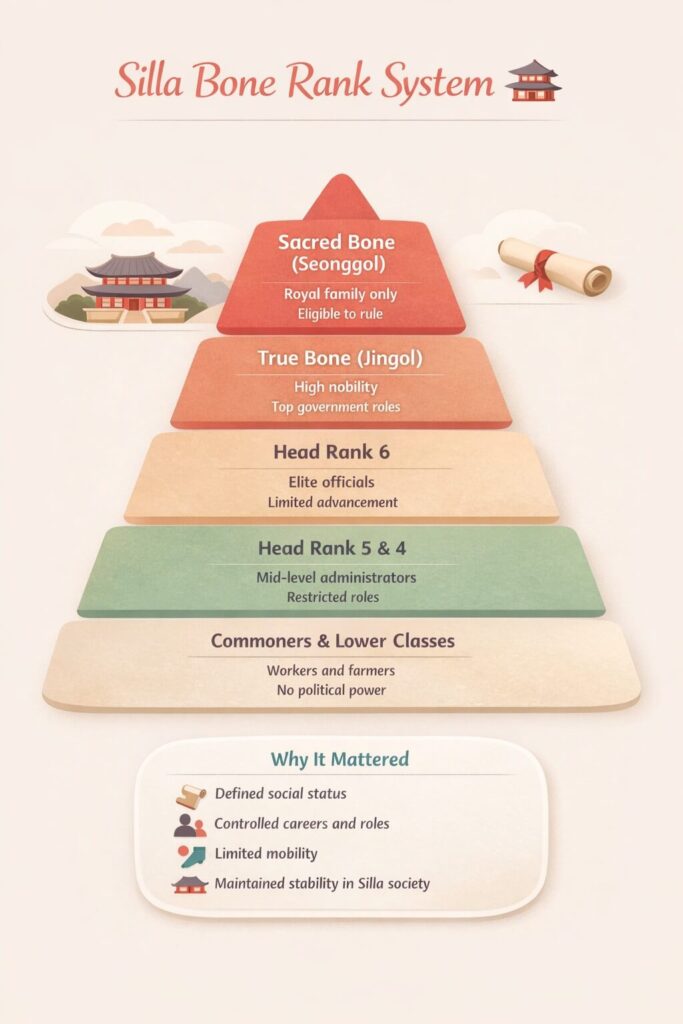
Silla used the strict Bone Rank System, which determined social status, careers, and privileges. This system ensured stability but limited mobility, shaping Silla’s political and social structure throughout its history.
🛡️ Hwarang Warriors
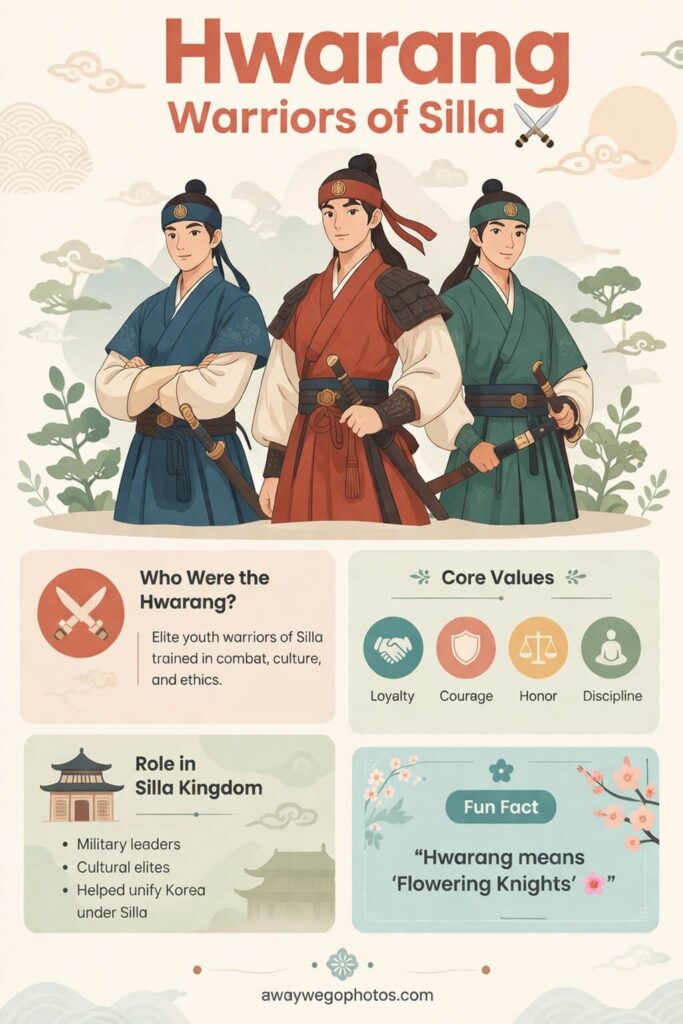
The Hwarang were an elite group trained in combat, ethics, and leadership. Influenced by Buddhism and Confucian values, they became key military leaders and played a vital role in Silla’s expansion and unity.
🌏 Trade & Economy
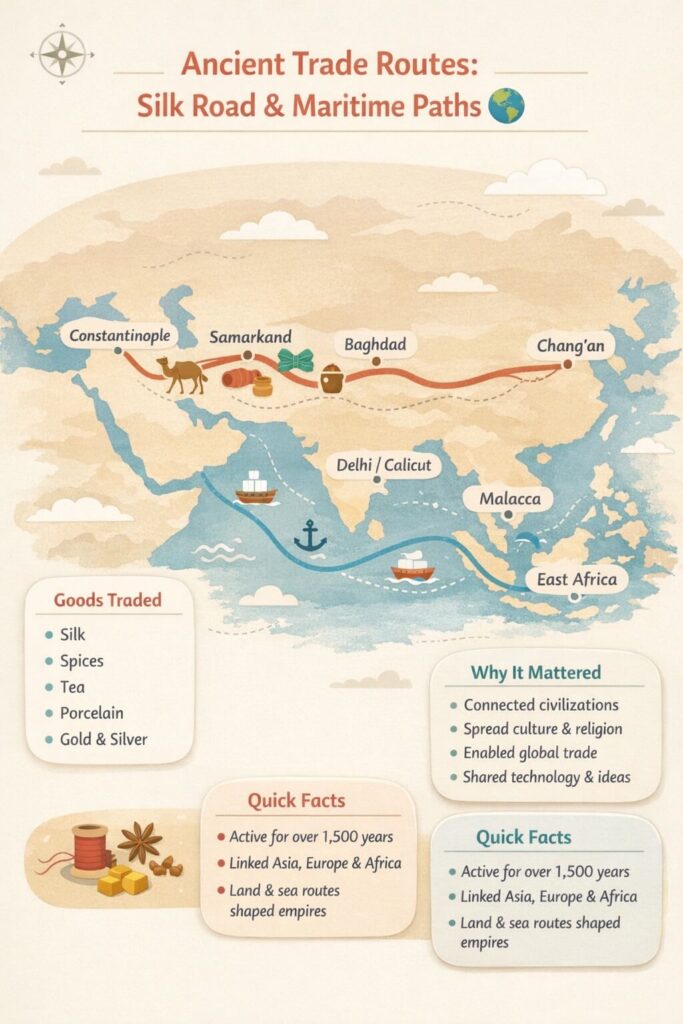
Silla traded actively with the Tang Dynasty and other regions. Goods like gold, silk, and ceramics were exchanged, bringing wealth and cultural influences. This helped Silla develop advanced craftsmanship and a strong economy.
🗣️ Language & Culture
Language
Silla people spoke Old Korean, an early form of the modern language. Chinese characters were used for official writing, reflecting strong cultural ties with China and influencing Korea’s written traditions.
Culture
Buddhism played a central role in shaping Silla society. Art, architecture, and spiritual life flourished, especially in Gyeongju, which became a hub of culture and religion.
🏯 Architecture & Legacy
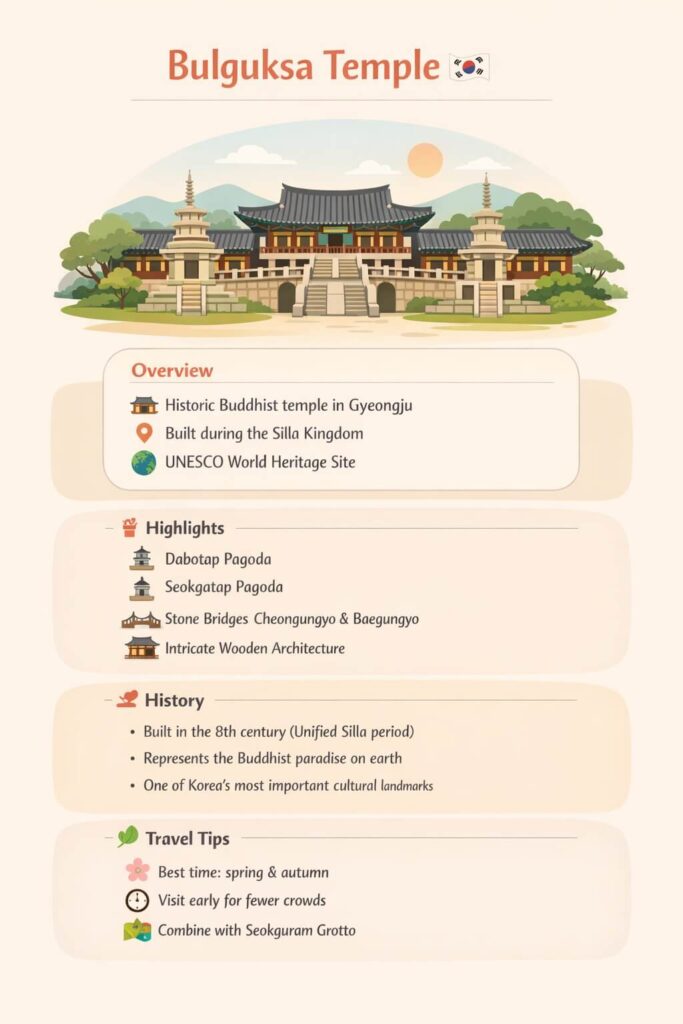
Silla’s legacy includes masterpieces like Bulguksa Temple and Seokguram Grotto. These UNESCO World Heritage sites reflect advanced design and deep spiritual devotion, attracting visitors from around the world.
⚔️ Fall of Silla
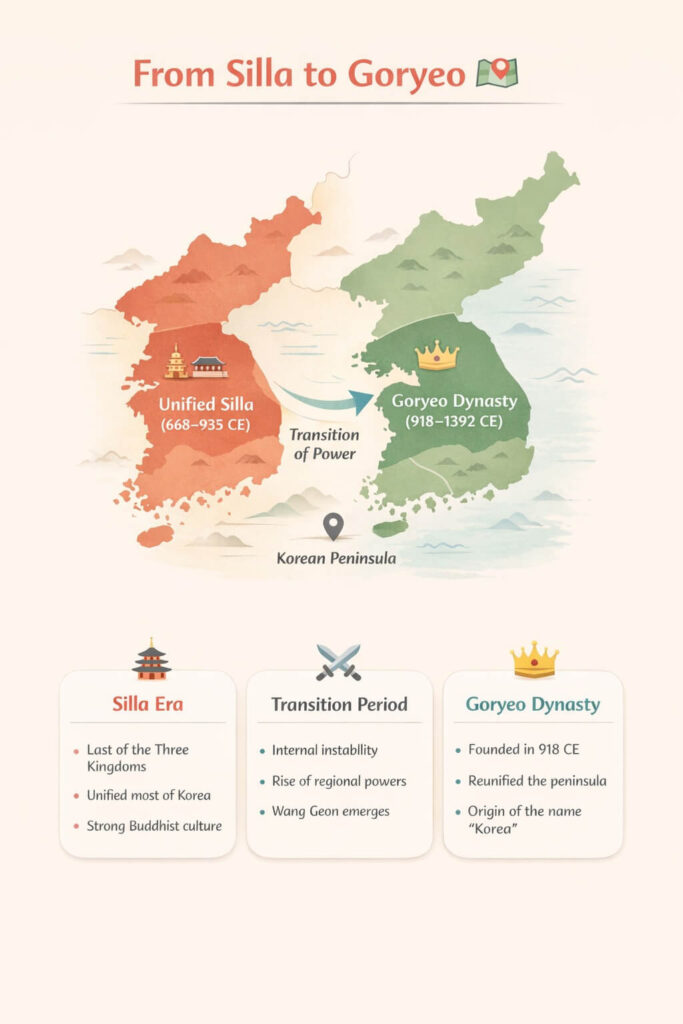
Silla declined due to internal corruption, weakened leadership, and rising regional powers. In 935 CE, it fell and was replaced by the Goryeo Dynasty, which unified Korea under a new rule.
🌏 Why Silla Still Matters Today
Silla’s influence continues in modern Korea through traditions, culture, and preserved historical sites. Visiting Gyeongju allows travelers to experience ancient tombs, temples, and artifacts that bring Silla’s story to life.
✈️ Plan Your Korea Trip
If you’re inspired by Silla history, explore more guides:
👉 Read: 5 Palaces in Seoul You Must Visit
👉 Explore: 50 Things to Do in Seoul
👉 Plan: 3 Days in Seoul Travel Guide
All of these help you connect ancient history with modern experiences in Seoul.
🌟 Final Thoughts
The Silla Kingdom remains one of the most influential dynasties in Korean history. From powerful rulers and legendary battles to rich culture and architecture, its legacy continues to shape Korea today. Whether you’re learning history or planning a trip, Silla offers a fascinating journey into the past 🇰🇷
Like this Post? Save it on Pinterest!