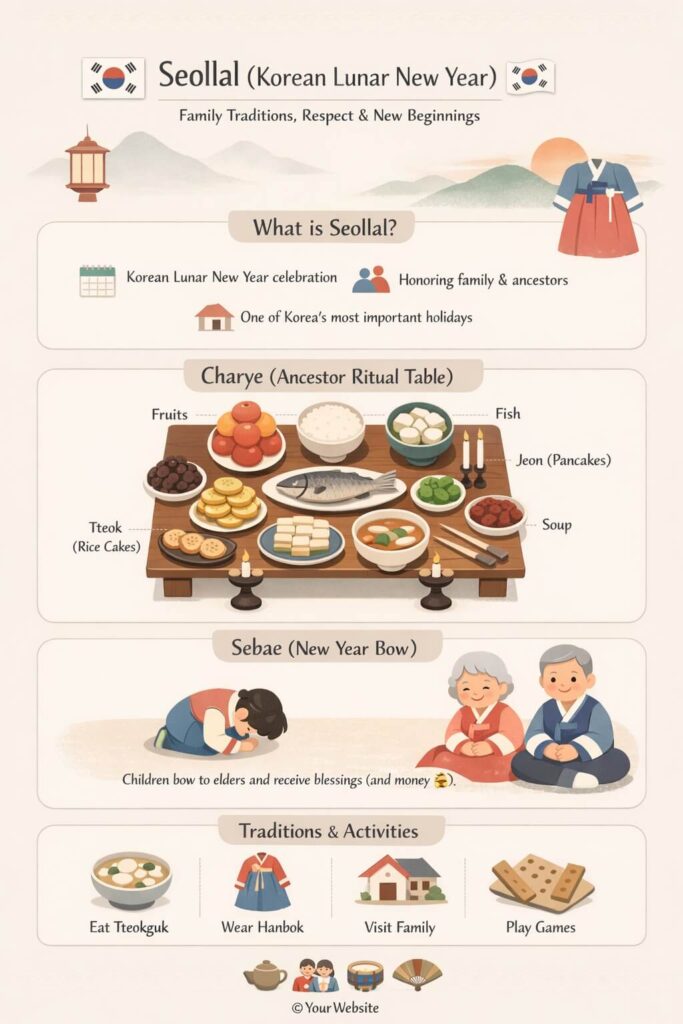
Seollal, the Korean Lunar New Year, is one of the most important holidays in South Korea. It marks the first day of the lunar calendar and usually falls between late January and mid-February. Families gather to honor ancestors, share meals, and celebrate new beginnings. The holiday lasts several days, with many people traveling across the country to reconnect with loved ones.
This post may contain affiliate links. I may earn a small commission at no extra cost to you if you make a purchase.
While many places close during Seollal, it’s still a great time to explore Seoul’s cultural landmarks.
Explore Seoul’s top cultural sites on a guided full-day tour →
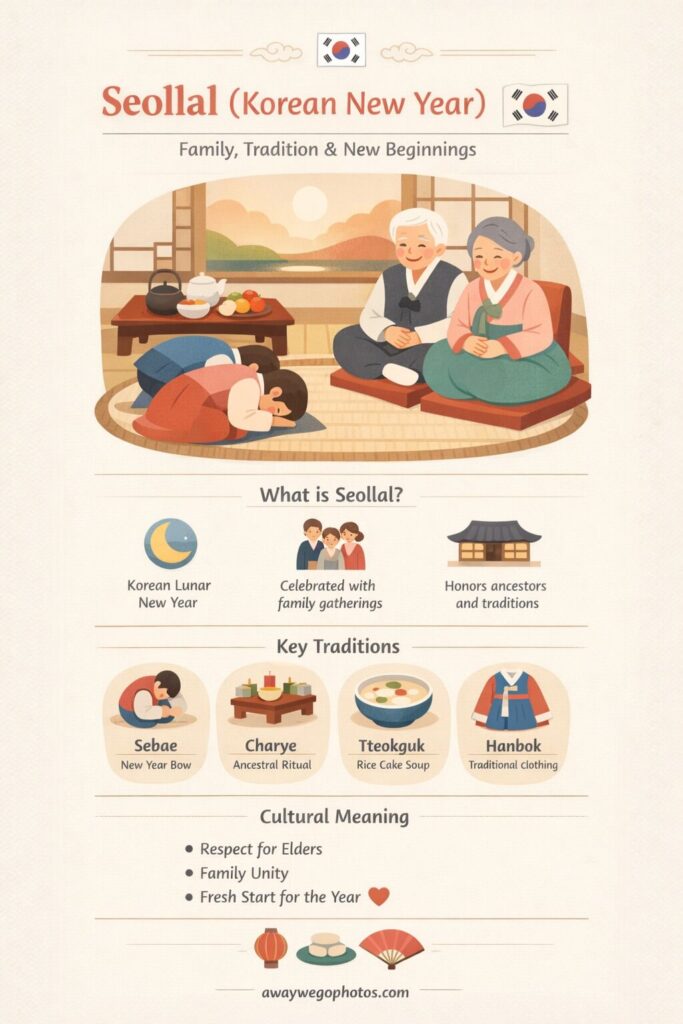
📜 History of Seollal
Seollal dates back over a thousand years to ancient Korea, where the lunar New Year marked an important seasonal transition. During the Three Kingdoms period, early forms of New Year celebrations were already observed. These traditions later evolved during the Joseon Dynasty, when Confucian values shaped many customs still practiced today.
Rituals like charye (ancestral rites) and sebae (formal bowing) became deeply rooted during this time. Although Seollal was once downplayed in the 20th century, it was revived and is now a major national holiday that blends ancient traditions with modern life.
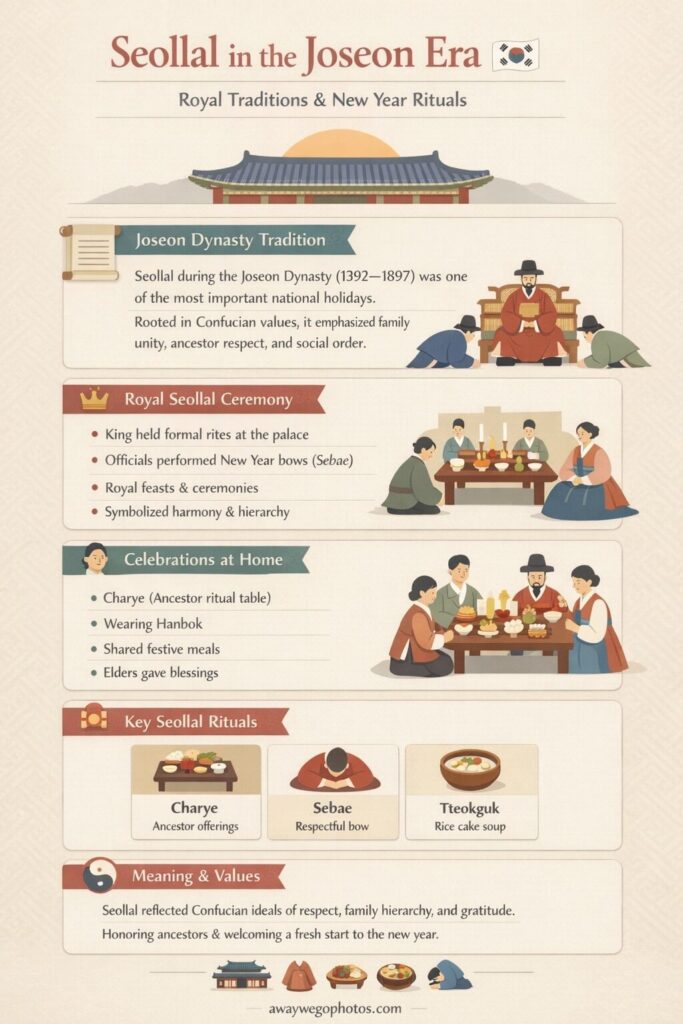
🕰️ Seollal Timeline: Day-by-Day Traditions
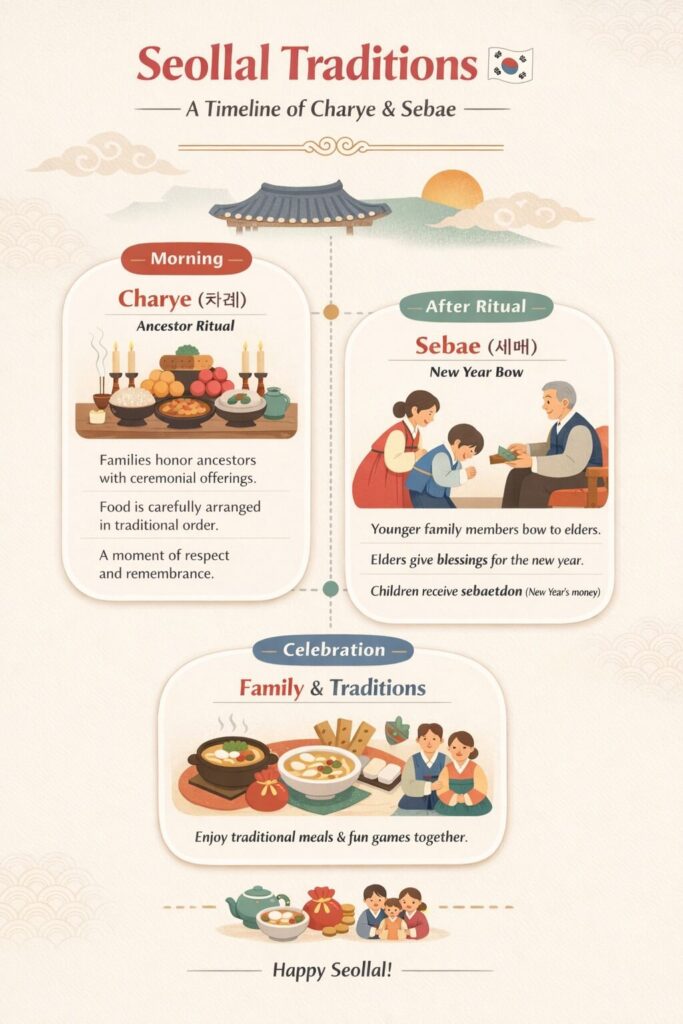
Seollal celebrations unfold over several meaningful days, combining preparation, rituals, and family time. Understanding this timeline helps you experience the holiday more deeply.
📅 Before Seollal (Preparation Day)
Before the New Year begins, families clean their homes to remove bad luck and welcome good fortune. Traditional foods are prepared in advance, often requiring hours of cooking. Travel begins as many people head to their hometowns, making this one of the busiest travel periods in Korea.
🌅 Seollal Day (Lunar New Year’s Day)
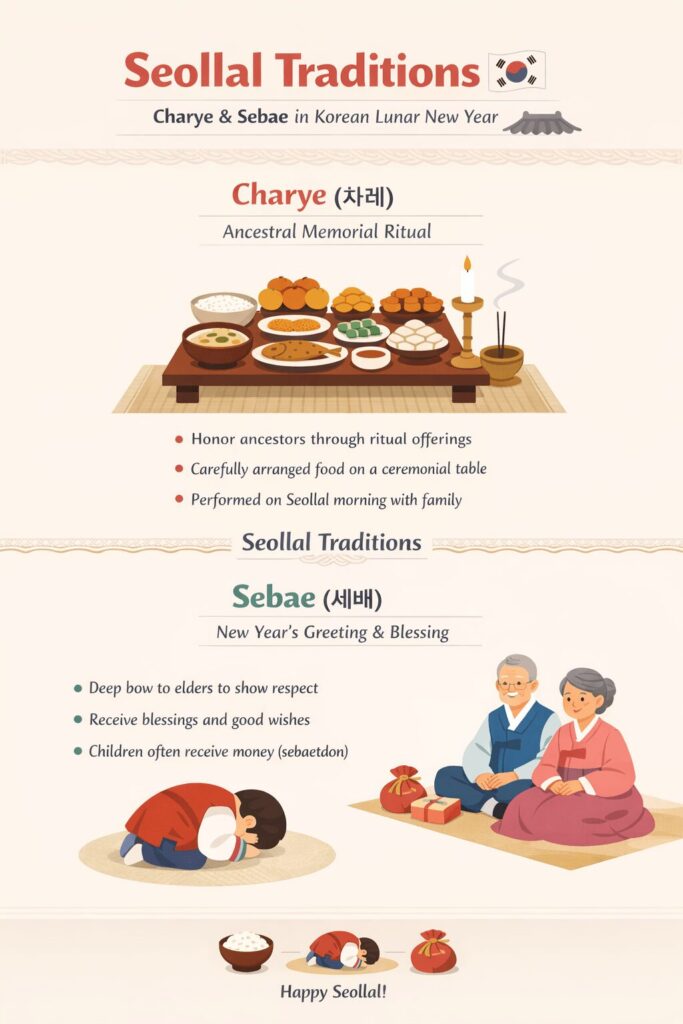
The main celebration starts with charye, where families honor ancestors with a carefully arranged table of food. Younger members then perform sebae, bowing to elders to receive blessings and money (sebaetdon). Families gather afterward to eat tteokguk, symbolizing a new beginning and gaining a year in age.
👨👩👧👦 Day After Seollal (Family Time & Visits)
The following days are more relaxed, focused on visiting relatives and spending time together. Families play traditional games like yutnori, watch holiday specials, and enjoy a slower pace before returning to everyday routines.
🙇 Traditional Customs & Rituals
Seollal is deeply influenced by Confucian traditions that emphasize respect and family hierarchy. Families perform charye, followed by sebae, where younger members bow to elders. In return, they receive blessings and sebaetdon. Many people wear traditional hanbok and take part in games like yutnori, creating a festive and meaningful atmosphere.
Check this full-day Seoul highlights tour →
🍲 Traditional Seollal Foods
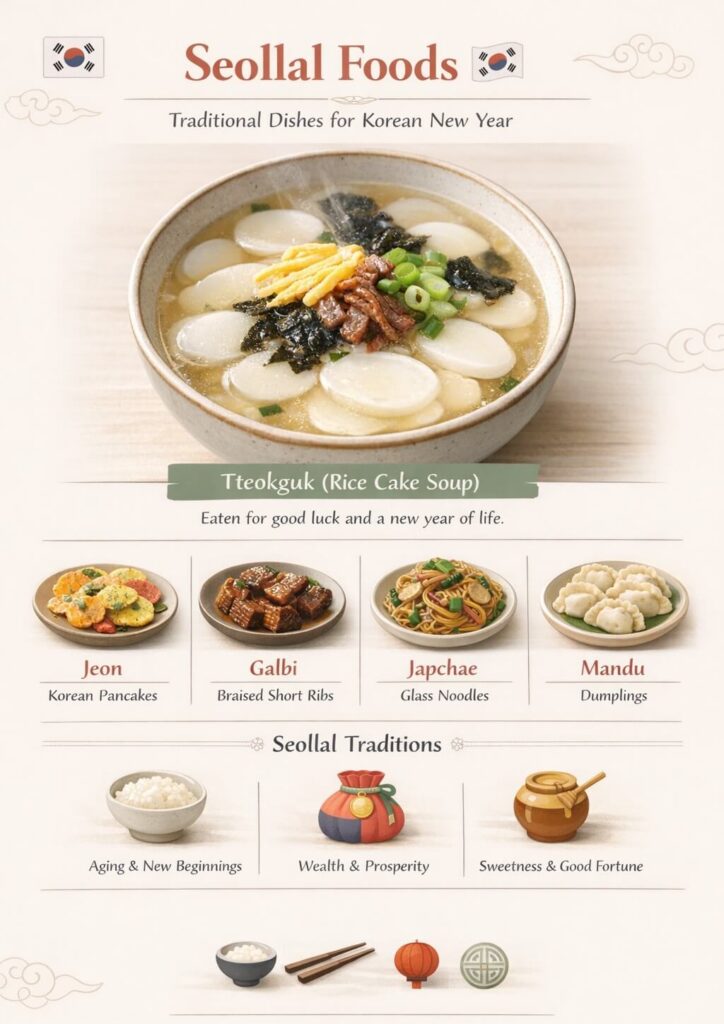
Food is central to Seollal celebrations, symbolizing prosperity and renewal. The most important dish is tteokguk (rice cake soup), representing a fresh start and the gaining of a year in age. Other popular dishes include jeon (savory pancakes), japchae (glass noodles), and a variety of side dishes prepared for the holiday feast.
🏯 Best Places to Experience Seollal in Seoul
If you’re visiting Seoul during Seollal, you can experience traditional celebrations at cultural landmarks like Gyeongbokgung Palace, Bukchon Hanok Village, and Namsangol Hanok Village. These locations often host special events, performances, and cultural activities, making it one of the best times to experience Korean heritage.
👉 Ideas to do in South Korea
✈️ Travel Tips for Seollal
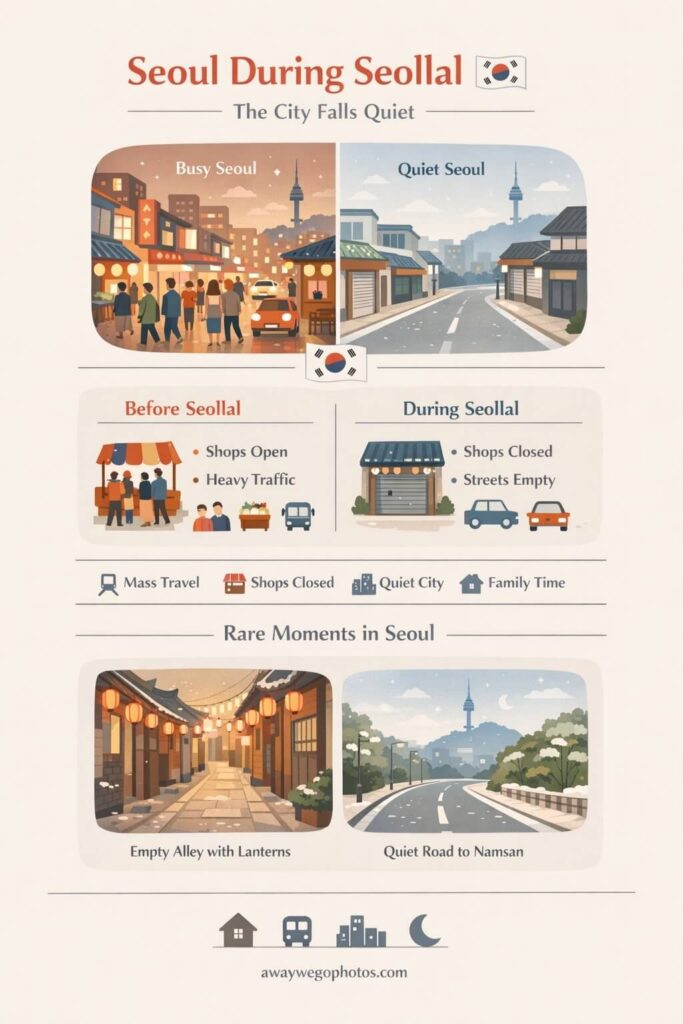
Traveling during Seollal can be both exciting and challenging. Transportation becomes extremely busy as locals return home, so booking tickets early is essential. Many shops and restaurants close on the main holiday day, but major attractions often remain open. Cities like Seoul can feel quieter, offering a unique chance to explore without large crowds.
🎊 Why You Should Experience Seollal
Seollal is more than just a holiday—it’s a meaningful cultural experience that offers a deeper understanding of Korean traditions, values, and family life. From honoring ancestors through charye to sharing meals like tteokguk, every part of the celebration reflects respect, renewal, and togetherness. Whether you’re visiting or simply learning about Korean culture, Seollal provides a unique and memorable insight into the country’s heritage.
✨ Final Thoughts
If you’re planning a trip to South Korea, experiencing Seollal can be both fascinating and rewarding. While travel during this time requires extra planning, the opportunity to witness authentic traditions and a quieter side of cities like Seoul makes it worthwhile. From cultural rituals to traditional foods, Seollal is a celebration that beautifully blends history, family, and new beginnings.
👉 Ideas to do in South Korea
Like this Post? Save it on Pinterest!