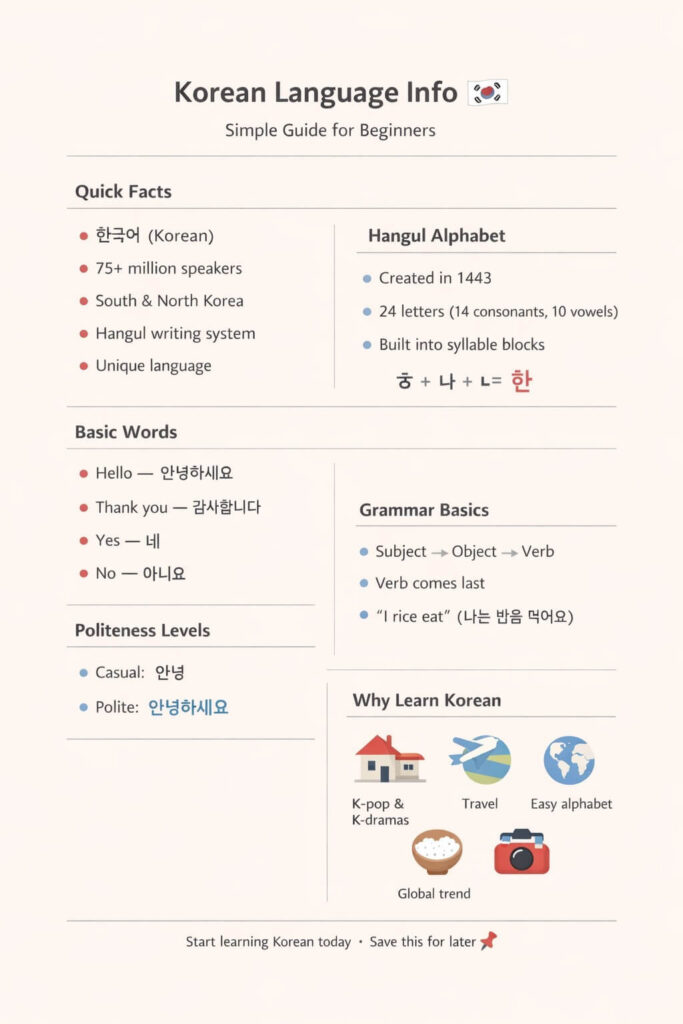
The Korean language has become one of the most popular languages to learn worldwide. With the rise of K-pop, K-dramas, and Korean culture, more people are eager to understand and speak Korean.
Spoken by over 75 million people, Korean is the official language of both South Korea and North Korea—and it’s more beginner-friendly than you might think.
👉 Planning a trip? Check out our Seoul Travel Guide and 3 Days in Seoul itinerary to explore the city while practicing basic Korean.
📚 What Is the Korean Language?
Korean is a unique language with its own writing system called Hangul. Unlike Chinese or Japanese, Hangul is phonetic, meaning each symbol represents a sound.
🔎 Quick Facts:
- Native name: 한국어 (Hanguk-eo)
- Writing system: Hangul
- Speakers: 75+ million worldwide
- Language family: Koreanic
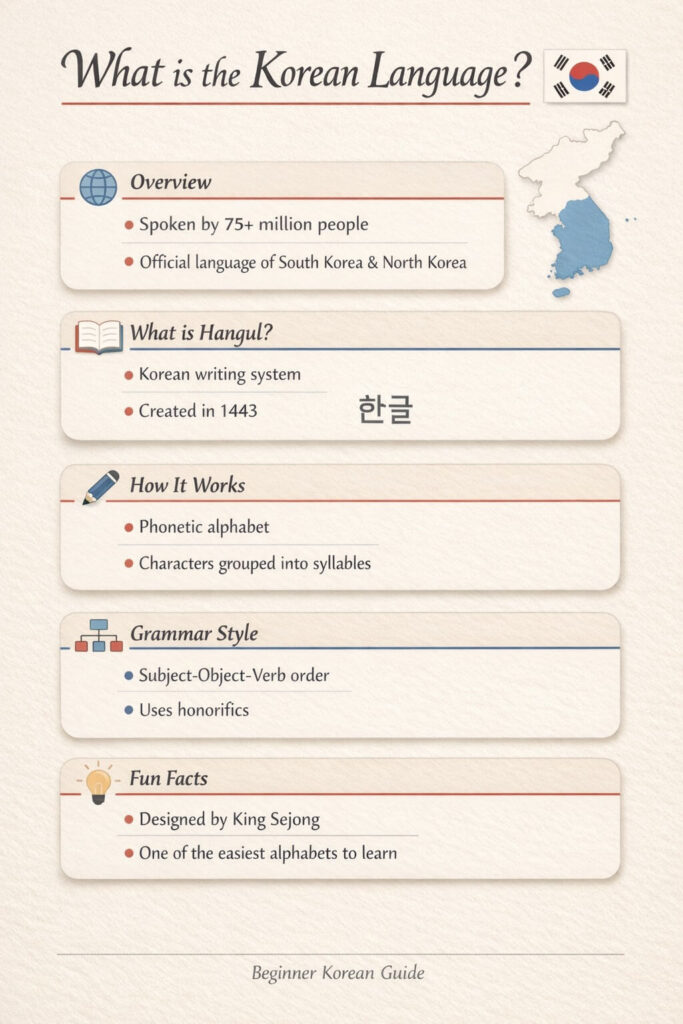
🕰️ A Brief History of the Korean Language
Understanding the history of Korean helps you appreciate how simple and effective the language is today.
📜 Key Moments:
- Before 1443:
Koreans used Chinese characters (Hanja), making literacy difficult. - 1443 – Creation of Hangul:
King Sejong the Great created Hangul to improve literacy. - 1500s–1800s:
Hangul spread slowly among the population. - 1900s:
Hangul became widely used during modernization. - Today:
Korean is now a global language.
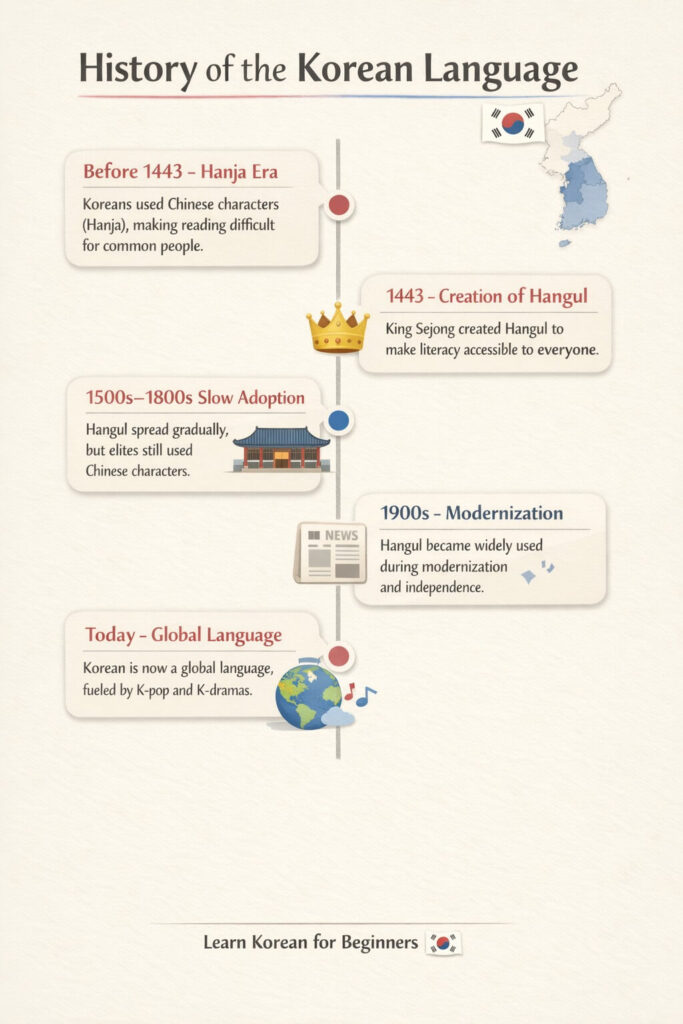
🔤 The Korean Alphabet (Hangul)
Hangul is one of the easiest writing systems in the world.
🧩 Structure:
- 14 consonants
- 10 vowels
✍️ Example:
- 한 (han)
- 국 (guk)
- 한국 (Hanguk)
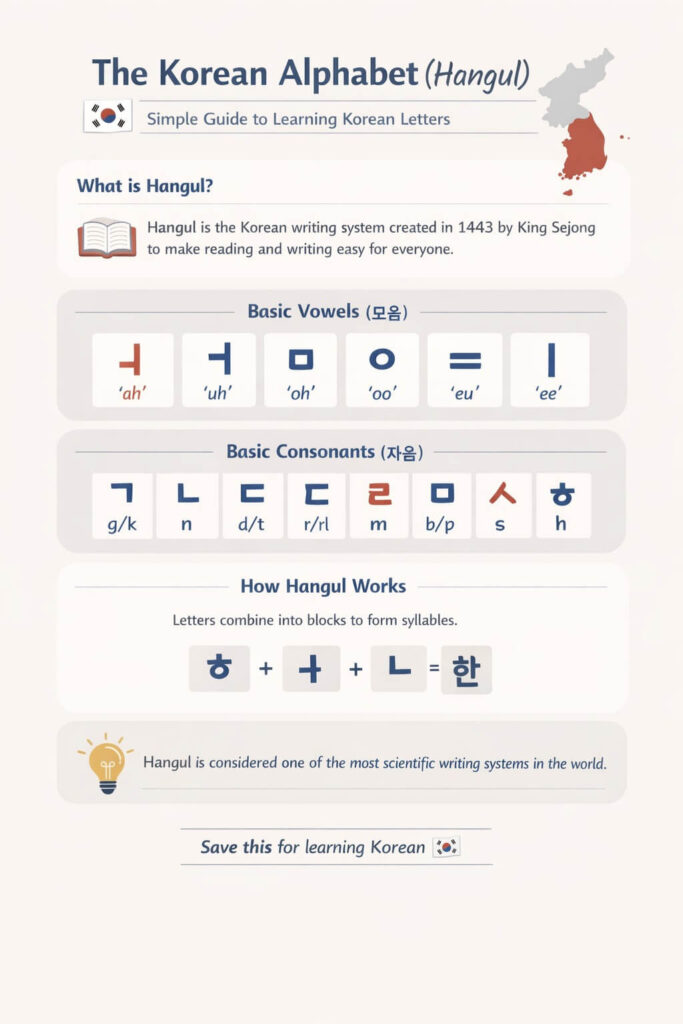
🔊 Korean Pronunciation Basics
Korean pronunciation follows consistent rules:
- Sounds shift depending on position
- Double consonants are stronger
- Some sounds soften naturally
🧠 Korean Grammar Structure
Korean sentence structure:.
💡 Subject + Object + Verb
Example:
- English: I eat rice
- Korean: 나는 밥을 먹어요
💬 Common Korean Phrases
Start with these essential phrases:
- Hello: 안녕하세요
- Thank you: 감사합니다
- Yes: 네
- No: 아니요
👉 These phrases are especially useful when traveling—try them while following this 3 Days in Seoul itinerary.
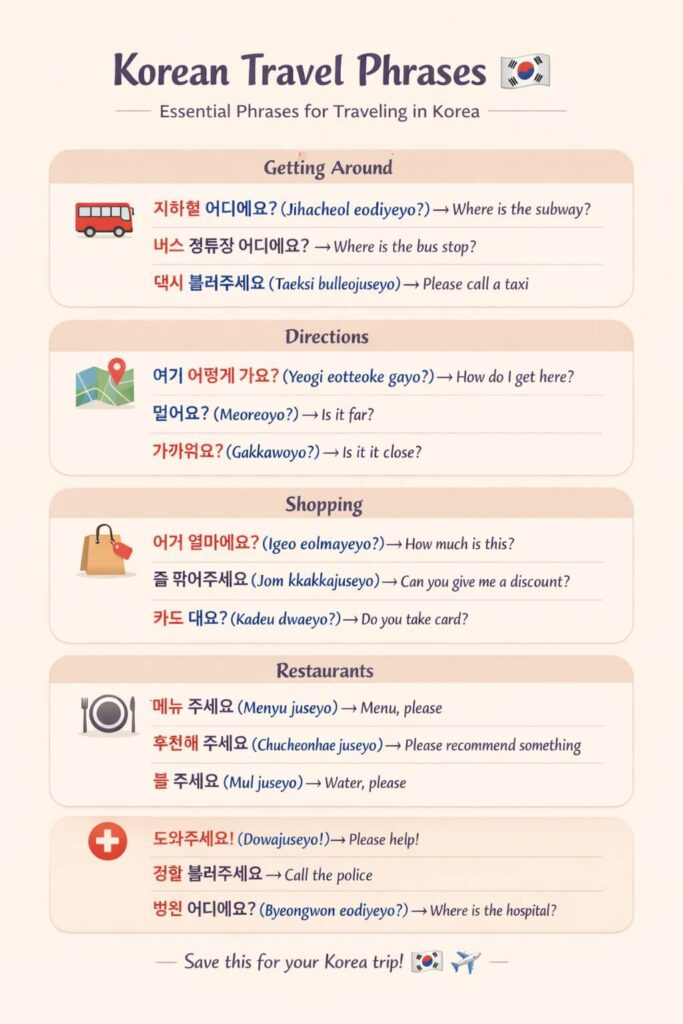
🌟 Why Learn Korean?
🎵 Enjoy Korean Culture
Understand music and shows without subtitles.
✈️ Travel with Confidence
You’ll be able to order food, ask for directions, and connect with locals.
💼 Career Opportunities
Useful in global industries.
🧩 Brain Benefits
Improves memory and cognitive skills.
🚀 Tips to Learn Korean Faster
📖 Learn Hangul First
Start with the alphabet.
⏱️ Practice Daily
Consistency is key.
📱 Use Apps
Apps like Duolingo or Memrise help reinforce learning.
📖 Learn Real-Life Phrases
Start speaking faster with common expressions.
🎬 Watch Korean Content
Immerse yourself in the language.
🤔 Is Korean Hard to Learn?
Korean may feel different at first, but Hangul makes it much easier than expected. With consistent practice, beginners can reach conversational level in a few months.
🏁 Final Thoughts
The Korean language is logical, structured, and rewarding to learn. Whether you’re studying for fun or preparing for a trip, it’s a valuable skill.
Like this Post? Save it on Pinterest!