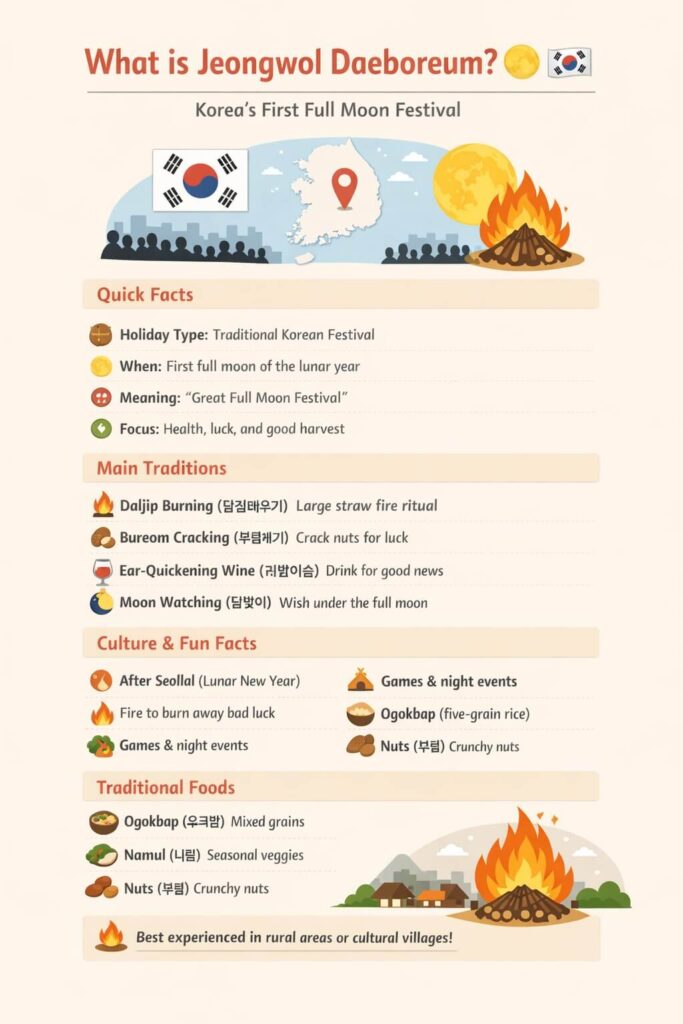
Jeongwol Daeboreum is a traditional Korean holiday celebrated on the first full moon of the lunar year. It symbolizes a fresh beginning and is believed to bring good health, prosperity, and protection from bad luck. Unlike other holidays, it focuses on nature, community traditions, and meaningful rituals tied to the moon and seasonal cycles.
📜 History of Jeongwol Daeboreum
Jeongwol Daeboreum dates back to ancient Korea when agricultural communities relied on lunar cycles to guide farming. The first full moon was believed to predict harvest success and ward off evil spirits. Over time, rituals like fire-burning and symbolic food traditions developed, turning the day into a cultural celebration of protection, renewal, and hope for the year ahead.
⏳ Jeongwol Daeboreum Timeline
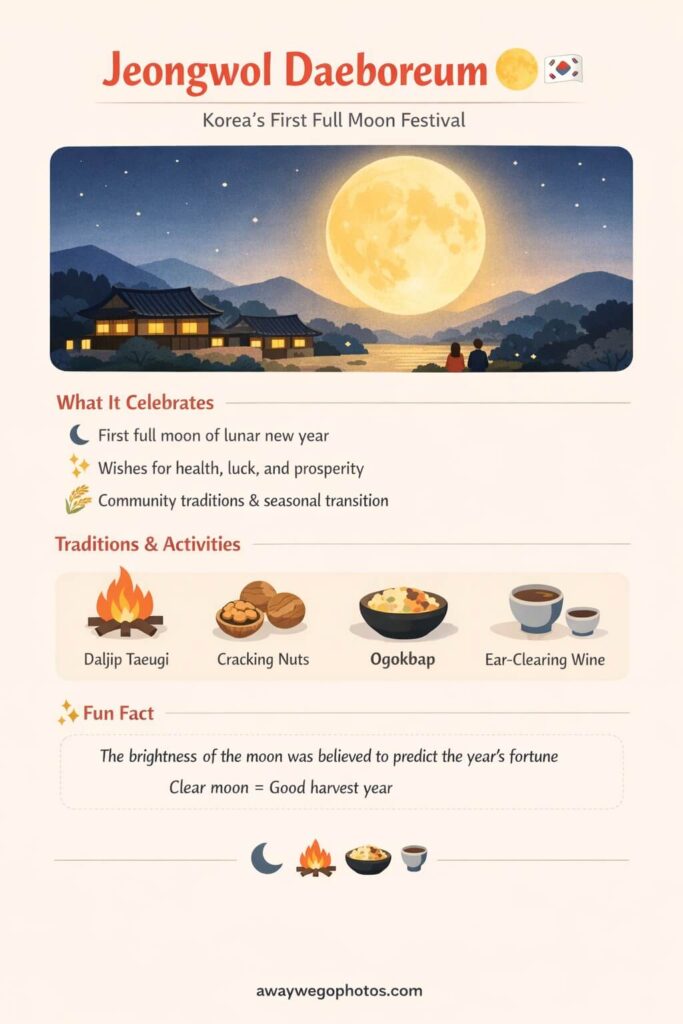
Jeongwol Daeboreum takes place on the 15th day of the first lunar month. Preparations begin the day before, with food preparation and ritual planning. The day itself is filled with symbolic activities from morning to night, ending with full moon viewing and fire ceremonies.
Quick Timeline:
- Morning: Drink “ear-quickening wine” (귀밝이술) for good news
- Daytime: Eat seasonal foods and play folk games
- Evening: Watch the full moon and burn daljip (straw fire ritual)
🥜 Traditional Foods & Symbolism
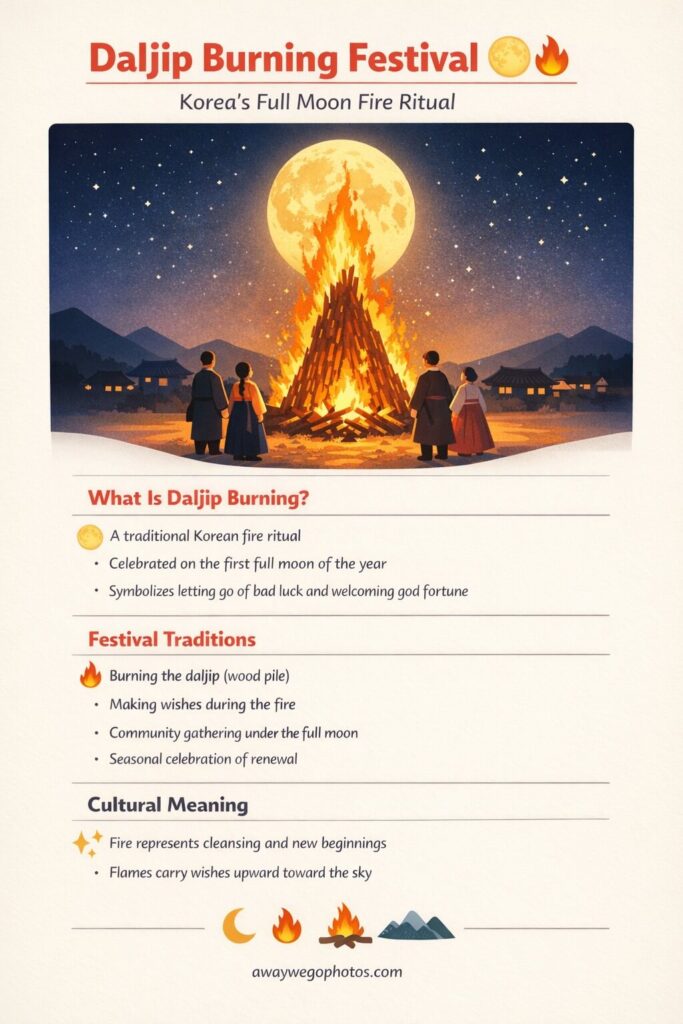
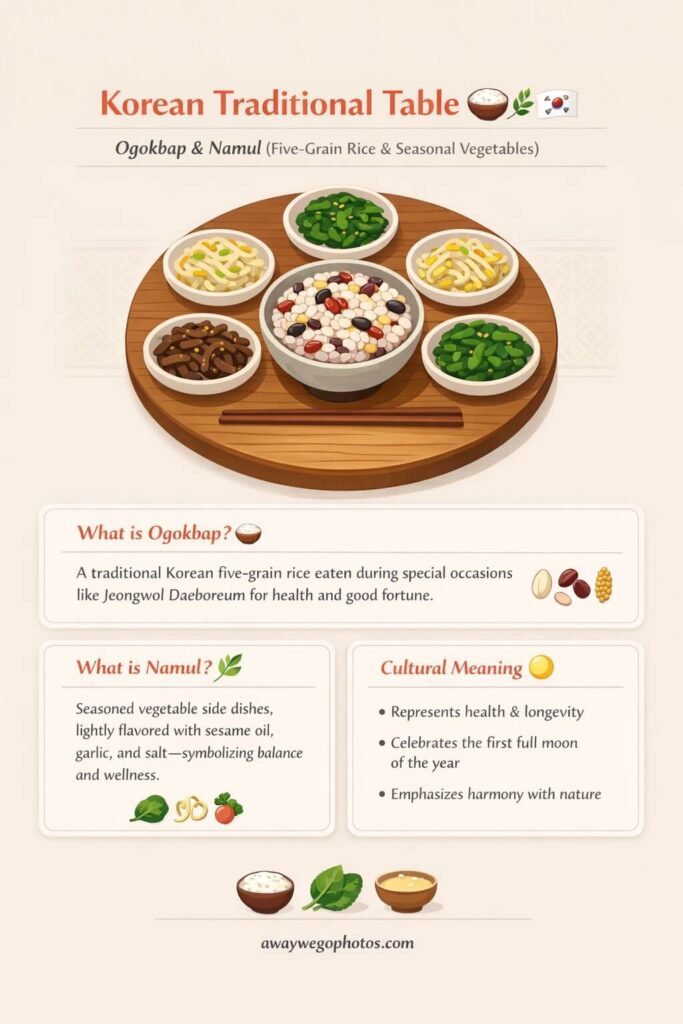
Food is an essential part of Jeongwol Daeboreum traditions. Dishes like ogokbap (five-grain rice) and boreum-namul (seasoned vegetables) are eaten for balance and health. Cracking nuts such as peanuts or walnuts symbolizes breaking bad luck and strengthening the body, especially teeth, while preparing for a prosperous year.
🔥 Popular Traditions & Activities
One of the most iconic traditions is daljip taeugi, where large straw piles are set on fire to drive away evil spirits. Other customs include walking across bridges for good health and playing traditional games. These activities emphasize community bonding and reflect hopes for happiness, protection, and success in the new year.
🌍 How Jeongwol Daeboreum is Celebrated Today
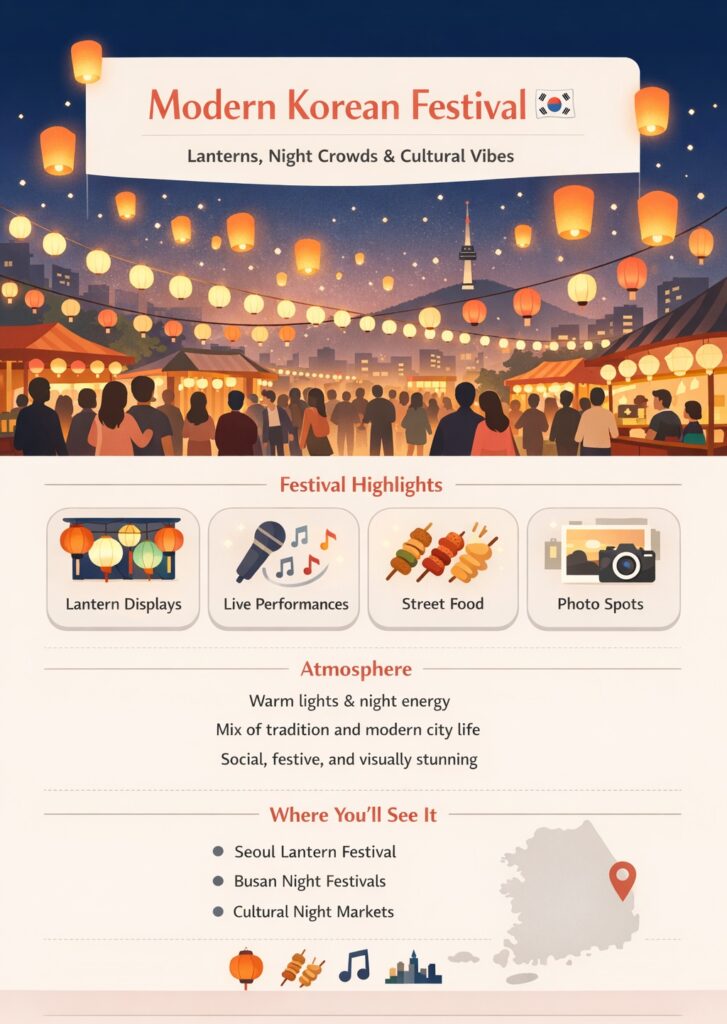
Today, Jeongwol Daeboreum is celebrated through both traditional customs and modern festivals. Cities and villages host cultural events, including performances, food markets, and fire ceremonies. While some rituals have evolved, the core meaning remains—bringing good fortune, health, and a positive start to the year.
⭐ Recommended Tours
Planning to explore more of Korea beyond the festival? Check out this Seoul: Highlights of Seoul Full-Day Tour, perfect for first-time visitors who want to see the city’s top landmarks in one day. For a different experience, the Seoul Night Tour & Cultural Experience lets you discover the city’s vibrant evening atmosphere and cultural spots after dark.
🔗 Related Posts
Continue exploring South Korea with these helpful guides:
🌙 Final Thoughts
Jeongwol Daeboreum is a meaningful celebration rooted in tradition, community, and hope for the future. From fire rituals to symbolic foods, each custom reflects a wish for health, prosperity, and protection. Whether you’re learning about Korean culture or planning a trip, this festival offers a unique and memorable cultural experience.
Like this Post? Save it on Pinterest!