German Christmas desserts are a festive blend of centuries-old traditions, warm spices, and comforting flavors that define the holiday season. From delicate butter cookies baked in family kitchens to rich cakes prepared with patience and care, these sweets reflect Germany’s deep-rooted Christmas culture. Many were first created in monasteries or royal courts, while others became cherished home-baked classics passed down through generations.
Ingredients like almonds, honey, cinnamon, vanilla, dried fruits, and butter appear again and again, filling homes with the unmistakable scent of Christmas. Some desserts are light and crumbly, others dense and richly spiced, but all share a strong connection to Advent and holiday celebrations. In this list of the 10 best German Christmas desserts, you’ll discover timeless favorites enjoyed at Christmas markets, festive gatherings, and cozy winter evenings across Germany and beyond.
Ready to try German Christmas Desserts!
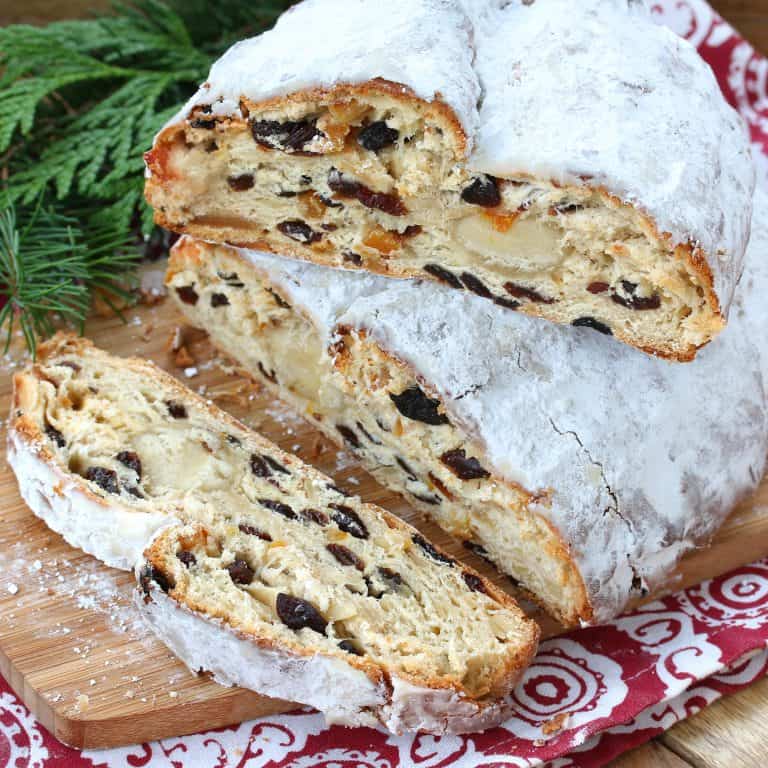
Stollen (Christstollen)
From daringgourmet.com
Stollen, also known as Christstollen, is a traditional German Christmas bread first documented in 1329 in the town of Naumburg. It later became strongly associated with Dresden, which is now famous for its protected specialty, Dresdner Christstollen. Originally, Stollen was a simple bread made under medieval fasting rules, but it evolved into a rich holiday treat once butter and sugar were permitted.
The name “Stollen” comes from Middle High German, meaning post or shaft, and its folded shape is believed to symbolize the baby Jesus wrapped in swaddling clothes, giving rise to the name Christstollen.
Traditional Christstollen is made from buttery yeast dough filled with raisins, candied orange and lemon peel, and almonds, gently flavored with warm spices like cardamom and nutmeg. The decoration style is intentionally simple, with the loaf brushed in butter and heavily dusted with powdered sugar, creating a snowy appearance that reflects its Christmas origins.
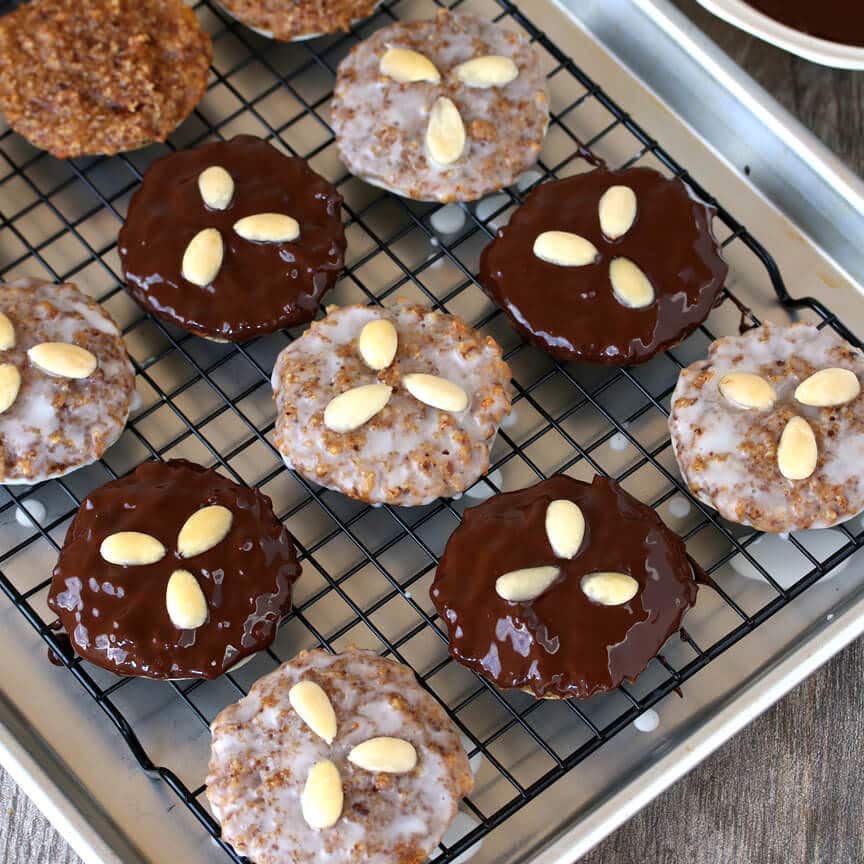
Lebkuchen
From daringgourmet.com
Lebkuchenis a traditional German Christmas treat with roots dating back to the 13th century, first appearing around 1296 in Nuremberg, which remains the most famous center of Lebkuchen production today. The city’s Nürnberger Lebkuchen later received protected status, highlighting its long-standing cultural importance.
The name “Lebkuchen” is believed to come from the old German word leb (meaning herbs or medicinal plants) or from Laib (meaning loaf), reflecting its spiced nature. Historically, Lebkuchen was linked to monastery baking, where monks used spices thought to have healing properties.
Traditional Lebkuchen is made with honey instead of sugar and flavored with a blend of warm spices such as cinnamon, cloves, nutmeg, ginger, and cardamom. Ground nuts, especially almonds and hazelnuts, are commonly used instead of flour.
In terms of decoration, Lebkuchen is often baked on wafer-thin bases (oblaten) and finished with a sugar glaze, chocolate coating, or simple icing, sometimes decorated with almonds, making it both festive and visually appealing.
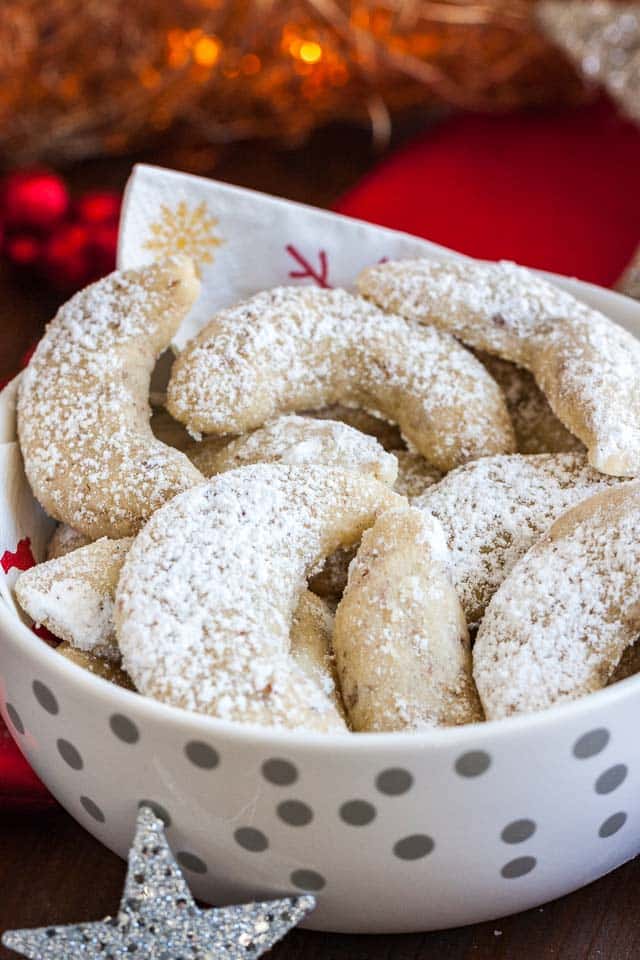
Vanillekipferl
From cooking.nytimes.com
Vanillekipferlis a classic Austrian Christmas cookie that dates back to the 18th century and became widely popular across Austria, Germany, and Central Europe. It is traditionally associated with the Viennese court, where refined pastries and delicate flavors were highly valued during the holiday season.
The name “Vanillekipferl” comes from German, with Vanille meaning vanilla and Kipferl meaning crescent, referring to the cookie’s distinctive moon-like shape. This crescent form is one of its most recognizable features and has remained unchanged for centuries.
Traditional Vanillekipferl is made with a rich, crumbly dough of butter, flour, ground almonds or walnuts, and a small amount of sugar, flavored gently with vanilla. Unlike many spiced Christmas cookies, its taste is mild, buttery, and delicate.
The decoration style is simple yet elegant. While still warm, the cookies are rolled in vanilla-flavored powdered sugar, which lightly coats them and gives Vanillekipferl their soft, snowy appearance, perfectly fitting the winter holiday tradition.
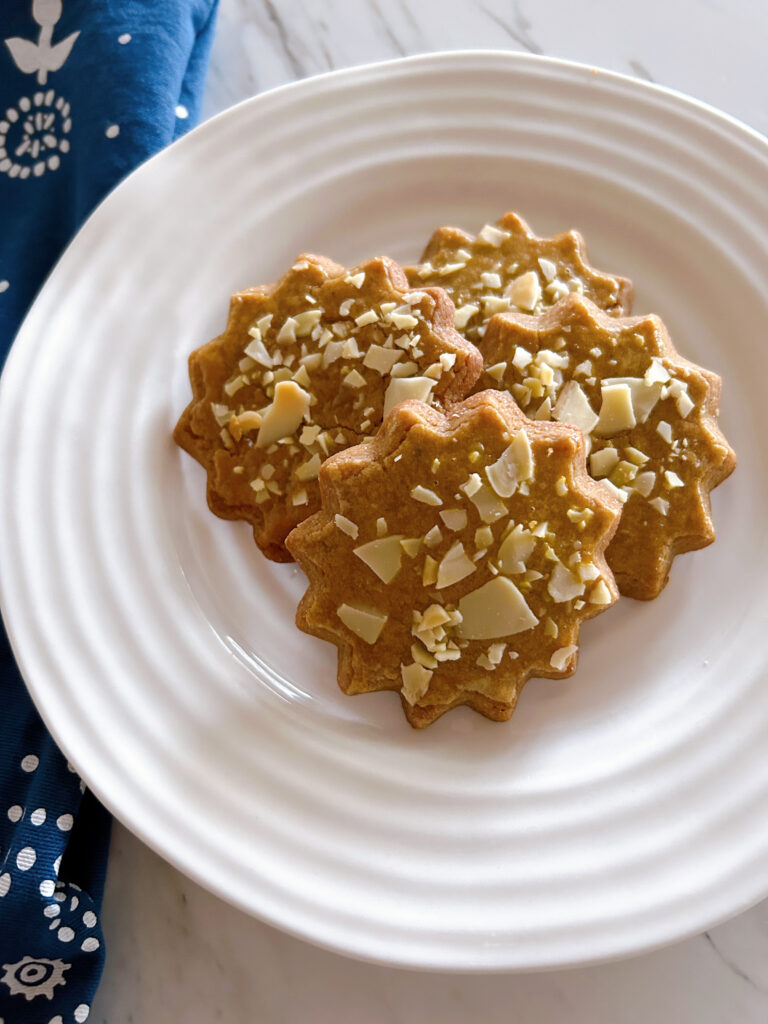
Spekulatius
From accidentalartisan.ca
Spekulatius is a traditional German spiced Christmas biscuit with origins dating back to the 17th century, particularly in regions along the Lower Rhine and the Netherlands. It became especially popular during the Advent season and remains closely associated with St. Nicholas celebrations.
The name “Spekulatius” is believed to come from the Latin word speculator, meaning observer or bishop, a reference to St. Nicholas, whose images often appear on the cookies. Another theory links the name to speculum (mirror), reflecting the detailed images pressed into the dough.
Traditional Spekulatius is made from a crisp butter dough flavored with warm spices such as cinnamon, cloves, nutmeg, cardamom, and ginger. Brown sugar and sometimes almonds add depth and richness to the flavor. The cookies are thin and crunchy, making them ideal for imprinting.
The decoration style is one of its defining features. Spekulatius dough is pressed into carved wooden molds that create detailed scenes, often showing St. Nicholas, windmills, or festive symbols. After baking, the cookies are usually left plain to highlight their intricate designs.
Zimtsterne
From daringgourmet.com
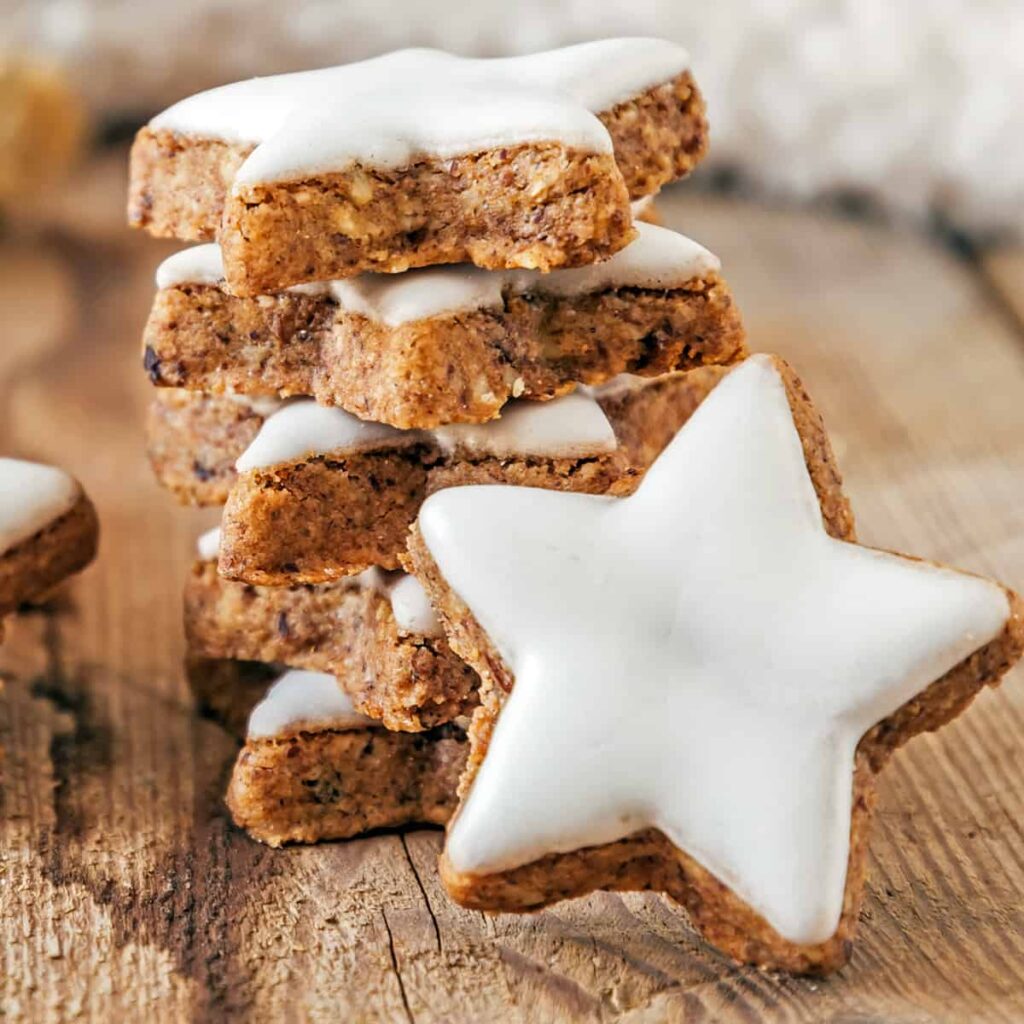
Zimtsterneare traditional German Christmas cookies with origins dating back to the 16th century, particularly in southern Germany and Switzerland. They became popular during Advent as a festive treat made without flour, making them suitable for fasting periods in earlier times.
The name “Zimtsterne” comes from German, with Zimt meaning cinnamon and Sterne meaning stars, referring to both the cookie’s shape and its warm, spiced flavor. The star shape symbolizes the Christmas season and is closely associated with holiday baking traditions.
Traditional Zimtsterne are made from ground almonds or hazelnuts, egg whites, sugar, and a generous amount of cinnamon. The dough is rich and chewy on the inside, with a lightly crisp exterior.
The decoration style is simple yet distinctive. Before baking, the cookies are topped with a smooth white sugar glaze made from egg whites and powdered sugar. This bright icing contrasts with the dark, nutty dough and gives Zimtsterne their classic festive appearance.
Pfeffernüsse
From daringgourmet.com
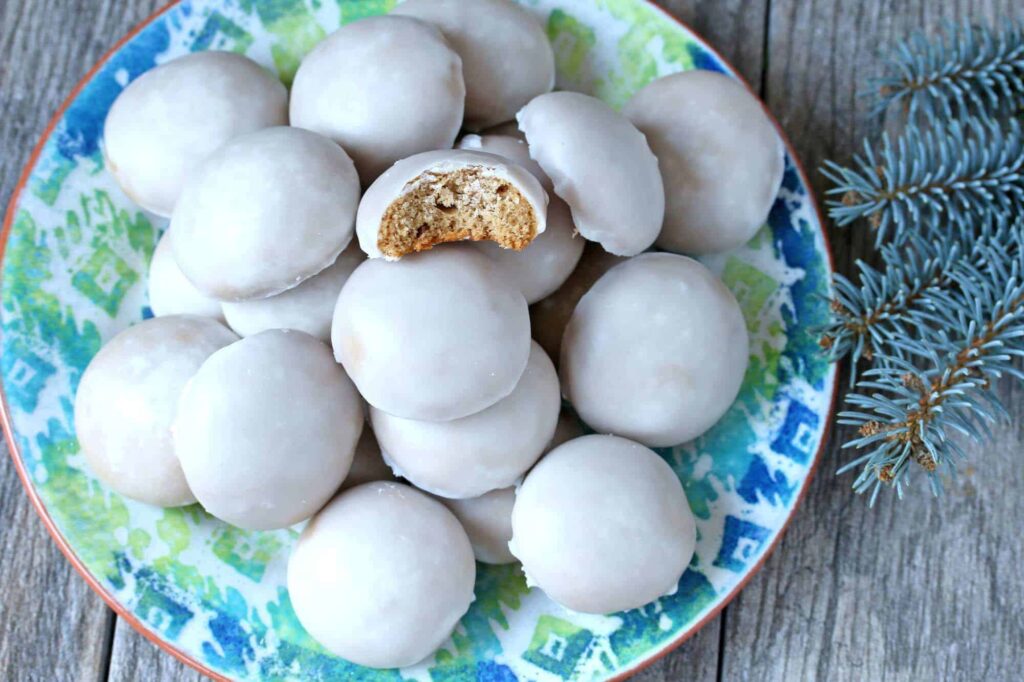
Pfeffernüsseare traditional German Christmas spice cookies with origins dating back to the 17th century, particularly in northern Germany and parts of the Netherlands. They were commonly baked during Advent and are closely associated with festive winter celebrations.
The name “Pfeffernüsse” translates to “pepper nuts,” referring not to actual pepper in modern recipes, but to the historical use of exotic spices, which were once broadly called “pepper.” The small, round shape of the cookies resembles nuts, giving them their distinctive name.
Traditional Pfeffernüsse are made from a firm dough flavored with honey or molasses and a blend of warming spices such as cinnamon, cloves, nutmeg, cardamom, ginger, and sometimes anise. Some older recipes included a small amount of white pepper, adding subtle heat.
The decoration style is simple and understated. After baking, the cookies are either rolled in powdered sugar or lightly glazed, creating a snowy coating. Pfeffernüsse are often aged for a short time before eating, allowing the flavors to deepen and soften.
Marzipan
From daringgourmet.com
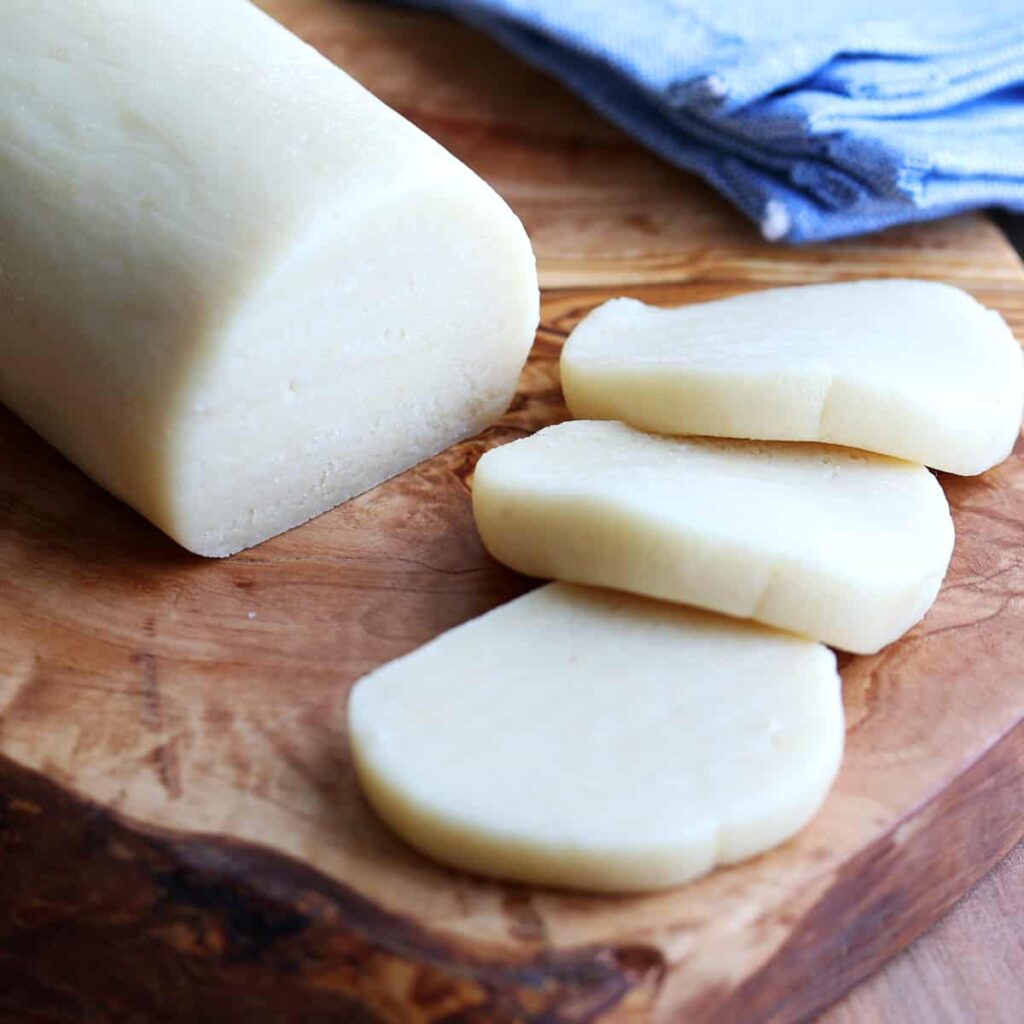
Marzipanis a classic almond-based confection with a long history dating back to the Middle Ages, commonly traced to around the 13th–15th centuries. While its exact origin is debated, Germany—especially Lübeck—became one of the most famous centers of marzipan production, and Lübecker Marzipan is now internationally recognized.
The name “marzipan” is thought to come from the Arabic mauthaban or the Italian marzapane, referring to a box or container in which the sweet was originally sold. Over time, the name became associated with the almond paste itself.
Traditional marzipan is made from finely ground almonds, sugar, and sometimes rose water or bitter almond essence for flavor. The balance of sweetness and almond richness is key to its quality.
Decoration plays an important role in marzipan. It is often shaped into fruits, animals, or festive figures, or used as a smooth covering for cakes and pastries. During Christmas, marzipan is frequently molded into seasonal shapes or dipped in chocolate.
Printen
From daringgourmet.com
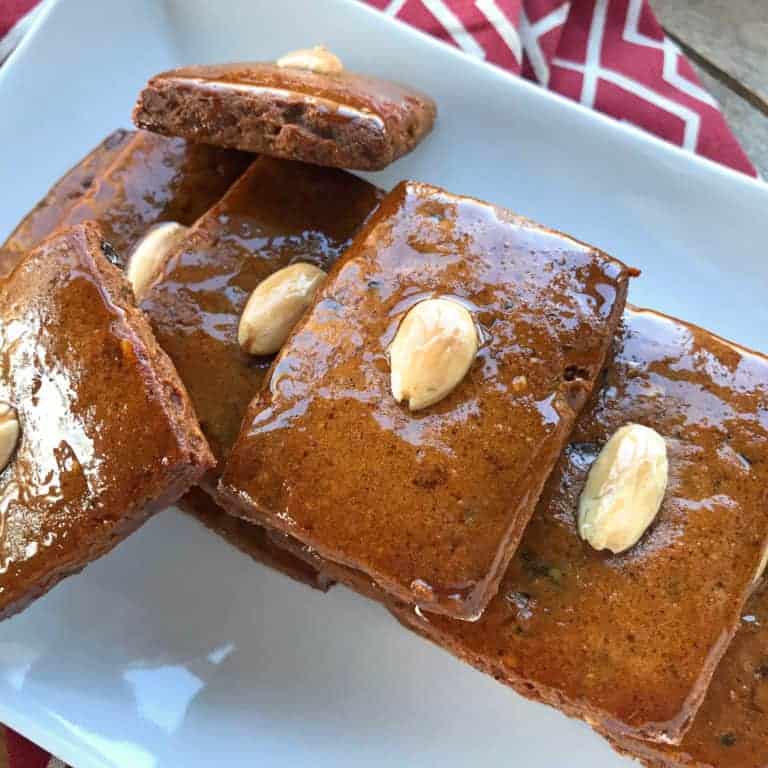
Printen are a traditional German spiced bread with origins dating back to the 17th century, most closely associated with the city of Aachen near the borders of Belgium and the Netherlands. They developed as a local variation of Lebkuchen and remain a regional specialty, especially during the Christmas season.
The name “Printen” comes from the act of “printing” or pressing the dough into carved molds, similar to other traditional European spiced cookies. This method gave early Printen their characteristic shapes and detailed patterns.
Traditional Printen are made without honey, instead using sugar syrup made from sugar beets, which gives them a darker color and firm texture. They are flavored with spices such as cinnamon, cloves, anise, coriander, and cardamom, and may include nuts or candied peel. Classic Printen are known for being quite hard, though softer versions exist.
Decoration varies by style. Traditional Printen are often plain, while modern versions may be coated in chocolate, glazed, or topped with sliced almonds for a festive finish.
Butterplätzchen
From caroha.com
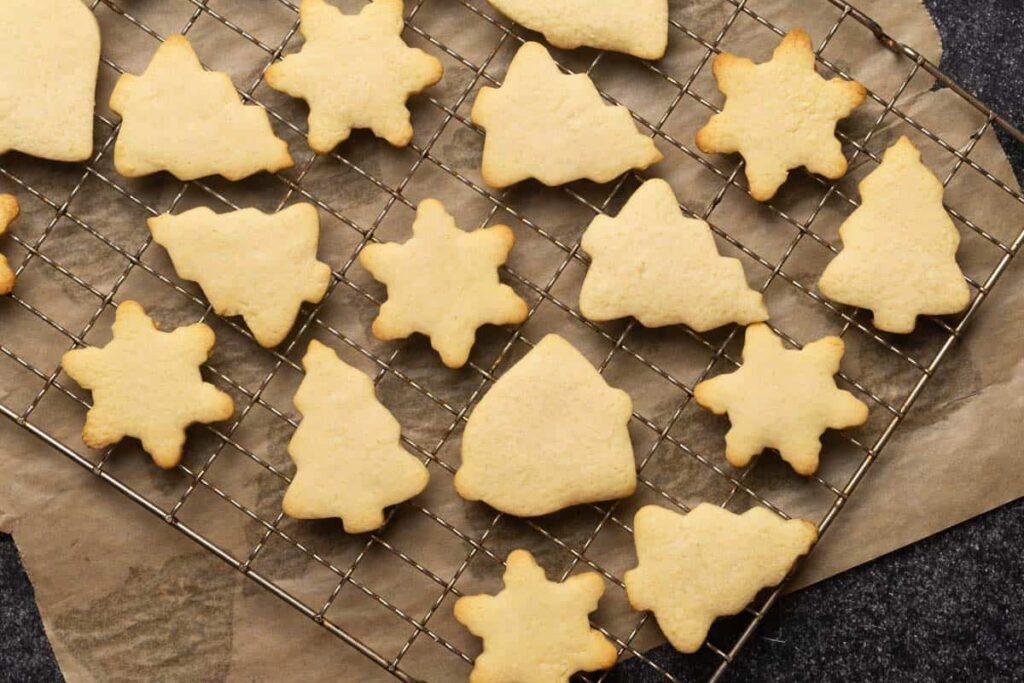
Butterplätzchenare classic German butter cookies that have been a staple of Christmas baking since the 19th century, becoming especially popular in home kitchens across Germany. Their simplicity and versatility made them a favorite for families during the Advent season.
The name “Butterplätzchen” comes from German, with Butter meaning butter and Plätzchen meaning little cookie, directly describing their rich, buttery character. The name reflects the straightforward ingredients and comforting nature of this traditional treat.
Traditional Butterplätzchen are made from a simple dough of butter, flour, sugar, eggs, and vanilla, resulting in a tender texture and mild sweetness. The neutral flavor makes them ideal for a wide range of decorations and shapes.
Decoration is a key feature of Butterplätzchen. The dough is often cut into festive shapes such as stars, hearts, or circles and then decorated with sprinkles, sugar crystals, chocolate, or jam centers. After baking, some cookies are half-dipped in chocolate, making them a colorful and festive Christmas favorite.
Baumkuchen
From caroha.com
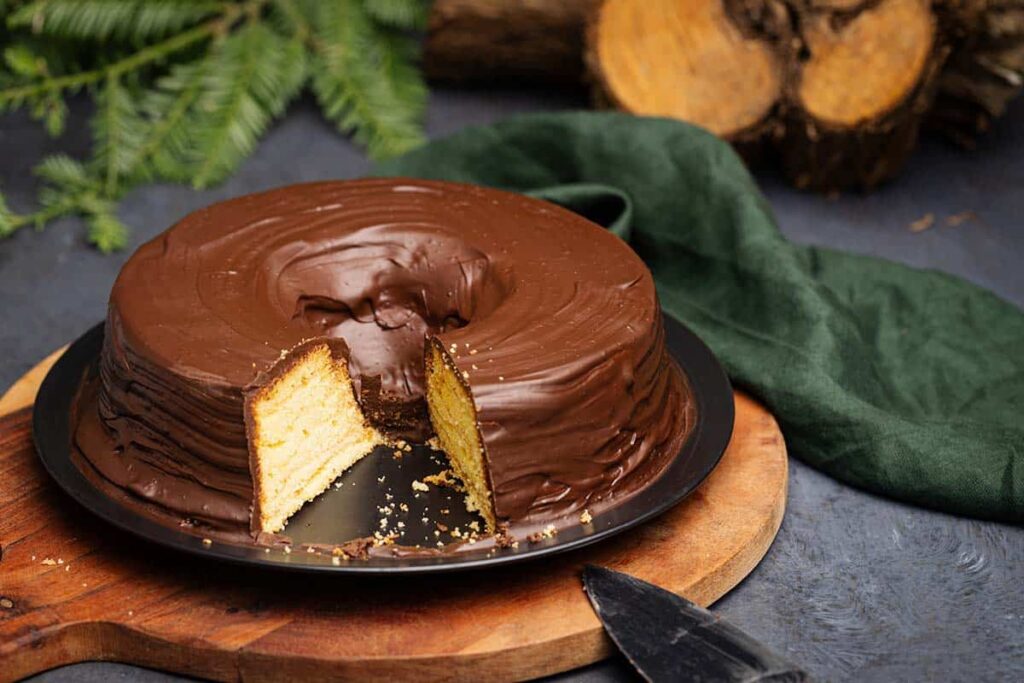
Baumkuchenis a traditional German cake with origins dating back to the 18th century, with the first written records appearing around 1799. It became especially popular in Germany and later in Japan, where it is also highly regarded. Baumkuchen is often associated with celebrations and is considered a symbol of craftsmanship in baking.
The name “Baumkuchen” comes from German, with Baum meaning tree and Kuchen meaning cake. The name refers to the cake’s distinctive ringed interior, which resembles the growth rings of a tree when sliced.
Traditional Baumkuchen is made from a rich batter of butter, eggs, sugar, flour, and vanilla, sometimes lightly flavored with rum or lemon zest. The batter is layered and baked one layer at a time on a rotating spit.
Decoration varies but is typically elegant and restrained. The finished cake is often coated in dark or milk chocolate or lightly glazed, highlighting its smooth exterior and distinctive layered structure.