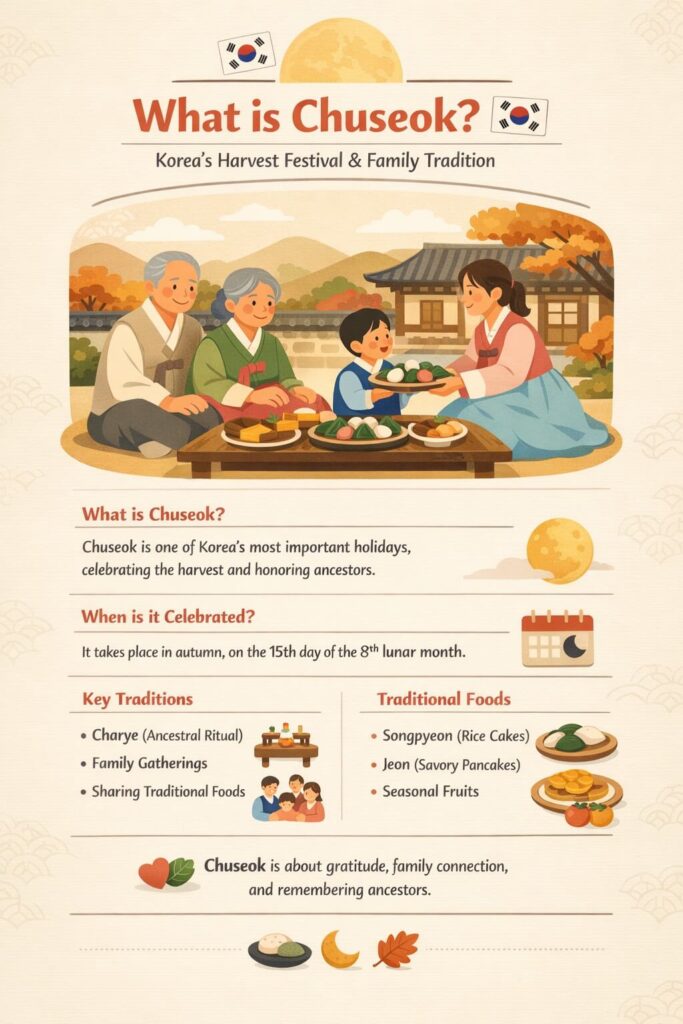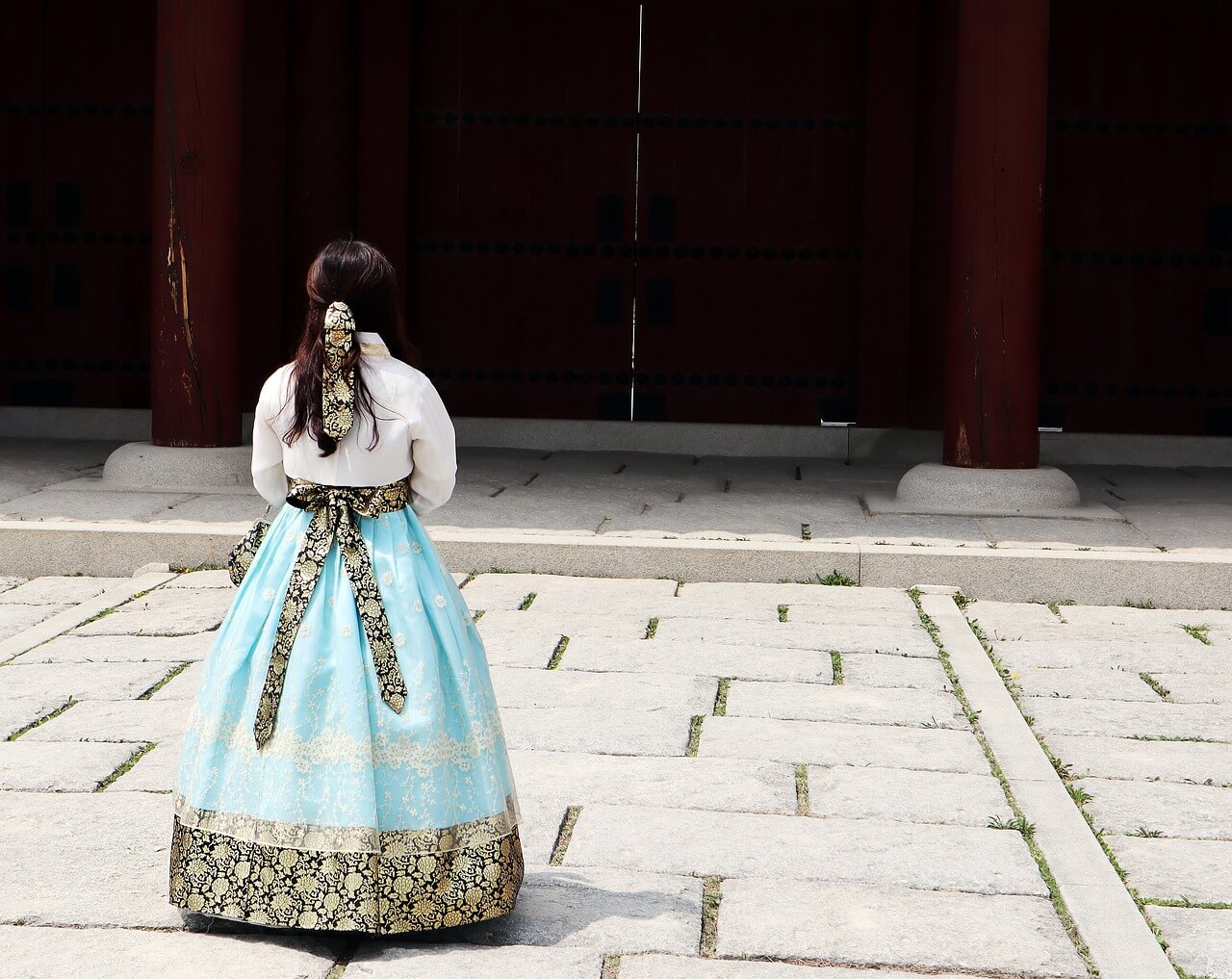
Chuseok is one of South Korea’s most important holidays, often compared to Thanksgiving. Celebrated on the 15th day of the 8th lunar month, it is a time for families to gather, honor ancestors, and share traditional meals. Many Koreans travel back to their hometowns, making it one of the busiest travel periods in the country.
This post contains affiliate links. I may earn a small commission at no extra cost to you.
🕰️ History of Chuseok
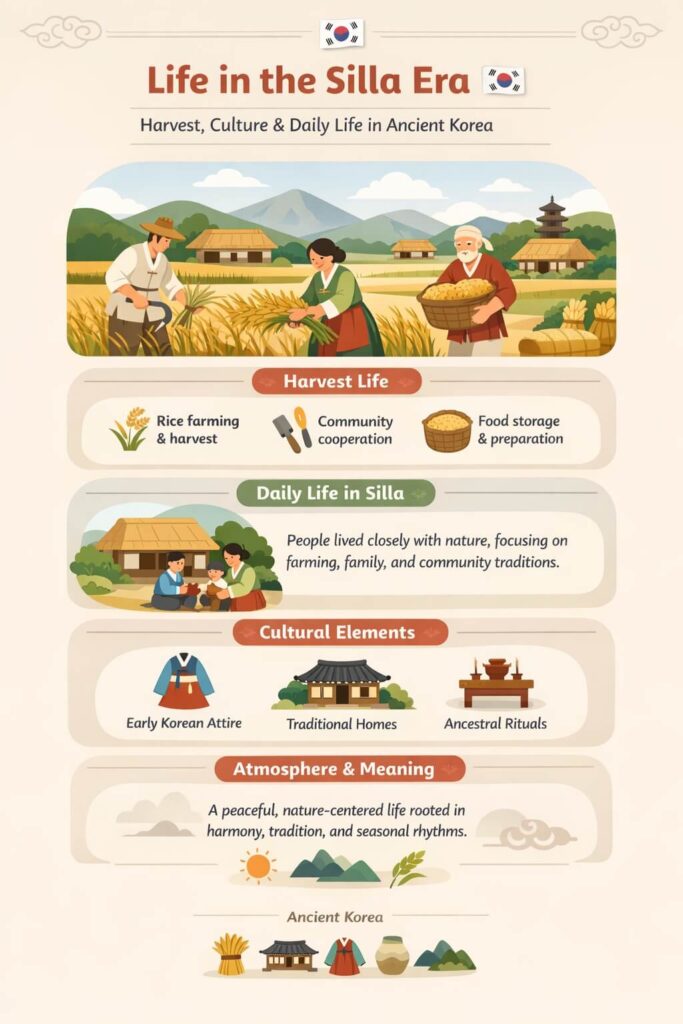
Chuseok dates back over 2,000 years to the Silla Kingdom. It likely began as a harvest celebration tied to agricultural success and community gatherings. Over time, it evolved into a holiday centered on family, gratitude, and ancestral respect, blending ancient traditions with Confucian values that still shape modern Korean culture.
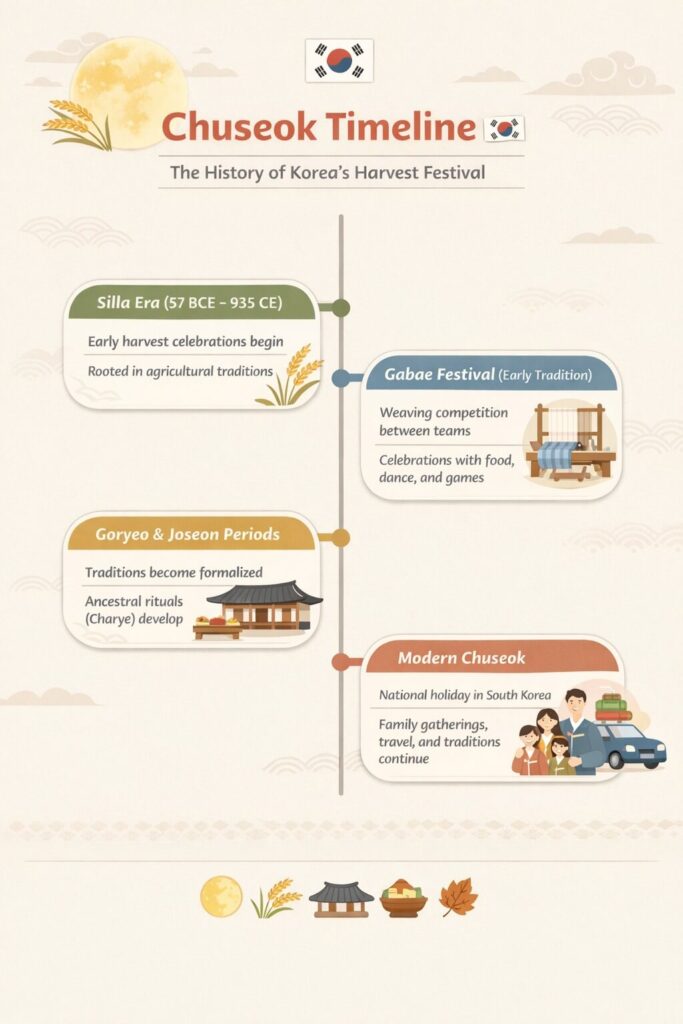
🕰️ Chuseok Timeline: From Ancient Harvest to Modern Holiday
🌾 57 BCE — Early Origins (Silla Kingdom)
Chuseok is believed to have started during the Silla Kingdom through harvest celebrations and community competitions. One legend tells of a weaving contest where the winning group celebrated with food, marking an early form of the festival rooted in community bonding and seasonal gratitude.
🏺 1st–7th Century — Agricultural Traditions Grow
As farming became central to Korean society, seasonal rituals honoring the harvest became more important. Communities celebrated the full moon and gave thanks for successful crops. These traditions shaped Chuseok’s identity as a harvest festival focused on food, nature, and unity.
🏯 668 CE — Unified Silla Period
Following the unification of Korea under Silla, Chuseok became more organized and widely celebrated. It began incorporating family-centered traditions, including shared meals and early forms of ancestor remembrance, turning it into both a national and cultural event.
📜 Goryeo Dynasty (918–1392) — Rituals Take Shape
Confucian ideas began influencing Korean life during this period. Ancestral rituals became more structured, and traditions similar to modern Charye developed. Chuseok gradually shifted toward honoring family lineage and respecting ancestors alongside celebrating the harvest.
🎎 Joseon Dynasty (1392–1897) — Traditions Formalized
Chuseok customs became highly structured under Confucian society. Rituals like Charye and Seongmyo (visiting ancestral graves) were widely practiced. Food preparation, etiquette, and family roles followed strict traditions, many of which are still observed today.
🇰🇷 Modern Day — National Holiday
Today, Chuseok is a major national holiday in South Korea. Families travel across the country to reunite, prepare traditional meals, and honor ancestors. While modern lifestyles have simplified some customs, the core values of family, gratitude, and tradition remain strong.
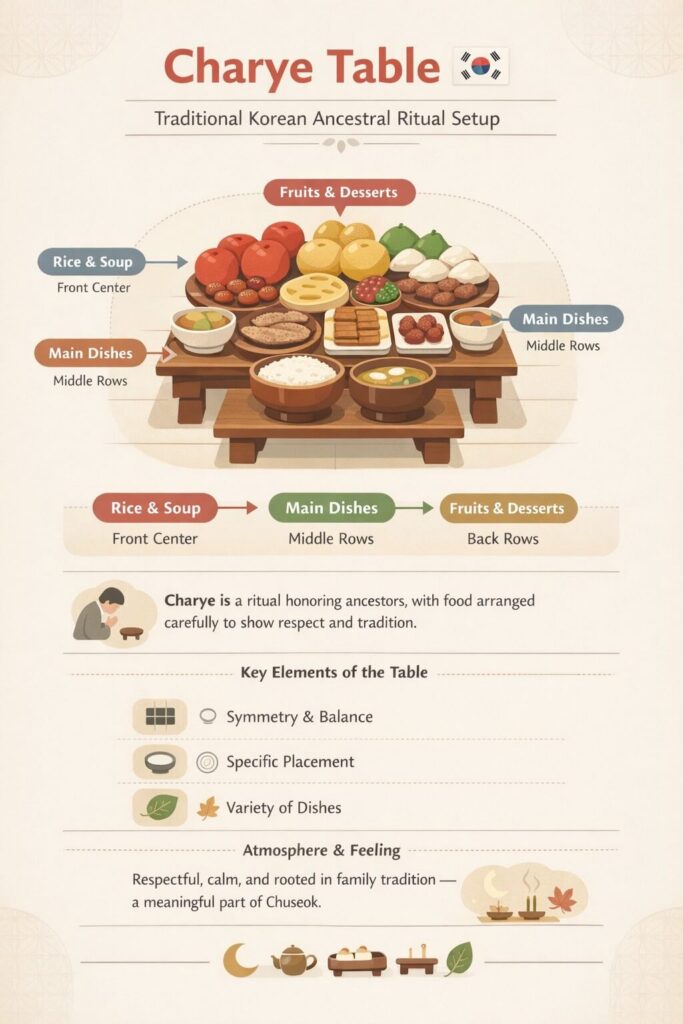
🙏 Charye: Honoring Ancestors
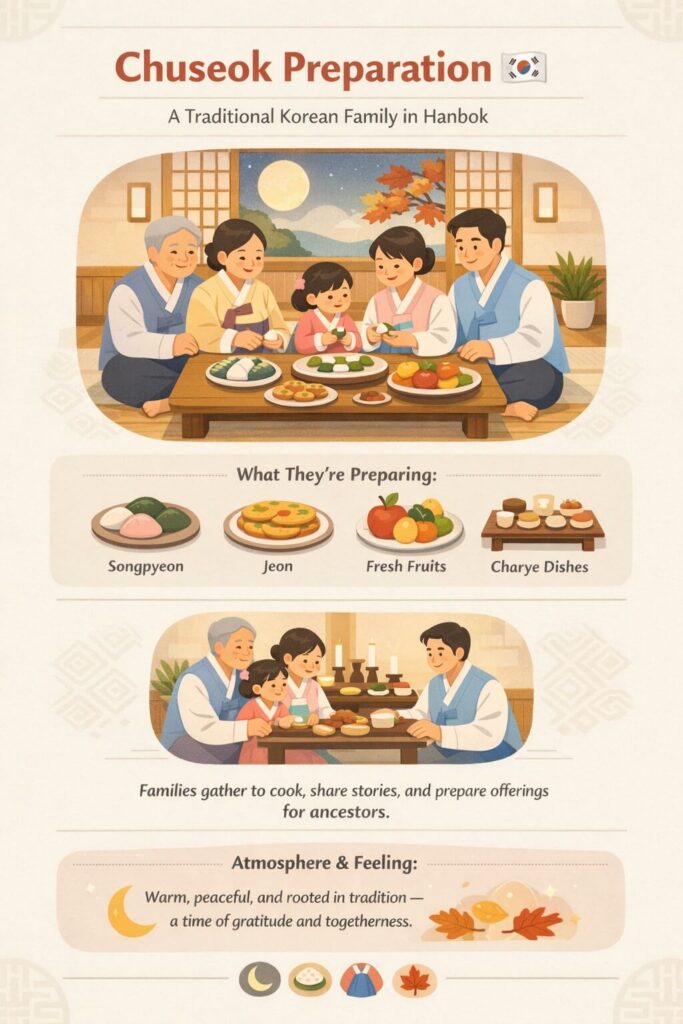
Charye is a memorial ritual held during Chuseok morning. Families prepare a table with carefully arranged traditional foods such as rice, fruits, fish, and rice cakes. Each item is placed according to tradition, symbolizing respect and gratitude toward ancestors and reinforcing strong family connections across generations.
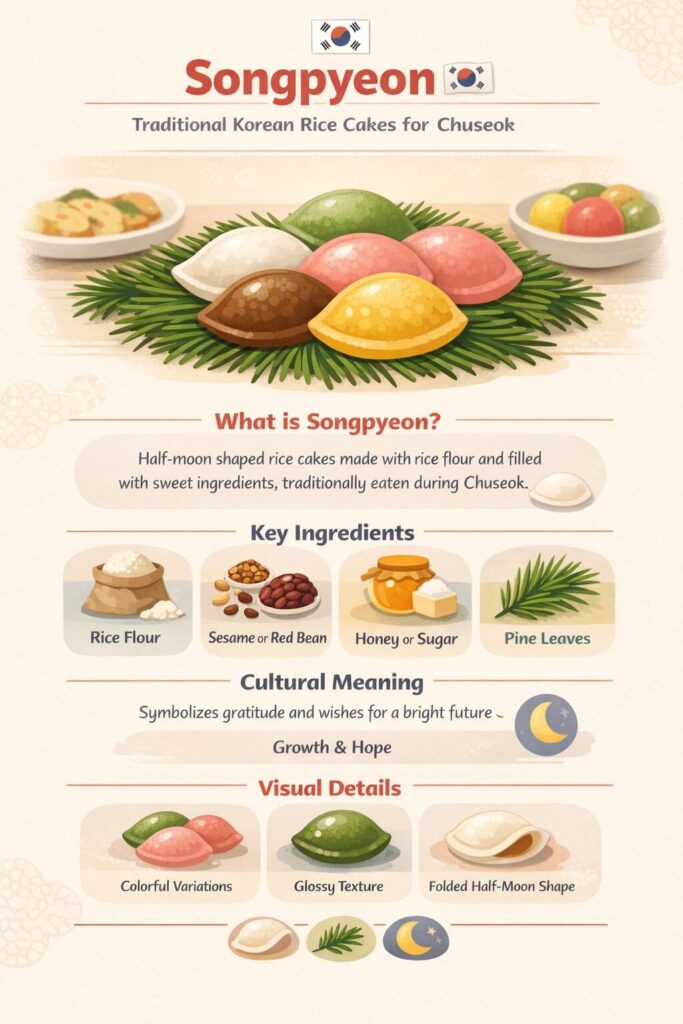
🍡 Traditional Chuseok Foods
Food plays a central role in Chuseok celebrations. Songpyeon, a half-moon-shaped rice cake, is the most iconic dish and symbolizes prosperity. Other foods include jeon (savory pancakes), japchae, and seasonal fruits. These dishes are shared among family members and offered during ancestral rituals.
🚗 Traveling During Chuseok
Traveling during Chuseok can be both rewarding and challenging. Roads and transportation systems become extremely busy as millions return to their hometowns. However, major cities like Seoul become quieter, offering a rare and peaceful atmosphere that allows visitors to explore popular sites without large crowds.
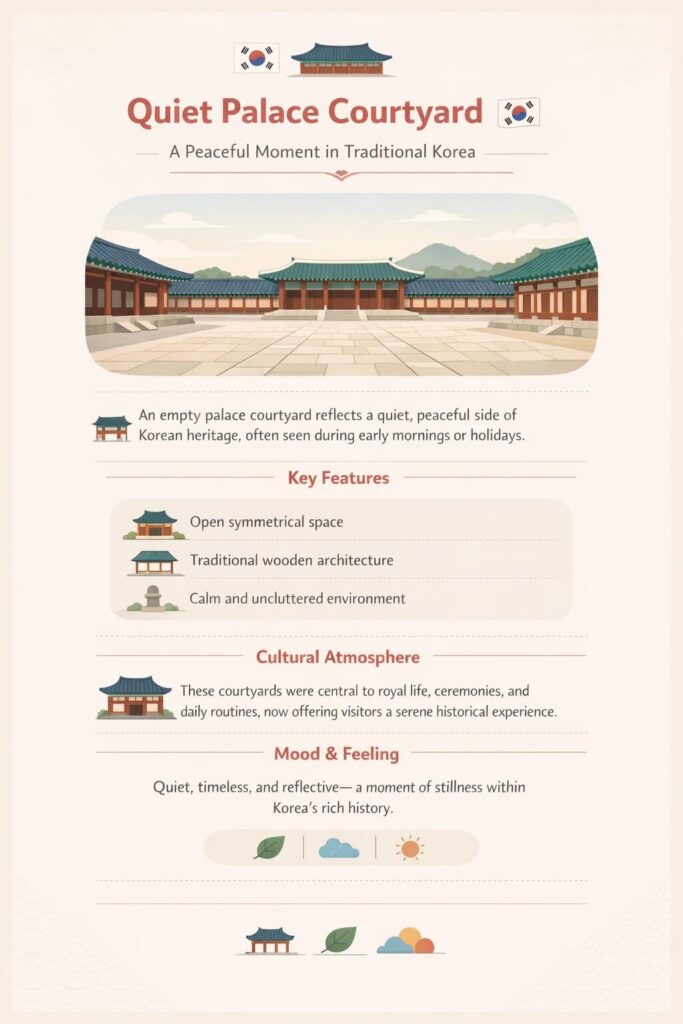
🎎 Cultural Experiences During Chuseok
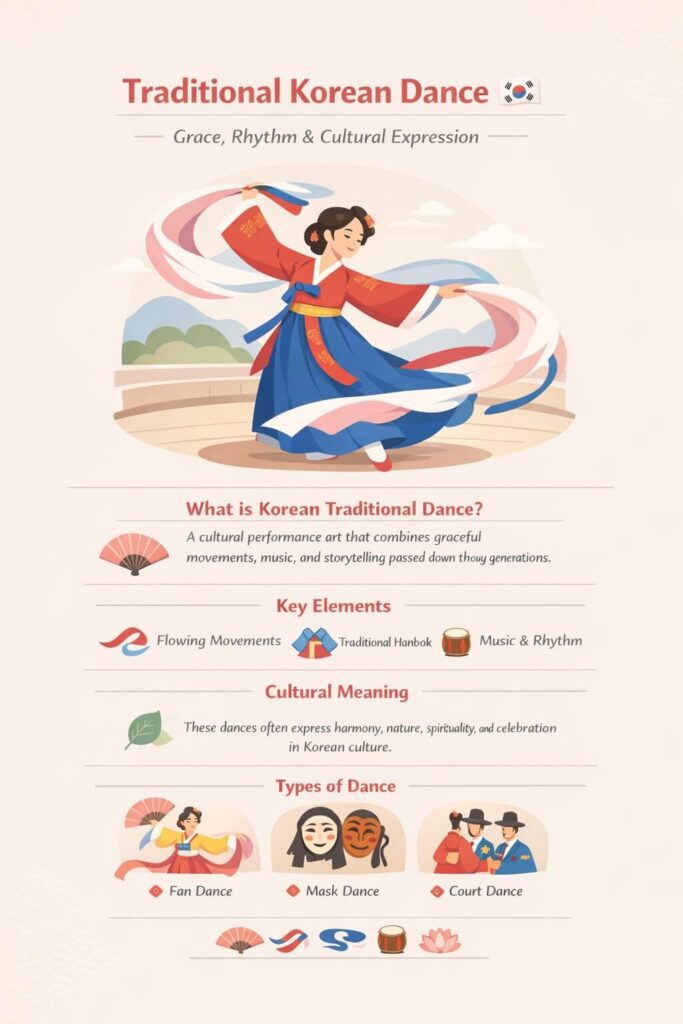
Chuseok is a great time to experience Korean traditions. Visitors can enjoy folk games like yutnori, watch traditional dance performances, and visit cultural sites hosting special events. Wearing hanbok or visiting palaces during this time provides a deeper understanding of Korea’s rich cultural heritage.
🎫 Recommended Tours
Enhance your Korea experience with these popular tours:
- Seoul Highlights Full-Day Tour
Explore major landmarks, palaces, and markets with a guided experience perfect for first-time visitors. – View Tour - Seoul Palace, Hanok Village & Market Tour
Visit Gyeongbokgung Palace, Bukchon Hanok Village, and Gwangjang Market while learning about Korean culture and food traditions. – View Tour
✨ Helpful Korea Travel Guides
Planning your trip? Check out these helpful posts:
🌾 Why Chuseok Matters
Chuseok is more than just a holiday—it reflects Korea’s deep respect for family, ancestors, and tradition. Even in modern times, it remains a meaningful occasion for reconnecting with loved ones and cultural roots. It offers a unique glimpse into Korea’s values and seasonal rhythms.
✨ Final Thoughts
Chuseok is one of the best times to understand Korean culture beyond the surface. From ancestral rituals to traditional foods and family gatherings, it captures the essence of Korea’s heritage. Whether you are visiting or learning from afar, Chuseok provides a rich cultural experience that is both meaningful and memorable.
Like this Post? Save it on Pinterest!