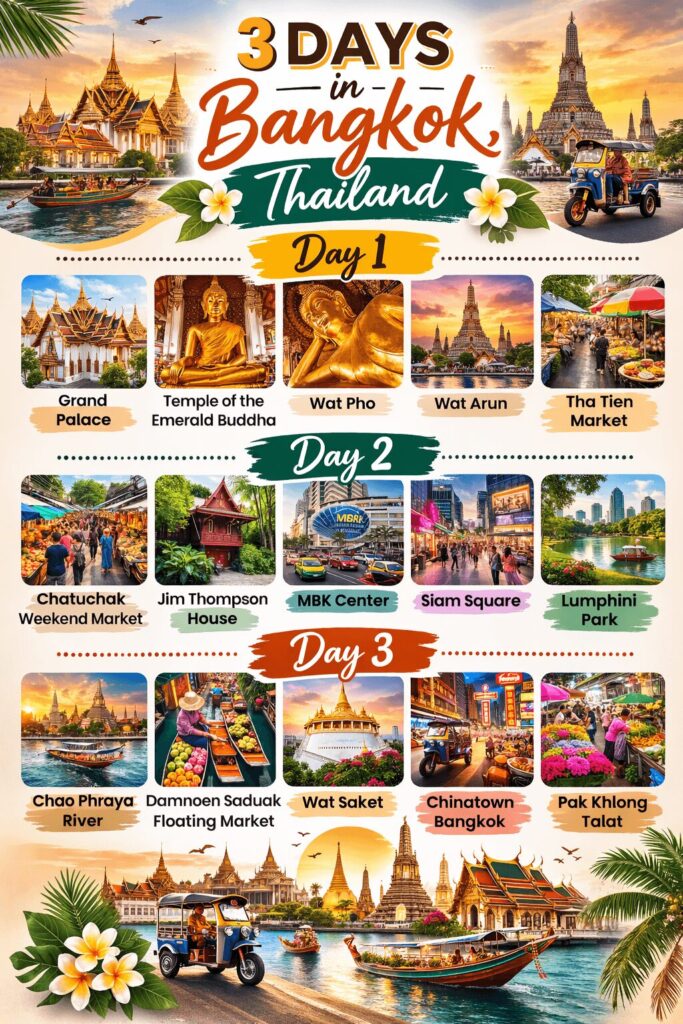
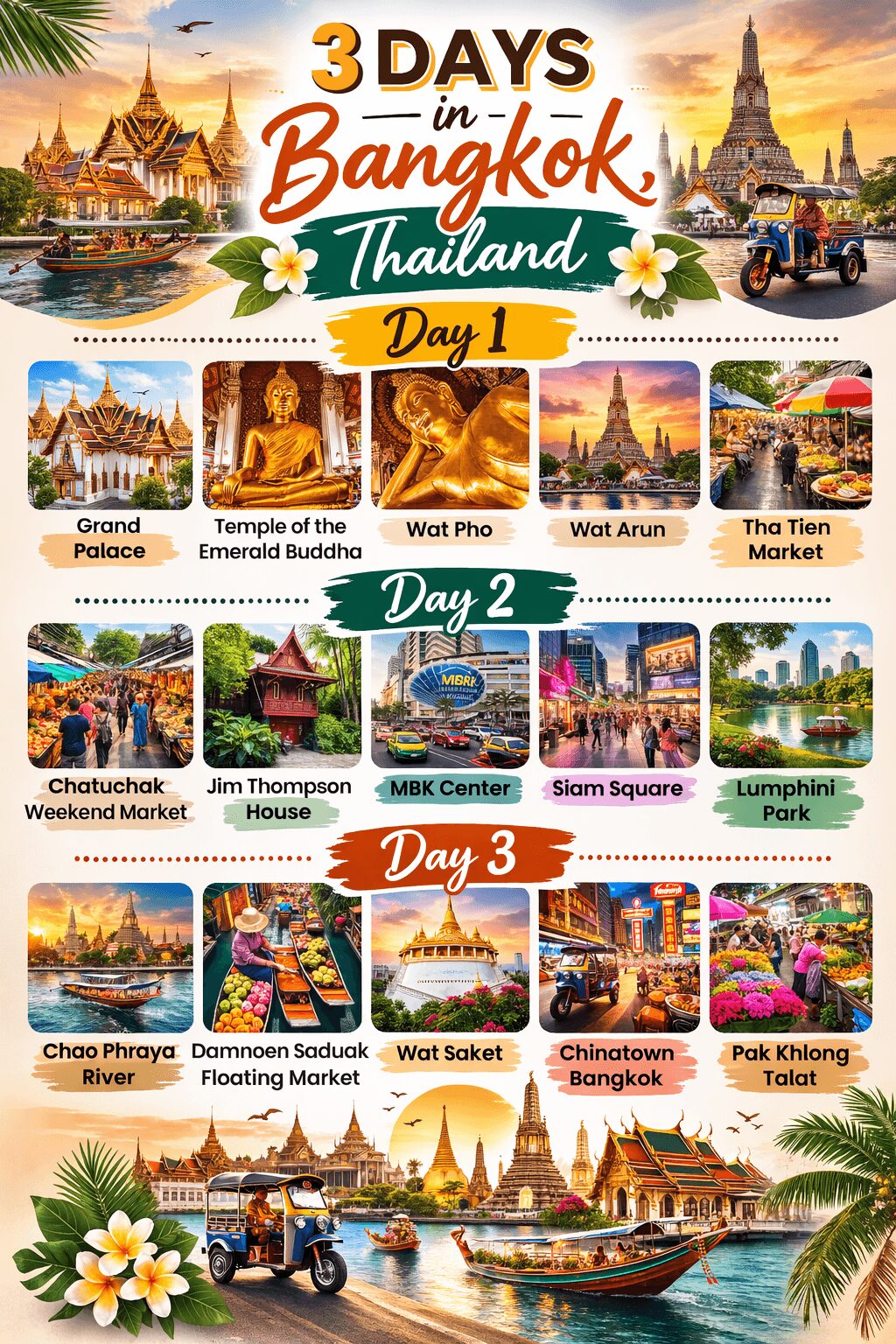
Discover the vibrant energy of Bangkok, where ornate temples, bustling markets, and flavorful street food create an unforgettable travel experience. This 3-day itinerary highlights iconic landmarks, cultural treasures, shopping districts, and scenic river views, giving you a well-balanced introduction to Thailand’s exciting and dynamic capital city.
Noted: Visited in 2015
Map
Day 1 – Temples & Historic Bangkok
1. Visit Grand Palace
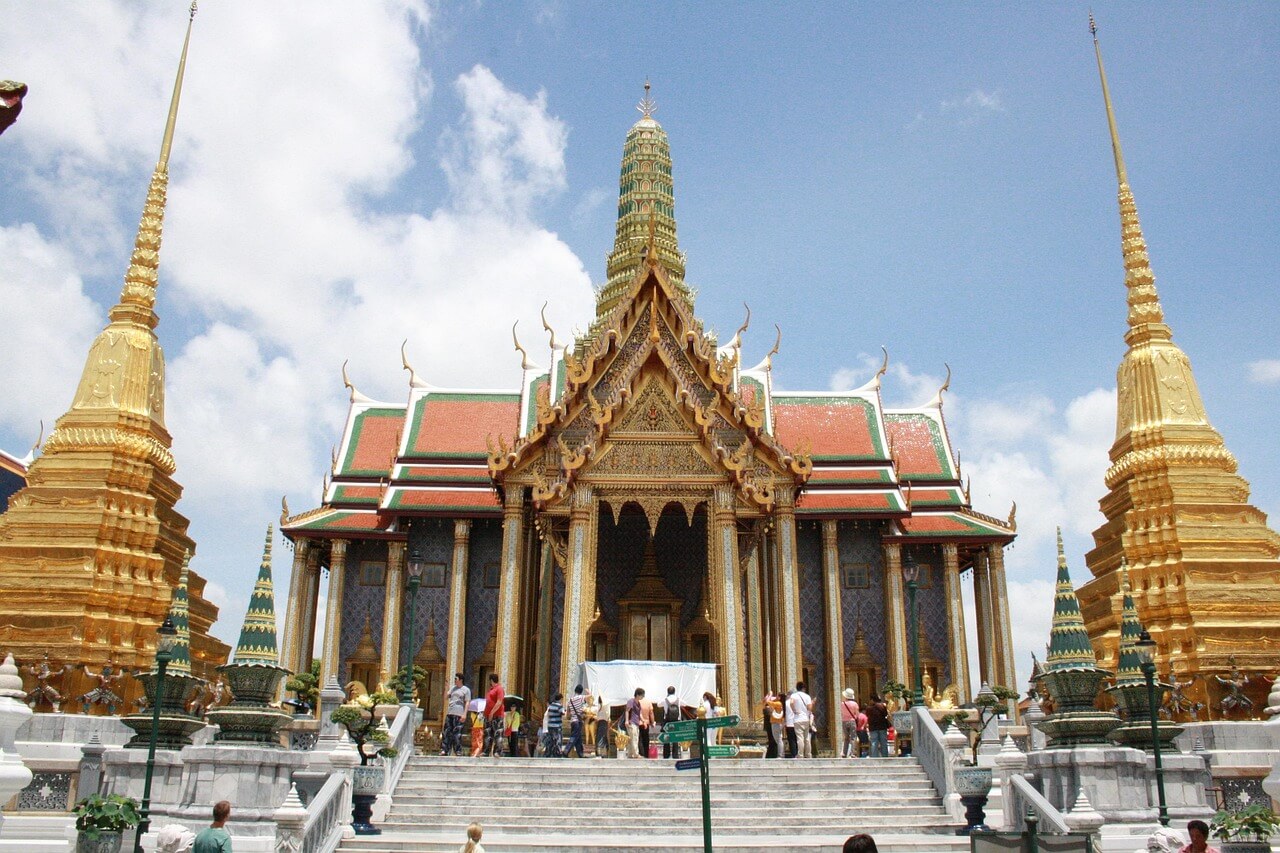
The Grand Palace is one of the most important cultural and historical landmarks in Bangkok. It was built in 1782 by King Rama I when he established Bangkok as the capital of Thailand. For more than 150 years, the palace served as the official residence of Thai kings and the center of royal administration.
Within the palace complex is the revered Temple of the Emerald Buddha, home to Thailand’s most sacred Buddha image. The architecture features intricate golden spires, detailed murals, and traditional Thai craftsmanship.
The best time to visit the Grand Palace is early in the morning, shortly after it opens around 8:30 AM. Visiting early helps you avoid the largest crowds and the intense midday heat, making it easier to explore the expansive and stunning complex comfortably.
2. Temple of the Emerald Buddha
The Temple of the Emerald Buddha is the most sacred Buddhist temple in Bangkok. Built in 1782 during the reign of King Rama I, the temple is located within the grounds of the Grand Palace. It houses the highly revered Emerald Buddha, a small statue carved from green jade that symbolizes the spiritual heart of Thailand.
According to tradition, the statue is dressed in seasonal royal garments changed by the Thai king three times each year. The temple is admired for its elaborate golden decorations, detailed murals, and traditional Thai architecture that reflect centuries of craftsmanship and devotion
The best time to visit is early morning when the temple opens, allowing visitors to experience the peaceful atmosphere before large crowds and midday heat arrive.
3. Wat Pho
The Wat Pho is one of the oldest and most important temples in Bangkok. The temple existed before Bangkok became Thailand’s capital but was expanded and renovated in 1788 by King Rama I. Wat Pho is best known for its massive Reclining Buddha statue, which measures about 46 meters long and is covered in gold leaf.
The temple is also considered the birthplace of traditional Thai massage and is home to one of Thailand’s oldest massage schools. Visitors can admire beautiful stupas, detailed murals, and peaceful courtyards throughout the complex.
The best time to visit Wat Pho is early in the morning or later in the afternoon. Visiting outside peak midday hours helps avoid crowds and the intense Bangkok heat.
4. Wat Arun
The Wat Arun is one of the most iconic temples in Bangkok, located along the banks of the Chao Phraya River. The temple dates back to the Ayutthaya period but was restored and expanded in the late 18th century during the reign of King Rama II. Its name comes from the Hindu god Aruna, symbolizing the rising sun.
Wat Arun is famous for its towering central prang decorated with colorful porcelain and seashells. The design reflects Khmer-style architecture and symbolizes Mount Meru, the center of the universe in Buddhist cosmology. Visitors can climb the steep steps for beautiful river views.
The best time to visit Wat Arun is early morning or around sunset when the light enhances the temple’s intricate details and creates stunning photo opportunities.
5. Tha Tien Market
The Tha Tien Market is one of the oldest traditional markets in Bangkok, located near the Wat Pho and along the Chao Phraya River. The area developed in the late 18th century during the early Rattanakosin period, when Bangkok became the capital of Thailand. Because of its riverside location, Tha Tien became an important trading hub where goods arrived by boat and were distributed throughout the city.
Over time, the market became known for selling dried seafood, spices, local produce, and traditional Thai snacks. Although parts of the market have been renovated, it still maintains an authentic local atmosphere that reflects Bangkok’s historic riverside trading culture.
The best time to visit Tha Tien Market is in the morning, when vendors open their stalls and the market is most lively.
READ MORE: 50 Bucket List Things to Do in Bangkok
Day 2 – Markets, Shopping & City Life

1. Chatuchak Weekend Market
The Chatuchak Weekend Market is one of the largest outdoor markets in the world and a major shopping destination in Bangkok. The market began in 1942 when the Thai government encouraged provinces to establish local markets. It was later relocated several times before settling in the Chatuchak district during the 1980s, where it gradually expanded into the massive market seen today.
Today, Chatuchak Weekend Market features more than 15,000 stalls organized into different sections selling clothing, handicrafts, antiques, plants, souvenirs, and street food. The lively atmosphere attracts both locals and international visitors looking for unique items and authentic Thai market experiences.
The best time to visit is early morning when the market opens, as temperatures are cooler and crowds are smaller than during the busy afternoon hours.
2. Jim Thompson House
The Jim Thompson House is a unique cultural attraction in Bangkok that preserves traditional Thai architecture and art. The house once belonged to Jim Thompson, who arrived in Thailand after World War II and helped revive the country’s silk industry. In the 1950s, he built the home by assembling several historic teak houses from different parts of Thailand.
Thompson was passionate about Southeast Asian art, and his home became filled with antiques, sculptures, and ceramics. After his mysterious disappearance in 1967 while visiting Cameron Highlands, the property was preserved and later opened as a museum. Today, visitors can explore the beautiful gardens and traditional rooms filled with historical artifacts.
The best time to visit is in the morning when temperatures are cooler and guided tours are less crowded.
3. MBK Center
The MBK Center is one of the most popular shopping malls in Bangkok. It opened in 1985 and was developed by MBK Public Company Limited. At the time, it was among the largest shopping complexes in Asia and quickly became a favorite destination for both locals and tourists looking for affordable products.
The mall features eight floors with more than 2,000 shops selling clothing, electronics, accessories, souvenirs, and mobile devices. MBK Center is especially known for its competitive prices and lively indoor market-style atmosphere. In addition to shopping, visitors can find restaurants, a cinema, and entertainment areas inside the complex.
The best time to visit is late morning or early afternoon on weekdays when the mall is less crowded compared to busy evenings and weekends.
4. Siam Square
Siam Square is one of the most vibrant commercial areas in Bangkok and is often considered the center of the city’s modern shopping and youth culture. The district was developed in the 1960s by Chulalongkorn University, which owned the land and planned the area as a commercial hub to generate income for the university.
Over the decades, Siam Square evolved into a trendy district filled with fashion boutiques, cafes, restaurants, beauty shops, and entertainment venues. It has become especially popular with students and young locals who come to explore the latest fashion trends, street food, and lifestyle stores. The area also connects to several large shopping malls nearby.
The best time to visit Siam Square is in the late afternoon or evening when the shops are lively and the atmosphere is energetic.
5. Lumphini Park
Lumphini Park is the largest public green space in Bangkok and an important recreational area for both locals and visitors. The park was established in the 1920s by King Rama VI, who intended the land to be used as a public exhibition space and later transformed it into a city park. Its name comes from Lumbini in Nepal, the birthplace of the Buddha.
Over the years, Lumphini Park has become a peaceful escape from Bangkok’s busy streets. The park features walking paths, lakes, shaded trees, and open spaces where people exercise, practice tai chi, or relax. It is also known for its population of large monitor lizards that can often be seen near the water.
The best time to visit is early morning or late afternoon when the weather is cooler and locals gather for outdoor activities.
Day 3 – Unique Experiences & Local Culture
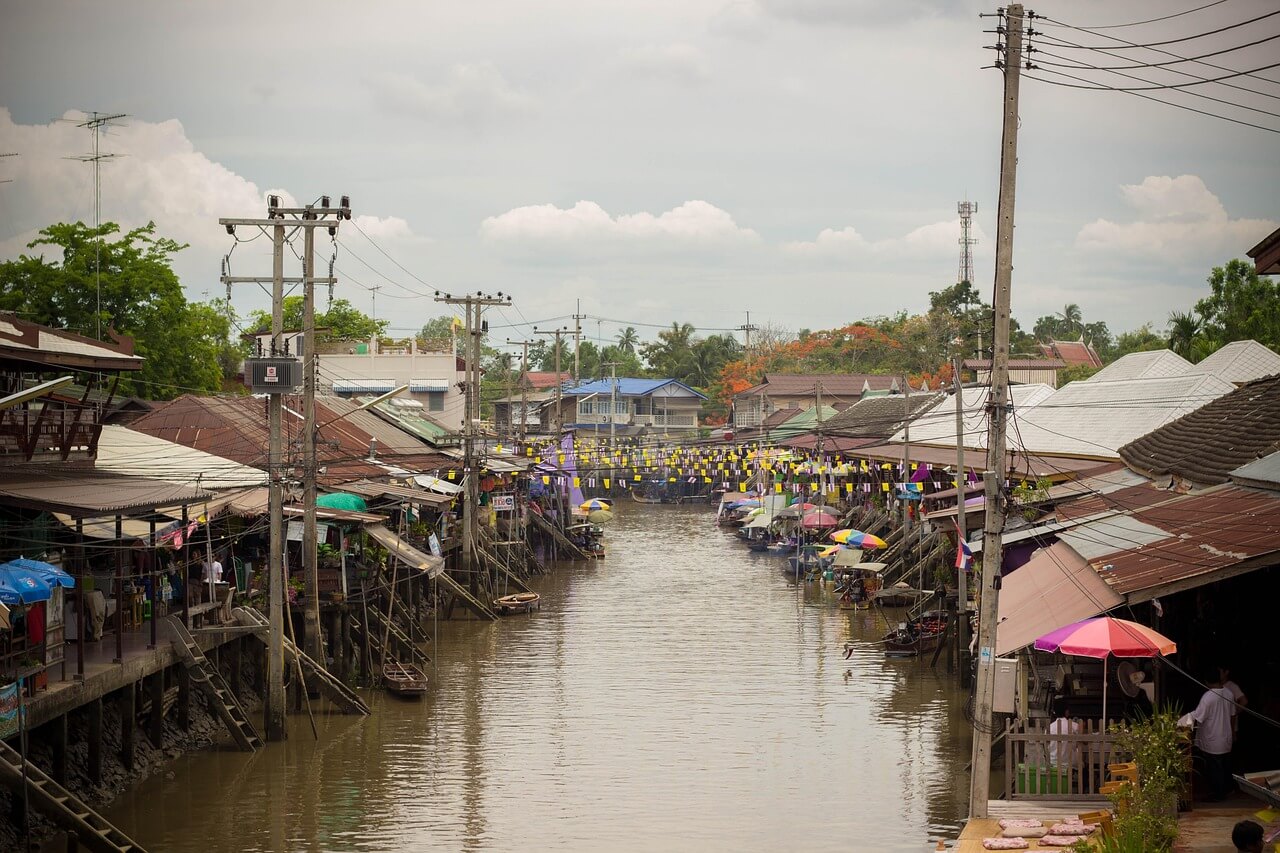
1. Chao Phraya River
The Chao Phraya River is the most important waterway in Bangkok and has played a central role in Thailand’s history for centuries. The river flows through central Thailand and empties into the Gulf of Thailand. Historically, it served as the main transportation and trade route, allowing goods, people, and cultures to move easily between regions.
When Bangkok became the capital in 1782 under King Rama I, many important temples, markets, and royal buildings were constructed along the riverbanks. As a result, the Chao Phraya River became known as the “River of Kings.” Today, it remains a vital part of city life with ferries, river cruises, and scenic viewpoints.
The best time to visit the river is in the evening when city lights reflect beautifully on the water.
2. Damnoen Saduak Floating Market
The Damnoen Saduak Floating Market is one of the most famous floating markets near Bangkok. It was established in the late 19th century during the reign of King Rama IV, when a canal was constructed to connect the Mae Klong and Tha Chin rivers. The canal helped farmers transport fruits, vegetables, and other goods by boat, creating a lively water-based trading community.
Over time, the market grew into a vibrant cultural attraction where vendors sell products directly from wooden boats. Visitors can see colorful displays of tropical fruits, Thai snacks, souvenirs, and traditional dishes while exploring the canals. The market reflects Thailand’s historic river culture and traditional way of life.
The best time to visit Damnoen Saduak Floating Market is early in the morning, usually between 7:00 and 9:00 AM, when the market is busiest and most authentic.
3. Wat Saket
The Wat Saket is a historic temple in Bangkok, best known for its artificial hill called the Golden Mount. The temple dates back to the Ayutthaya period and was later renovated during the reign of King Rama I when Bangkok became the capital in 1782. In the 19th century, King Rama III began constructing a large chedi on the site, though the original structure collapsed due to unstable soil.
Later, King Rama V completed the golden chedi that crowns the hill, creating the landmark seen today. Visitors climb about 300 steps to reach the top, where they are rewarded with panoramic views of the city and the temple’s golden stupa.
The best time to visit Wat Saket is early morning or late afternoon when the weather is cooler and the lighting is ideal for views.
4. Chinatown Bangkok
Chinatown Bangkok is one of the oldest and most vibrant districts in Bangkok. The area was established in the late 18th century when Chinese merchants moved to the neighborhood after Bangkok became the capital under King Rama I. Over time, the district developed into a major center for trade, commerce, and Chinese culture in Thailand.
The main street, Yaowarat Road, became famous for its busy gold shops, traditional Chinese medicine stores, markets, and street food stalls. Today, Chinatown remains a lively cultural hub where visitors can explore temples, shop for unique goods, and enjoy some of Bangkok’s best food. The blend of Chinese heritage and Thai culture gives the district its unique atmosphere.
The best time to visit Chinatown is in the evening when the street food stalls open and the neon lights brighten the bustling streets.
5. Pak Khlong Talat
The Pak Khlong Talat is the largest and most famous flower market in Bangkok. The market dates back to the late 18th century when the area near the Chao Phraya River served as an important trading port for agricultural goods. Originally, the market sold fish and produce brought by boat from nearby provinces before gradually transforming into a flower market in the early 20th century.
Today, Pak Khlong Talat is known for its vibrant displays of orchids, roses, marigolds, jasmine garlands, and lotus flowers used in religious offerings and celebrations. Florists, temple vendors, and locals come here daily to purchase fresh flowers in large quantities. The colorful atmosphere and fragrant air make it a unique cultural experience in Bangkok.
The best time to visit is late evening or early morning when fresh flower deliveries arrive and the market is most active
Like this Post? Save it on Pinterest!